Tuesday, November 27, 2012

Gas to Liquids (GTL): A Growing Market; And More

Due to plentiful supplies and an attractive gas to oil price differential, the natural gas to liquid fuels (GTL) market is beginning to take off, according to a new report, The Gas-to-Liquids Market 2013 - 2023. The 182 pp report suggests that the GTL global market will already exceed $5 billion in 2013. And this market is just getting started.
Two large-scale commercial Gas-to-Liquids plants have been opened in the 21st century and both are accumulating vast revenues due to the potentially lucrative differential between the price of natural gas and the price of oil. Building on the success of these facilities and a range of other factors, the Gas-to-Liquid market is set to grow strongly over the next 10 years. Visiongain has determined that the value of the global Gas-to-Liquids market in 2013 will reach $5.29bn. _ReportLinker _ via _ SacBee
The two large scale GTL plants built by Shell appear to be generating healthy profits. And as detailed in the above report, a number of startups are planning to build smaller scale GTL plants, which are also expected to be very profitable -- given the big price differential between crude oil and natural gas.
Carbon Sciences Inc. (OTCBB: CABN), provider of a complete solution for transforming abundant and affordable natural gas into clean burning gasoline and other transportation fuels, today announced its plan to act as the project developer of a "miniGTL" plant in the United States.

Flared and stranded natural gas is abundant and available. The World Bank estimates that 134 billion cubic meters of gas was flared worldwide in 2010, equivalent to almost 5 trillion cubic feet. If all this gas were converted to liquid fuels, it would equate to around 500 million barrels each year...

..."As the world searches for the security of new energy and fuel sources, miniGTL operations have the potential to unlock a vast quantity of natural gas that is either wasted or less accessible. We believe that flared gas could generate around 3 million barrels per day of synthetic fuel, and 'problem' gas, either stranded reserves or that associated with crude oil which would currently be re-injected, a further 20 million barrels per day," concluded Elton. _Equities.com
Going beyond natural gas to liquids, we see that several other feedstocks can also be profitably converted to liquid fuels, if the price of crude oil remains inflated.
The United States could eliminate the need for crude oil by using a combination of coal, natural gas, and non-food crops to make synthetic fuel, a team of Princeton University researchers has found.

...In the Princeton research, Floudas' team found that synthetic fuel plants could produce gasoline, diesel, and aviation fuels at competitive prices, depending on the price of crude oil and the type of feedstock used to create the synthetic fuel. About two-thirds of crude oil consumed by the United States is used for transportation fuel, according to the federal Energy Information Administration (EIA). The EIA said the United States imports about 45% of its annual crude oil consumption.

"Even including the capital costs, synthetic fuels can still be profitable," says Richard Baliban, a chemical and biological engineering graduate student who graduated in 2012 and was the lead author on several of the team's papers. "As long as crude oil is between $60 and $100 per barrel, these processes are competitive depending on the feedstock," he says.

The core of the plan is a technique that uses heat and chemistry to create gasoline and other liquid fuels from high-carbon feedstock ranging from coal to switchgrass, a native North American grass common to the Great Plains. The method, called the Fischer-Tropsch process, was developed in Germany in the 1920s as a way to convert coal to liquid fuels.

The chemistry is complicated, but it basically takes the carbon and hydrogen from the feedstock and reassembles them into the complex chains that make up fuels like gasoline and diesel. Essentially, the feedstock material is heated to 1,000 to 1,300 C and converted to gas, and using the Fischer-Tropsch process, the gas is converted to chains of hydrocarbon molecules. These hydrocarbon chains are then processed over catalysts such as nickel or iron. The end products include fuels, waxes, and lubricants normally made from crude oil. _RDMag
Synthetic liquid fuels from natural gas, coal, biomass, bitumens, kerogens, gas hydrates, etc. have enormous potential to substitute for crude oil, should the price of oil remain high.

As inexpensive process heat becomes more widely available, a wide range of synthetic fuels will become more profitable to produce.

High temperature and very high temperature nuclear reactors of advanced design will begin to provide very economical high temperature process heat for multiple high value purposes, beginning in the early to middle 2020s.

Labels: , ,

Sunday, July 29, 2012

China's Coal to Chemicals: Guest Post by Rembrandt

Note: The article below is reprinted from the peak oil site "The Oil Drum" to illustrate that even peak oil sites occasionally publish informative and factual material. Most of this information has already been published here at Al Fin Energy over the past few years. But it is always good to encourage the publishing of important, positive information by websites which typically focus on the negative.

The following article by Rembrandt was originally posted at The Oil Drum

In this post, I give an overview of developments in China to create a coal to chemicals industry, primarily using methanol as an intermediary feedstock. In doing this research, to my surprise, I found that the Chinese chemical economy is advancing rapidly in its use of coal as a chemical feedstock, as opposed to crude oil in other countries. In many cases, coal already represents 20% or more of chemical feedstocks, and in special cases such as PVC, the country already sources virtually all of its input from coal. Since China produces 20% of the world's PVC, such transitions have a substantial impact on the global energy system.

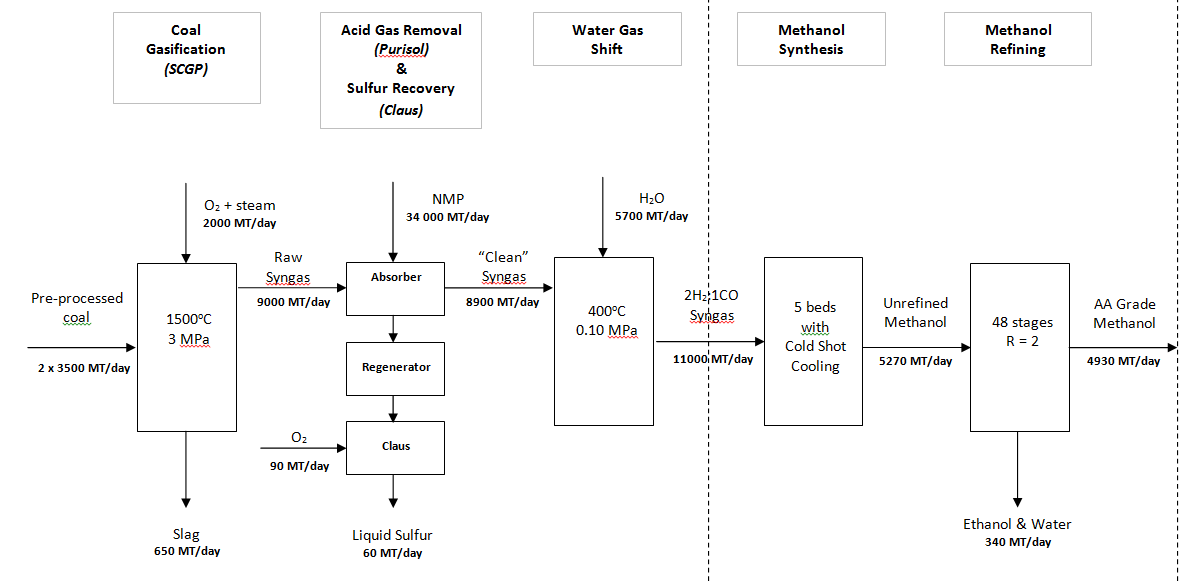
The primary raw chemical input produced from coal is methanol, which is produced through coal gasification and subsequently, methanol synthesis and refining (see picture below for overview of process steps).

Figure 1 - Block flow diagram of coal to methanol synthesis. Source: Inouye et al. 2008

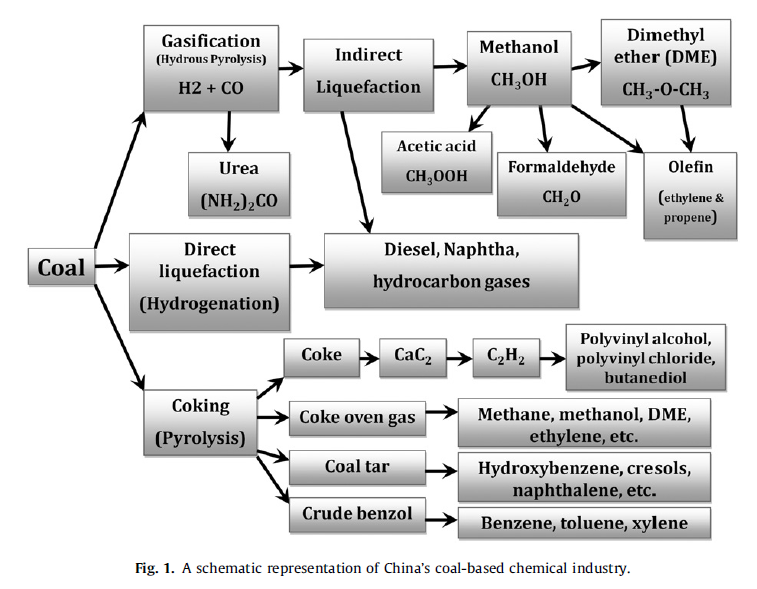
Today, methanol is used to produce a wide variety of chemicals including formaldehyde, MTBE, acetic acid, DME, esters, olefins, and other products. These are used for fuels, pesticides, medicines, plastics, fibres, resins, etc. China currently produces approximately 25% of the world’s output of methanol.


Figure 2 - Products produced in the coal to chemical's industry of today. Source: Yang and Jackson 2012

The current status of China’s coal to chemical industry.

Since 2000, China has been investing an increasing amount into the production of coal-based petrochemicals, substituting these for traditional crude oil based processes. The plausible reasons are the cheap price of coal and the strategic desire to be self-sufficient in resource inputs. The industrial base originally focused on five areas of petrochemical replacement. More recently, the industry is gearing up to produce other petrochemicals by Chinese R&D, and through establishing technology partnerships with non-Chinese players such as TOTAL Oil Company.

The five base chemical products currently made from coal in China are:

• Light oil (containing benzene, toluene and xylene) as a by-product of coke oven steel industry operations. The COLO (coke oven light oil) is utilized in the production of aromatics. It has been estimated that approximately 27% of benzene production in China is coming from this source. Benzene is a precursor for tens of thousands of chemical products including cosmetics, drugs, pesticides, lubricants, dyes, explosives, detergents, nylon, polymers, and plastics. Source: Jeffrey Plotkin 2012

• Acetylene used for production of vinyl chloride monomer (VCM) and 1,4 Butanedoil (BDO). VCM is used to produce polyvinyl chloride (PVC) plastics. BDO is used for a variety of plastics, elastic fibres, and polyurethanes. It is estimated that approximately 85% of VCM produced in China is through coal based routes. Source: Jeffrey Plotkin 2012

• Urea and Ammonia used mainly for the production of fertilizers. Roughly 70% of nitrogen fertilizers in China are produced from coal feedstocks, and all expansion in the future will likely be coal, given the lack of natural gas supplies in China. Source: China Fertilizer Consultants 2010

• Coal to Olefins (CTO), also referred to more commonly as alkenes. These are used to process into a large number of other building block chemicals including ketones, carboxylic acids, ethylene, and alcohols. The first commercial plant was started in 2010.

• Monoethylene Glycol (MEG) production, utilizing a new process route based on gasification of coal with several further reactions to obtain methyl nitrate into dimethyl oxalate into MEG. The first commercial plant began operating in 2009 at a rate of 200,000 tons per year.

Future ventures

The country's industry is expanding its current operations rapidly, as well as implementing new process routes. For example, the company Celanese is looking at commercializing technologies to produce ethanol from coal. A few of the upcoming developments include:

• Dow Chemicals together with Shenhua will launch a large multi million tonnes coal to many chemicals plant in 2016, called the Yulin Integrated Chemicals project, for the production of methanol, methanol to olefins, monoethylene glycol, ethanolamines/ethylendiamines, polyether polyols, acrylic acids, acrylic esters, chlorinated methanes, ethylene dichloride, vinyl chloride monomers, and PVC’s. Source: Business Wire 2010.

• A substantial number of companies are planning to expand methanol to olefins production at commercial scales. Currently there are three methanol to olefins plants with a capacity of 1.56 million tonnes, using coal based methanol inputs. Another nine such plants have been approved and are under construction, and thirty such plants are in the planning stage with a combined capacity of 20 million tonnes. It is estimated that half of these projects would be sufficient for China to become self-sufficient in ethylene supply (primarily from Coal).Source: Ken Yin 2012

• PetroChina is planning to build two coal to paraxylene facilities, one of the main building blocks of PTA for the production of polyester. The facilities are planned at a capacity of 1.6 million tonnesSource: Ken Yin 2012

While ambitions exist, the Chinese government has announced that it aims to cap methanol production capacity at 50 million tonnes by 2015. Current capacity is around 40 million tonnes, of which only 50% is utilized. I.E. half of the plants stand idle due to over-expansion of the industry. Beyond the obvious too fast expansion, there appears to be other strategic reasons such as potential competition over coal use for electricity, and restrictions on water availability to produce coal. Some other key challenges lie in the distance of the coal seams to major consumer markets, and competition over other fossil fuel feedstocks from the Middle-East.


Original article by Rembrandt at The Oil Drum

Labels: , ,

Sunday, June 24, 2012

Coal Is Becoming Both Versatile and Clean

Technology for turning coal into electric power, process heat, and liquid fuels has come a long way over the past ten years. And science and engineering have just begun developing cleaner and more efficient ways of utilising coal for heat, power, and transportation fuels.
The table above reveals the superior yields and efficiency of direct coal liquefaction (and hybrid liquefaction) as compared to gasification plus Fischer Tropsch, or indirect coal liquefaction.
The presentation summary above describes some economic advantages of direct coal liquefaction over indirect liquefaction -- including lower startup costs.
State-owned China Shenhua Group made a profit from its pioneering direct coal-to-liquids (CTL) project in the first half of this year (2011), raising hopes that the world’s second largest oil consuming nation may expand forays into alternative fuel production.

China has rich coal reserves but limited oil deposits. After backing CTL as a way of improving energy security and easing its growing dependence on overseas crude oil, China went cold on the technology in 2008, cancelling dozens of projects amid concerns about high production costs and the impact it would have on scarce water supplies.

The parent of China Shenhua Energy Co , the country’s biggest coal producer, produced 470,000 tonnes of oil products from coal in the first half and costs of the fuel were equivalent to crude oil prices of less than $60 a barrel, according to Shenhua Group’s General Manager Zhang Yuzhuo. _Shenhua DCL Project Proves Profitable
As long as oil costs remain high (above $80 a barrel), such projects should provide healthy returns to their backers.

The CTL approach depicted above utilises methane as a hydrogen donour in a unique liquefaction process which utilises gasification plus methanol production. The methanol can be further converted to diesel or jet fuel.

More details

This Accelergy approach to CTL utilises biomass gasification as a hydrogen donour for the coal liquefaction. At this point in time, methane is likely to be more practical to provide hydrogen.
The above image portrays three ways of CTL, including Exxon Mobil's coal to methanol to gasoline (MTG), traditional gasification plus Fischer Tropsch, and the use of biomass gasification to provide hydrogen for direct liquefaction of coal to liquids.

And just to remind you that the world is not giving up on coal for the generation of electrical power, this EIA graphic projects a steady growth in the use of coal for electrical power generation through 2035 -- consistent with the recent 2012 BP Statistical Review.


Coal is second in size only to gas hydrates as a global hydrocarbon resource. Any rational projection of future energy and fuels production would necessarily include coal.

Rather than to reject coal altogether, more intelligent energy analysts and policy-makers would do better to continue to press for cleaner, safer, and more efficient ways of utilising this massive energy source -- as a bridge to future sources of energy which can be used for many thousands of years, such as advanced nuclear fission, nuclear fusion, and hybrid fission - fusion.

Labels: ,

Saturday, June 23, 2012

Coal Will Thrive Long After Obama Is Gone

The National Coal Council delivered a report to the US DOE which points to increasing uses of coal -- to generate electric power, to produce large quantities of liquid fuels via CTL, and to expedite enhanced oil recovery (EOR) using CO2 recovered from coal gasification (both IGCC and CTL).
  • By 2035, the combination of coal-based EOR and CTL technology could provide up to 30 percent of U.S. liquid fuel demand and ensure America's energy security for decades....
  • Use of ... CTL could generate $200 billion in economic activity, more than 1 million skilled jobs and $60 billion in tax revenues.
  • At least 100 gigawatts of advanced coal generating capacity could be built or retrofitted over the next two decades. These advanced plants would use an additional 300 million tons of coal annually.
  • CTL plants with carbon capture could convert coal into more than 2.5 million barrels a day of additional oil. An additional 450 million tons of coal would be used annually in these operations.
  • Capturing a high volume of CO2 for commercial purposes, coupled with CTL operations, would increase coal use to 1.75 billion tons annually. This production level is well within the capability of the United States, home to 30 percent of the world's coal reserves.
_Nat.Coal Council Report to US DOE

Obama's misguided war against coal -- along with his war against all other forms of viable energy -- mark him as a political activist rather than a true leader. Obama's war against energy and against the US private sector has led to a stagnant economy with very slow job creation.

Meanwhile, Primus Green Energy is pushing ahead with a shale gas - to - liquids project which hopes to produce 100 million gallons of gasoline from shale oil per year.
The allure of cheap nature gas has altered the course of a New Jersey biofuel start-up’s path to commercialization. Shale gas will serve as Primus Green Energy’s (PGE) bridge fuel until it shifts to biomass feedstocks.

PGE today held a dedication ceremony for a demo plant at its Hillsborough, NJ headquarters. Local luminaries and a swarm of politicians, including former governor Jim Florio, Representative Leonard Lance, and an Obama administration agricultural official, were in attendance.

The plant will create up to 5 barrels of fuels per day, which will be used for customer certification testing and approvals. It is also a proof of concept for technology that PGE says can scale to upwards of 100 million gallons per year at a significantly higher yield (35 percent) than the industry average.

The company is hoping to raise US$150 million to build a facility next year that would produce 20 million gallons of fuel annually. In comparison, the Pearl GTL (gas to liquids) facility in Qatar has cost over $19 billion to build. _SP
The Pearl GTL plant in Qatar expects to yield profits of $6 billion a year, for as long as the price of crude oil (Brent) remains above $80 a barrel.

Primus Green Energy had intended to be a biomass-to-liquids (BTL) company rather than a GTL company, but basic economics dictated Primus' decision to go with shale gas rather than biomass -- at least in the beginning.

Meanwhile, commodities prices remain well above 2007 levels, suggesting that without big government stimulus from the US, Europe, and China, there is still significant deleveraging and deflating of bubbles that could occur.

The Obama government has injected about $1.5 trillion per year of fiat stimulus into the US economy, with very little positive effect to show for it -- except a rapidly growing debt which could destroy the economy if interest rates should be forced upward.

The energy world does not exist apart from the political and economic worlds, but is rather inextricably enmeshed within both.

Obama has attempted to re-shape the energy worlds, the political worlds, and the economic worlds -- as a legacy to his own unique greatness. Time will tell what lasting impact Obama's policies have had on those worlds -- if any.

Labels: , ,

Sunday, March 25, 2012

Massive Global Coal Resource in Demand

Thanks to growing demand for energy in India and China, global demand for coal is increasing. For example:
China's coal consumption, including its growing imports totaled about 3.75 billion tons in 2011. At that rate and for China's estimated 1.33 billion population, this is a consumption rate of 2.8 tons per person a year... _Source
Worldwide, several projects for large scale conversion of coal to gasoline and other liquid fuels are in the works, including two in the US -- in Wyoming and West Virginia. Both of the proposed US plants are under attack from faux environmentalist green groups such as the Sierra club, but the Wyoming plant appears to be making progress against the lefty-Luddite assault:
“We think Wyoming is a pacesetter here,” said Kelly, executive chairman of DKRW Advanced Fuels, which wants to build the $1.7 billion to $2 billion plant to convert coal into gasoline and carbon dioxide for sale, among other products. “This would be the first project like this in the U.S. and really, the West.”

...The company won a critical victory in March 2011 when the Wyoming Supreme Court upheld a state-issued air quality permit for the project and its adjacent mine, despite a Sierra Club challenge. But the plant and similar projects continue to face opposition from the club and other environmental advocacy groups.

...Medicine Bow Fuel and Power, the company’s project subsidiary, has obtained the right to use technology key to the plant’s conversion process. It also has a buyer for both gasoline and carbon dioxide to pump into old fields to boost production.
The DKRW plant will use a General Electric coal gasification technology, which produces a synthetic gas, also known as syngas, and strips it of nearly all sulfur and carbon dioxide. Using a licensed ExxonMobil technology, the syngas is converted into methanol, which is converted into gasoline.

DKRW has also retained CitiBank as adviser in its search for private financing. DKRW has sunk $100 million into the project’s development so far, according to Kelly.
“All that’s a big task, and it takes a long time,” Kelly said. “Those are gigantic things to do and they’re expensive things to do.” _BillingsGazette
The project still faces significant financial obstacles -- primarily due to delays caused by faux environmentalist lawsuits and other ideologically-based red tape.

Another obstacle to standard CTL plant projects in North America is the very cheap price of natural gas there. Some projects are switching from CTL to GTL (gas to liquids) to take advantage of cheap gas prices, and the possibility of a quicker route to production.

A better approach to coal liquefaction (CTL) might be a combined coal and natural gas approach, where natural gas is used as a hydrogen source. At today's natural gas and coal -- compared to oil prices in North America and elsewhere -- such an approach makes sense.

The best approach of all for synthetic liquid fuels production would be the use of nuclear process heat for CTL, GTL, and combined gas and coal liquefaction. The only meaningful resource limits, after all, are those in the human mind.

If we allow the lefty-Luddite dieoff.orgy green mentality of energy starvation to take over modern societies, we will have little to look forward to but increased global poverty, violence, and societal decay.

One way or another, humans will make use of the massive coal resource. It would be best if coal were cleanly converted to liquid fuels or electricity. But if faux environmentalist greens prevent the clean use of coal, coal will be used in dirty ways, using increasingly more primitive and polluting technologies prevalent in the growing third world.

Labels: ,

Sunday, March 04, 2012

Gas-to-Liquids and Coal-to-Liquids: Bringing in a New Era of Energy?

Unconventional liquid fuels are slated to provide ever growing proportions of future demand for transportation fuels. The burgeoning success of plants such as Shell's Pearl GTL plant in Qatar herald a new era of liquid fuels production.
In terms of what GTL is, it is the process of chemically turning natural gas into cleaner-burning liquid products, including fuel, base oil for lubricants and feedstock for chemicals. To produce, the process firstly involves methane and oxygen which are converted into a mixture of hydrogen and carbon monoxide known as synthesis gas or syngas. This is then fed to a reactor with a proprietary Shell catalyst that accelerates the conversion of the mixture to long-chained waxy hydrocarbons and water.

From the GTL reactor, the long-chained hydrocarbons are then reacted with hydrogen and ‘cracked,’ into a range of smaller molecules of various sizes using another proprietary Shell catalyst. This process is referred to as ‘hydrocracking.’ The final step is distillation. Various boiling points are reached to separate out the products, which can be in the form of GTL naphtha, GTL kerosene, GTL normal paraffins, GTL gas oil, or GTL base oils. These are then eventually fed to their own storage tanks ready for use.

...One of the products, GTL gasoil (diesel-type fuel), can contribute significantly to the diversification of the diesel fuel supply. This product can reduce local emissions of nitrogen and sulfur oxides and particulate matter. Because it contains virtually no sulfur or aromatic compounds and has a high cetane number – a measure of combustion quality – GTL gasoil burns more efficiently than conventional oil-based diesel and thus produces fewer local emissions and less black smoke than conventional diesel. The high cetane of GTL gasoil can lead to noise reductions in certain engines under certain driving conditions and improve cold start performance. GTL gasoil can also be blended with conventional diesel and/or biodiesel and used in the same vehicles and infrastructure, thus offering a low investment cost compared with other alternatives.

GTL Kerosene is an alternative to conventional oil-based kerosene. Its primary use is expected for aviation. GTL kerosene can be used as a blend with traditional jet fuel without any modifications to existing aircraft and engines. Given that the aviation sector will rely on liquid hydrocarbons for decades, this fuel can help support the future energy needs of the industry, and offer customers fuel diversification. GTL kerosene has higher energy density than conventional oil-based kerosene and this reduces the required fuel payload, thus aircraft may be required to carry less fuel weight to cover the same distance. _QatarShell
When even pro-nuclear activists such as Rod Adams are speaking out in favour of a coal - nuclear partnership to produce liquid transportation fuels, you should understand that people are finally beginning to look at the possibilities.
Coal is a valuable resource that can be safely mined for centuries by well-trained and compensated miners. Instead of eliminating the use of coal, I would prefer to help coal miners and coal mine owners to recognize that they could make more money and sell a cleaner product if they upgraded their fuel at the mine rather than shipping a dirt-filled, unrefined product that sells for a huge discount in the energy market.

...My pitch to the coal industry would be to use cheap, clean nuclear heat to convert H2O and their carbon rich fuel into a refined hydrocarbon that could compete with petroleum products.

...Shipping oil instead of coal from our domestic mines would also be very beneficial to the US national security and to the prosperity of the world. Just think about the positive impact that substantially lower US demand would have on the price of diesel fuel delivered to a developing country. _RodAdams
Until more people are able to think of energy in multi-disciplinary, multi-industrial terms, societies will be forced to pay higher prices for fuels and energy than is necessary. By including cheap and unlimited nuclear reactor process heat into the fuel production mix, we can immediately bring CTL, GTL, bitumens to liquids, kerogens to liquids, and even biomass to liquids (BTL) into the feasible and profitable arena.
Fortunately, more nuclear advocates are beginning to understand the importance of cleanly integrating coal and gas into the overall energy and fuels mix. But we need more bright chemical engineers like Robert Rapier, and physicists like Tom Murphy, to crunch the numbers once again -- this time including the powerful impact of high temperature process heat from modular and mini-modular HT gas-cooled nuclear reactors.
By utilising scalable, factory produced reactors which can be sited at the point of production of gas, coal, bitumens, kerogens, methane hydrates -- and even biomass in some situations of intensive cultivation -- it should be clear to any objective observer that a new era of hydrocarbon production is quite feasible.

Government action could certainly prevent this development. The great carbon hysteria delusion -- if firmly enacted into law in the developed world -- would not only kill unconventional fuels, it would kill the economic viability of the underlying societies themselves. That is what several governments, from the UK to Obama's US to Australia to the EU are attempting to do in various ways.

A far less likely -- but still potentially effective -- way to stop the revolution in unconventional fuels, is for the national oil companies of OPEC and other oil dictatorships to route needed funds into oil field production, exploration, discovery, and development. It would be easy for existing oil fields and fields under development to ramp up production to overwhelm even the current inflated levels of global demand -- if the equipment, manpower, and funding were allotted for the purpose. But this will not be done, because governments from Russia to Venezuela to Saudi Arabia etc need oil prices to remain artificially high so that they can use oil profits to pacify unstable populations and pay off highly placed insiders.

Labels: , , ,

Friday, February 17, 2012

Fischer Tropsch Syngas to Hydrocarbons: New Innovations

Dutch scientists have breathed new life into a century old chemical synthesis: Fischer Tropsch. By the clever use of nano-scale catalysts, the Utrecht University and Dow Chemical researchers have significantly expanded the list of important industrial products that can be created from syngas. Syngas can be derived from biomass, natural gas, coal, kerogens, bitumen, and any carbonaceous material.
Dutch scientists have found a way of turning plant matter into the building blocks of common plastics using a nanotechnology process that offers an alternative to oil-based production.

The team from Utrecht University and Dow Chemical Co produced ethylene and propylene - precursors of materials found in everything from CDs to carrier bags and carpets - after developing a new kind of iron catalyst made of nanoparticles. _SciAm
More from Green Car Congress:
Lower olefins are key building blocks for plastics, cosmetics, and drugs. Conventionally, light olefins are produced by steam cracking of crude oil–derived naphtha, but, as the authors note in their paper, there is a pressing need for alternative feedstocks and processes in view of supply limitations and of environmental issues.

Although Fischer-Tropsch (F-T) synthesis can convert coal-, biomass-, and natural gas-derived synthesis gas into hydrocarbon derivatives, selectivity toward lower olefins tends to be low. As a result, non-petroleum production routes for olefins usually involve at least two conversion steps, involving either cracking of FT-derived hydrocarbons or the methanol to olefins (MTO) process. _GCC
By destroying one of the key arguments behind peak oil doom -- the former need for crude oil to create a broad range of chemicals and polymers -- this new use of Fischer Tropsch has earned our appreciation.

In other F-T news, Oxford Catalysts claims to have sold five of its microchannel F-T units for converting syngas to high quality liquid fuels. The company says that its microchannel units can convert gas, coal, or biomass to hydrocarbon fuels, via syngas.

Here is a summary of the F-T based GTL process used by Shell in its $6 billion a year in profits Pearl plant in Qatar:
The GTL plant turns clean natural gas (methane) into five useful oil products through complex chemical transformation processes.

Methane is converted into these useful liquid products over three stages. First, the methane is reacted with oxygen to create a synthesis gas in reactors operating at up to 1,300ºC. The synthesis gas is then converted into liquid waxy hydrocarbons through the Fischer-Tropsch process.

Finally, the liquid waxy hydrocarbons are ‘cracked’, or broken down, into the five useful products using specially developed technology involving novel cobalt catalysts.

Gas oil is one of those useful GTL products being used to make a new cleaner car fuel. Colin Abraham, Shell’s vice-president for lubricants and commercial fuels marketing, said there are four main benefits to the new GTL fuel: reduced emissions; reduced noise emissions; ease of integration into existing fuel systems; and lack of investment needed into new infrastructures.

Abraham said Shell would not be introducing the fuel to petrol stations. ‘We will target airports and customers who have the ability to store the fuel themselves,’ he said. ‘The plan is not to make GTL fuel available widely across the network as this would put a strain on infrastructure.’

Base oil, another useful product of GTL, is being used to improve Shell’s existing premium engine lubricants to make engines more efficient by reducing friction.

Selda Gunsel, Shell’s vice-president for global commercial technology, said: ‘We plan to use our GTL base oils in developing high-performance engine oils that help conserve energy, improve engine durability and help reduce emissions.’

Recent tests of the GTL engine oils on a fleet of Volvo trucks saw a three per cent fuel economy benefit over conventional oils. _TheEngineer
The Fischer Tropsch process is far from dead. In fact, with the arrival of well designed nanotech catalysts plus the assistance of high quality process heat from gas-cooled nuclear reactors, F-T synthesis is just getting started.
The IEA chart above shows roughly 8 trillion barrels of oil equivalent remaining, by using F-T or similar methods.   The addition of gas hydrates to the mix roughly doubles the remaining hydrocarbon reserve.  Any delusions you may have had about running out of hydrocarbon fuels should probably be in the recycle bin by now.

Labels: , ,

Thursday, February 02, 2012

Below the Radar: The Race to Bring Gas to Liquids to the Well Head

With record lows in the natural gas markets, companies are offering natural gas assets at very attractive pricing. "We want to demonstrate the enormous potential in stranded North American gas reserves; that will only be possible when industry understands the market potential in converting those reserves to liquids at the surface. Currently the industry focus is finding and developing natural gas liquids below ground, but few really understand the financial potential unlocked by small scale conversion of existing gas to liquids with GasTechno above ground," says Walter Breidenstein, [Gas Technologies] CEO. "Our industry studies have been completed and all the economic and technical models are developed. Our goal in the Early Adopter Program is to open up our expertise and demonstrate what we have proven over the last several years in this growing sector." _Marketwatch
A third mini-GTL maker is moving into the "early adoption" phase. Gas Technologies is bringing its "Gas Techno" mini-GTL to 7 preferred customers for early adoption and trial. Gas Technologies joins Oxford Catalysts / Velocys, and CompactGTL in the race to bring miniature gas to liquids to currently undervalued stranded gas resources.
GasTechno's focus is the conversion and monetization of flared or stranded natural gas. The company is also evaluating and developing processes for methanol-to-diesel (MTD), methanol-to-gasoline (MTG), methanol-to-jet fuel, methanol-to-olefins (MTO), glycols, amines, fertilizers and other bolt-on processes that provide exceptional ROIs and high profit margins. Securing a "flare to fuels" partner with similar interests is a high priority for the program. Operators with gas resources at landfills and biodigesters are also targeted.

...Deploying a GasTechno plant on stranded reserves converts stranded gas to liquid product that sells at market prices trending well above pipeline prices. By converting and marketing stranded reserves at improved pricing, this strategy has the potential to improve asset valuations at more than 5 to 10 times by exploiting provisions in the modernized SEC oil and gas reporting requirements that permit the use of "alternative product pricing" to value proven reserves.
_Marketwatch
This general technology is also applicable in part to biomass to liquids (BTL) and coal to liquids (CTL). In other words, scalable production of high value liquid fuels and chemicals from inexpensive feedstocks, is rapidly coming within reach of more and more enterprises.

Consider what the global energy marketplace will look like, when even small communities can afford to own and operate their own small-scale fuels and chemicals refinery, using whatever abundant feedstock is closest or more affordable?

Labels: , ,

Sunday, January 08, 2012

Coming Boom in Coal to Liquids (CTL) and Gas to Liquids (GTL)

Gas Techno
Stanford Research Institute's (SRI) clean, new approach to coal-to-liquids (CTL) utilises methane gas as a hydrogen source. This makes the SRI process something of a hybrid CTL and GTL approach. More from MIT's Technology Review:
SRI claims its process addresses three liabilities that have slowed the commercialization of the technology. By blending some natural gas into the conventional coal-to-liquids (CTL) process, the private research lab, based in Menlo Park, California, claims to have eliminated CTL's carbon footprint, slashed water consumption by over 70 percent, and more than halved its capital cost.

...In SRI's process, methane preheated to 600 °C displaces much of the water required, thus reducing the unwanted reaction with the coal. The methane also reduces the amount of heat absorbed by the gasification process, eliminating the need for oxygen and combustion to maintain the 1,400 to 1,500 °C temperatures the process requires. As a result SRI says it can eliminate the use of oxygen-fired combustion that the process requires, making do with zero-carbon renewable or nuclear power instead.

Skipping oxygen not only eliminates a source of carbon dioxide, but contributes substantial cost savings by eliminating the need for an oxygen plant. Further savings are achieved through more efficient fuel synthesis.

...SRI estimates that its zero-carbon process will generate jet fuel for $2.82 per gallon, which is under DARPA's $3 target. SRI's projected capital cost for a 100,000 barrel/day plant—$3.2 billion—is well below the $6 billion cost of a CTL plant, but still well above DARPA's $1.5 billion target. _TechnologyReview
Alaska is thinking about using its considerable coal and natural gas resources to produce synthetic liquid fuels for US military bases in the Pacific basin:
A GTL (or CTL) plant in Alaska, while utilizing conventional transportation and storage within the state, could also fulfill military desires throughout the Pacific Basin.

Alaska, with its vast quantities of coal and natural gas should enter this field, both to service domestic needs, but also to support the nation’s military mission in the Pacific Basin. As the state and industry continue to ponder a natural gas line to the Lower 48 and Liquefied Natural Gas (LNG) is pushed, both into questionable competitive markets, Alaskans continue to suffer under extremely high petroleum fuel prices.

Strategically located Alaska has the potential of delivering completed fuel at a shorter distance, and more secure routes, than any other domestic region; and far more reliable and safe than from foreign sources. For example vessels traveling from Alaska to a forward base at Guam can be shadowed and protected by the U.S. Navy and land based aircraft. _AlaskaJournal
South African energy giant Sasol is pushing ahead with its Fischer-Tropsch based GTL technology in both the US and Canada.
The company is a world leader in GTL and CTL production. Upstream production of coal, oil and gas is either sold on the open markets or used a feedstock for Sasol's synthetic fuels production. The final leg of the company's revenue sources is chemical production and sales.

...In June 2011, Sasol Limited closed a deal for 50 percent ownership of the Montney gas basin assets of Talisman Energy (TLM) for approximately $1 billion. Plans for the shale gas production site include the construction of a GTL plant, which would have a capacity of 50,000 or 100,000 barrels per day of synthetic fuels. A GTL plant has the potential to turn low value natural gas production into high value synthetic fuels. _NM
Sasol is also considering putting a GTL plant in Louisiana.

Shell's Pearl GTL plant in Qatar is ramping up production, and looks to generate profits of $6 billion per year, on total capital costs of around $20 billion.

GTL and CTL are capital intensive enterprises, requiring very high up-front investment. At the same time, more scalable approaches to GTL are being developed by Oxford Catalysts, Carbon Sciences, Gas Techno, and others.

The key to efficient GTL and CTL will be the eventual mass availability of cheap, abundant, high quality process heat from gas cooled nuclear reactors (750 C to 1000 C). Using nuclear reactor process heat to substitute for fossil fuel heating, GTL and CTL suddenly become a lot more profitable -- and well able to moderate hysterical market tendencies which might otherwise further over-inflate oil costs based upon fleeting rumours.

Natural gas and coal can be as easily converted to high value chemicals as to diesel or gasoline. This allows producers a great deal of versatility in dealing with changing markets and prices. They will also offer fierce competition to crude oil suppliers in multiple markets, further helping to contain the highly volatile fluctuations of the petroleum market.

Labels: ,

Wednesday, December 21, 2011

Peak Oil: Meet SRI's Cheap, Clean New Coal to Liquids Process

Research from SRI International has identified a promising new way to produce liquid transportation fuels from coal without consuming water or generating carbon dioxide. Based on data from bench-scale tests, SRI engineers estimate that the capital cost for a full-scale plant using SRI's process would be less than half that of a conventional coal-to-liquids (CTL) plant that uses a process called Fischer-Tropsch synthesis (FTS). _Marketwatch
Given the vast reserves of coal residing in the nations of the Anglosphere, a cheap and clean coal-to-liquids (CTL) process sounds like a dream. Interestingly, SRI's new cheap & clean CTL process also relies on another plentiful hydrocarbon: natural gas, or methane.
SRI's new process uses natural gas to provide the hydrogen needed to convert coal to syngas (a mixture of carbon monoxide and hydrogen). Syngas is first converted into methanol, which can then be efficiently processed to make transportation fuels.

Using natural gas eliminates the need to add water as a source of hydrogen, reduces the need to add energy to drive the gasification reaction, and results in the use of a smaller gasifier. In conventional CTL approaches, energy is supplied by burning a portion of the coal feed, which then produces carbon dioxide. SRI's approach makes it economical to use carbon neutral electricity, such as nuclear, hydro, or solar as a source of additional energy.

"The implications of this research are expansive, including enhancing US energy security through the use of domestic carbon sources," said Robert Wilson, Ph.D., director, Chemical Science and Technology Laboratory, SRI International. "The process can also dramatically reduce the environmental footprint associated with alternative transportation fuels."

...The SRI process was recently presented at the 28th Annual International Pittsburgh Coal Conference in a presentation titled, "Coal Gasification with Methane Reforming: A Novel Environmentally Benign CTL Process" by Ripudaman Malhotra, associate director of SRI's Chemical Science and Technology Laboratory. _Marketwatch
Of course, we cannot expect the US Obama administration to support this vast, cheap, clean new source of liquid fuels and chemicals. Not in the same way it has supported crony enterprises in big solar and big wind energy. CTL is a reliable form of energy and fuels, after all. Obama only likes and invests in unreliable forms of energy -- particularly if the firms are likely to go bankrupt.
Regardless, this type of alternative form of liquid hydrocarbon production is likely to emerge, once the energy starvationists are chased out of positions of power and influence. Advanced CTL will take its place alongside advanced and scalable forms of gas-to-liquids (GTL) as viable alternatives to crude oil, for transportation fuels, chemical feedstocks, and as precursors to a wide range of important materials.

More from GreenCarCongress:
SRI estimates the efficiency of its CTL plant at 67%—significantly higher then traditional CTL plants predominately because it is converting 100% of the carbon feed into product and it utilizes electricity generated off-site. Accounting for the heat rate of generating that electricity from a traditional coal plant would result in a plant efficiency of 47%.
The implications of this research are expansive, including enhancing US energy security through the use of domestic carbon sources. The process can also dramatically reduce the environmental footprint associated with alternative transportation fuels.

—Robert Wilson, Ph.D., director, Chemical Science and Technology Laboratory, SRI International
SRI performed a series of analyses to examine the environmental impact of the technology under several scenarios. Based on these analyses, if diesel were produced using biogas as the source of methane, the resulting product would qualify as an alternative fuel under the revised Renewable Fuels Standard of the Energy Independence and Security Act of 2007. The Act requires alternative fuels to meet a standard of 50% reduction of greenhouse gas emissions compared to other fuels.

The work was supported by DARPA under Contract No. HR0011-10-0049.

DARPA solicitation. The DARPA solicitation set goals for a coal-to-liquids process for JP-8 of:
Process scalable to 100,000 bbl/day
Production cost of JP8 less than $3.00/gallon
No CO2 emissions during process
Water consumption less than 235 kg/barrel
Capital cost less than $15,000/daily barrel
(The availability of CO2-free electricity was assumed.)
_GCC
Images via GCC

A small modular nuclear reactor paired with such a plant would allow a company to locate the CTL plant near the fossil fuel resource, to minimise transport costs, and maximise operating efficiency to near 67%.

More: Be sure to check out coverage of this story by Brian Westenhaus and Brian Wang

This story reminds us that with huge piles of coal, kerogens, bitumens, and methane lying around, clever people will find ways to deal with the threats of political peak oil coming from OPEC, Russia, and the Obama White House.

PS: Don't forget all that offshore and Arctic oil that Mr. Obama has put off limits, and the abundant and replenishing supply of methane hydrates just waiting for a clever person to discover how to safely and cleanly extract and utilise them.

Labels: , ,

Friday, September 30, 2011

Coal to Liquids Offers Vast New Supplies of Liquid Fuels

Options for Coal to Liquids

Engineers are developing a wide range of options for producing advanced liquid fuels out of coal, gas, biomass, and other carbonaceous materials. If politicians and faux environmentalists will get out of the way, industry can supply society with ample supplies of liquid fuels for generations to come. Here is more on the coal liquefaction approach to coal to liquids (CTL):
In indirect liquefaction, coal is first gasified to form syngas, which is then converted to liquids by means of a catalyst and Fischer Tropsch (FT) chemistry. By contrast, direct liquefaction uses pressure, heat and a catalyst to crack the coal to make liquids. In a 2009 presentation to NETL, John Winslow and Ed Schmetz of Leonardo Technologies called direct liquefaction the “sledge hammer approach”, as opposed to the “engineered” approach of indirect liquefaction.

They also noted that direct liquefaction efficiency may be higher than indirect technology and that direct liquefaction may have a better carbon footprint than indirect technology.

By incorporating Accelergy’s TerraSync terrestrial sequestration system—a carbon capture and recycle process—the integrated project will achieve a thermal efficiency in excess of 60% and achieve a 100% reduction in CO2 emissions, according to Accelergy.

In the TerraSync process, produced CO2 passes through a photobioreactor that is growing concentrated algae. The algae is derived from locally available cyanobacteria, harvested from soils adjacent to the facility. Once the growth cycle is complete, the algae is blended with proprietary additives to produce a bio-fertilizer which is then distributed on crops, continuing to capture CO2 from the atmosphere as it grows.

...Currently the world’s largest producer and consumer of coal, China’s output for coal-to-liquids is expected to jump from 1.5 million tons in 2010 to 30 million tons in 2020, according to a recent report on the global CTL market from Market Avenue.

Accelergy says that its Direct Liquefaction process offers China a solution that produces less carbon dioxide than traditional petroleum refining and has a significantly higher overall efficiency than conventional CTL technologies. _GCC
The world's vast supplies of coal, natural gas, methane hydrates, kerogens, and bitumens -- together with current tight supplies of liquid hydrocarbon fuels -- suggests the need for better methods of converting unconventional hydrocarbons into advanced liquid fuels. With the addition of a virtually limitless and ongoing supply of biomass which can be converted to advanced liquid fuels, the planet is unlikely to face doom from liquid fuels shortages any time soon. Unless, of course, our political overlords decide otherwise. If so, a revolution may be in order.
Accelergy's CBTL Approach

Compare the sliver of hydrocarbon energy that has been consumed by human societies, with the vast resources which remain. Human societies need to get rid of the dieoff.org green lefty-Luddites who are pushing them toward energy starvation, and unleash the energy which will let them advance beyond primitive combustion energies to the more advanced energies which drive the universe.

Labels:

Thursday, September 08, 2011

Accelergy's CBTL Technology Expanding Rapidly

Accelergy is taking its coal biomass to liquids technology across the US, to China, and to the US military.
In the United States, Accelergy is working on demonstration facilities in Pennsylvania, Montana, and North Dakota. Accelergy's process can be tuned to utilize a wide range of feedstocks, and the company is currently exploring the use of both coal and natural gas in the U.S, along with biomass.

The company is also targeting its efforts in China since the country already has a small number of synthetic fuels plants where coal is converted to a liquid, he said. China is also the world's largest producer and consumer of coal. _Energy.AOL.com


Accelergy's Coal Biomass to Liquids (CBTL) process utilises direct liquifaction of coal (using hydrogen from gasification of algal biomass and coal), combined with advanced catalytic processing of hydrotreated coal and hydrotreated algal lipids, to produce advanced hydrocarbon liquid fuels at high yields.
Consider these facts about CBTL [Coal Biomass to Liquids]:

Abundant Supply: There is more than 250 billion tons of recoverable U.S. coal reserves – equivalent to an estimated 800 billion barrels of oil, compared to Saudi Arabia’s proven reserves of 260 billion barrels. (Source: National Mining Association)

Environmental Benefits: Combining the Coal-to-Liquids (CTL) and Biomass-to-Liquids (BTL) processes, Accelergy removes 20% of the CO₂ emissions associated with standard refining methods, resulting in cleaner fuels that reduce nitrogen oxide and particulate emissions and enabling use of higher efficiency engines.

Reliable Sources: Coal currently provides more than half of the nation’s electricity and is the largest single source of overall domestic energy production at more than 31% of the total, according to the National Mining Association. Additionally, our feedstocks can be grown domestically an land deemed unsuitable for food crop cultivation. _Accelergy

EERC PDF

More on direct coal liquefaction:
• Direct liquefaction processes add hydrogen to the hydrogen deficient organic structure of the coal, breaking it down only as far as is necessary to produce distillable liquids.
• Coal dissolution is accomplished under high temperature (~400 0 C) and pressure (~1500-3000 psi) with hydrogen and a coal-derived solvent.
• The coal fragments are further hydrocracked to produce a synthetic crude oil.
• This synthetic crude must then undergo refinery upgrading and hydrotreating to produce acceptable transportation fuels. _Direct Liquefaction of Coal PDF
More on Accelergy's licensing of Exxon Mobil technologies

Accelergy patent dealing with a related but variant process

More on Accelergy's potentially lucrative move into the Chinese market

Accelergy's approach to CBTL is rather sophisticated, involving some advanced Exxon Mobil technology along with other imaginative innovations. The fact that Accelergy is working with the US military, with civilian US entities, and inside China, indicates that the company is following an aggressive path of expansion and development.

Labels:

Wednesday, August 31, 2011

Coal to Syngas; Syngas to Methanol; Methanol to Gasoline

Synthetic fuels from coal, natural gas, biomass etc. will compose a larger share of the transportation fuels market over the next few decades. This will come about due to more economical processes for coal to liquids (CTL), gas to liquids (GTL), biomass to liquids (BTL), etc. combined with a long term trend of rising oil prices.
Ambre Coal to Liquids

The methanol-to-gasoline (MTG) process is the prime competitor to the Fischer Tropsch (FT) process, in the conversion of carbonaceous mass to liquid fuels. Ambre Energy of Australia is involved in the clean conversion of low quality coal to high quality liquid fuels, using the Exxon-Mobil methanol-to-gasoline process (PDF).
Methanol is usually synthesised from syngas, a mixture of H2, CO, CO2, methane, etc. Syngas can be produced via gasification of coal, natural gas, biomass, or any other carbonaceous material.

Methanol is used as a feedstock to produce fuels or other chemicals. Methanol can also be used as a fuel itself, or as a fuel additive. Methanol is also finding greater use in methanol fuel cells -- a market that is expected to grow very rapidly over the next several years.

Ambre CTL process
PDF description of Ambre CTL
Ambre is involved in a technical study agreement with Synthesis Energy Systems to develop an improved coal to liquids project which will produce both synthetic gasoline and LPG from methanol.


Labels: , , ,

Tuesday, June 14, 2011

1st Sales from Shell's Gas to Liquids + 2 Approaches to Coals to Liquids

Unconventional hydrocarbon resources represent a huge resource as alternatives to liquid petroleum fuels. Liquids from coal and liquids from gas are potentially competitive at today's petroleum prices -- with proper development and scaling of industrial processes.

Big News from Shell's Pearl GTL Plant in Qatar:
Shell sells first gasoil from Pearl Gas-to-Liquids plant
The $19 billion Pearl gas-to-liquids plant, built in the Persian Gulf emirate of Qatar, will reach full capacity by the middle of 2012, when it is expected to convert 1.6 billion cubic feet of natural gas a day into kerosene, gasoil, base oils, paraffin and naphtha, Shell said today in a statement.

Pearl would generate about $6 billion a year in profit for Shell assuming oil at $70 a barrel, Andrew Brown, the company’s executive vice president for the country, said last year. Pearl and a Qatari gas liquefaction plant that started earlier this year may account for 10 percent of the company’s output when both are fully operational.

...Gas-to-liquids plants such as Pearl produce fuels that would normally be made in an oil refinery and hence benefit when natural gas is cheaper than crude. Oil is close to four times more expensive than gas on an energy equivalent basis and was a record five times more expensive in April, based on New York futures prices.

Pearl will have the capacity to produce 140,000 barrels a day of liquid fuels normally produced in a refinery ... as well as 120,000 barrels a day of condensate and liquid petroleum gas, byproducts of natural-gas production._BW


A plasma gasification CTL plant for Morristown, Tennessee, is planning the beginning of operations by November 2012. The plant will utilise plasmas at 30,000 degrees F to create a clean syngas from coal, for catalytic diesel synthesis.

An alternative CTL approach planned for China involves the production of ethanol from coal. Chinese developers intend to sell this ethanol both within China and on the international ethanol market. They may even sell their coal ethanol to Russia and label it as vodka? ;-)

Al Fin energy analysts prefer the coal to diesel approach, given the much higher value of diesel compared to ethanol. In addition, any catalytic synthesis plant capable of producing diesel from syngas, could be modified to produce other high value chemicals, plastics, lubricants, etc.

Similarly, GTL plants using catalytic synthesis can be modified to produce a wide array of hydrocarbon based chemicals, materials, fuels, and lubricants.

Labels: , ,

Friday, June 10, 2011

MIT Study: Climate Policy Must Destroy the World to Save It

GCC

According to an MIT study, the conversion of coal to liquid fuels via gasification and Fischer Tropsch, has great potential for clean and economical replacement of petroleum fuels, as the price of oil edges higher. Unless, that is, a global climate policy is in place -- which will force additional costs to the technology so as to make it uneconomical.
Coal-to-liquid technology has been in existence since the 1920s and was used extensively in Germany in 1944, producing around 90 percent of the national fuel needs at that time. Since then, the technology has been largely abandoned for the relatively cheaper crude oil of the Middle East. A notable exception is South Africa, where CTL conversion still provides about 30 percent of national transportation fuel.

But will there be a resurgence of CTL technology? To determine the role that CTL conversion would play in the future global fuel mix, researchers examined several crucial factors affecting CTL prospects. Different scenarios were modeled, varying the stringency of future carbon policies, the availability of biofuels and the ability to trade carbon allowances on an international market. Researchers also examined whether CTL-conversion plants would use carbon capture and storage technology, which would lower greenhouse gas emissions but create an added cost.

The study found that, without climate policy, CTL might become economical as early as 2015 in coal-abundant countries like the United States and China. In other regions, CTL could become economical by 2020 or 2025. Carbon capture and storage technologies would not be used, as they would raise costs. In this scenario, CTL has the potential to account for about a third of the global liquid-fuel supply by 2050.

However, the viability of CTL would be highly limited in regions that adopt climate policies, especially if low-carbon biofuels are available. Under scenarios that include stringent future climate policies, the high costs associated with a large carbon footprint would diminish CTL prospects, even with carbon capture and storage technologies. CTL conversion may only be viable in countries with less stringent climate policies or where low-carbon fuel alternatives are not available. _MIT_via_GCC
MIT study PDF 512 KB

In other words, costs for energy are likely to be driven far higher with top-down carbon penalties than with more market-oriented energy policies. Given the rather shaky nature of global economic regimes, the pursuit of expensive carbon penalties is apt to depress global trade and western economies beyond the current troubles.

Climate change science has been forced to backpedal on a number of over-wrought alarmist claims recently, and has had its nose rubbed in some rather unsavoury insider activity as a result of the public release of a number of emails between some rather unscrupulous climate scientists (ClimateGate).

It would be a shame to discover that world economies had been subjected to ruinously expensive carbon policies which were based on nothing more than sham science. And yet, such may well be the case.

More: A single but dramatic example of the destructive impact of Obama's EPA climate regulations on US energy supply These governmental and inter-governmental bureaucrats of the faux environmentalist persuasion do not care how many lives or enterprises they destroy. Still, you cannot claim that Obama did not give fair warning of what he planned to do. The promise of energy starvation is one that he aims to keep, and damn the costs.

Labels: ,

Saturday, May 07, 2011

Sugar Fuel Cells, and Other Responses to Inflated Oil Costs

AzoCleanTech

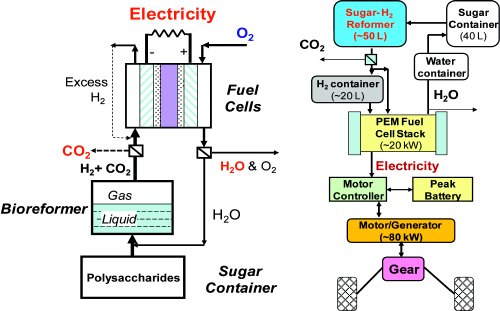
Energy prices have been over-inflated since oil passed the $80 a barrel level, triggering a world-wide rush to develop alternative fuels and energy sources. One of the interesting ideas for new energy is the sugar fuel cell, where cheap sugars from biomass sources would power fuel cells of all sizes for a wide range of applications from hand-held consumer products to utility-scale power backup and load leveling.

Here we suggest an out-of-the-box solution - use of renewable biomass carbohydrates as a high-density hydrogen carrier. This new solution can efficiently address the above challenges for the transportation sector. Here we present the recent advances in cell-free synthetic pathway biotransformation (SyPaB), the roadmap of SyPaB from high-end to low-end applications, and its potential impacts.

A Sweet Solution to the Hydrogen Economy - Sugar as High H Carrier

Cellulosic biomass is the most abundant renewable biological resource (ca. 1 x 10¹¹ tons/year)3. Biomass is produced locally, and is more evenly distributed than are fossil fuels. Each year, the overall chemical energy stored in biomass by terrestrial plants is approximately 6-7 times the total human energy consumption. Also, renewable carbohydrates (e.g., cellulosic materials and starch) are less expensive based on energy content than are other hydrogen carriers, such as hydrocarbons, biodiesel, methanol, ethanol, and ammonia1. The use of a small fraction of low-cost renewable biomass for producing transportation fuels (e.g., cellulosic ethanol and hydrogen) provides benefits to the environment, economy, and national security3.

_Azo
Follow the link to the full article, with illustrations, links, and more detailed explanations and arguments.

On other alternative fuels and energy fronts:

Accelergy is moving ahead with construction of demonstration CBTL (coal and biomass to liquids) plant in Pittsburgh

Australian company Linc Energy is promoting its underground coal gasification and gas to liquids technology in the land down under. In situ underground coal gasification is suitable for difficult to mine coal of even the lowest quality. Syngas to liquids technologies are becoming more economical with better catalysts and process designs.

Offshore and other small-scale gas to liquids (GTL) is getting closer to feasibility, thanks to microchannel architecture reactors.

Powerful members of the US House of Representatives are beginning to push back against President Obama's policies of energy starvation. Besides promoting increase US offshore oil & gas production, congress is likely to promote coal to liquids and increased development of oil shales, heavy oils, and oil sands.

Advanced nations have multi-trillion dollar infrastructures devoted to mainly liquid fuels (and secondarily gaseous fuels). But if sugar fuel cells truly can provide a disruptive fast track technology to multi-scale, decentralised production of electrical power, then solid fuels may join the club. The more the merrier.

If Obama's Nuclear Regulatory Commission ever wakes up and realises that it has an important job to do besides preening before the mirror, nuclear power may begin to fulfill its immense promise as well.

Labels: , , ,

Saturday, April 23, 2011

About Fracking, GTL Offshore, and CTL in West Virginia Hills

GWPF

Modern horizontal drilling combined with fracking, have unleashed untold energy wealth upon a previously unsuspecting world. So, naturally the faux environmental movement -- with a little encouragement from a much-inconvenienced Russian gas industry -- is pulling out the stops to demonise fracking and shale gas / oil. The Luddites are ratcheting up the anti-fracking, anti-energy hysteria almost as high as it will go -- but the anti-energy campaign of the Luddites is based upon the flimsiest of delusion. About fracking:
...the whole anti-fracking movement has its head where the sun doesn’t shine – and here are just ten reasons why.
  1. Hydraulic fracking has been around for 60 years. Developments made by U.S. engineers around 2008-9 have simply made the process much more commercially viable.
  2. Since fracking was introduced in 1949, over 2 million frack treatments have been pumped without a single documented case of treatments polluting a water aquifer.
  3. 90 percent of all gas wells drilled in the United States since 1949 have been fracked.
  4. The depth of most shale gas deposits drilled is between 6,000 and 10,000 feet – water aquifers exist at an average depth of 500 feet.
  5. Claims of ‘migration’ between the shale gas layers and water aquifers due to fracking or for any other reason, are patently absurd as the gas would have to pass through millions of tons of impermeable rock. If the rock was that porous, neither the water nor the gas would have been there in the first place. (As the hard data in fig. 1 from a study of 15,000 frac treatments in the Barnett Shale Field reveals plainly.)
  6. Fracture design engineers go to great lengths to avoid fracture growth of even 100 feet to prevent losing production.
  7. The new eco-horror genre flicks like Josh Fox’s Gasland, create impact by making outrageous claims which include suggesting “569 chemicals” are used in a single “toxic cocktail” frack treatment. The reality is that 99.5 percent of the treatment is water and sand. Much of the remainder is made up of a maximum of 12 or so harmless gelling agents, like Guar gum (used in ice cream making), and chemicals commonly used around the house.
  8. Domestic running water faucets being set alight with a match might wow gullible film audiences, but dissolved methane found in well water may well be biogenic (naturally occurring). As the largest component in natural gas, methane is not even regulated as it is not toxic and escapes naturally like soda bubbles.
  9. Hydraulic fracking procedures are heavily regulated and not, as often claimed by eco-activists, exempt from drinking water and other key regulatory laws.
  10. Concerns about using “excessive water resources” in the process are already being assuaged by new developments, including recycling water. And the U.S. Ground Water Protection Council confirms that drilling with compressed air is becoming increasingly common.
_EnergyTribune Peter Glover
Just when the lefty-Luddites thought that energy starvation was a "done deal," just when peak oil doomers thought we had reached the end game stage, and just when the Russians thought they had Europe over a barrel -- fracking shale oil and gas come along to spoil their little doom and power party.

Such deep disruptions of doom fantasies are much to be welcomed, at any time.

More on the Oxford Catalyst microchannel F-T GTL process being employed by Petrobras offshore in Brasil

West Virginia's Adams Fork Energy is to produce 18,000 barrels a day of premium grade gasoline, from West Virginia coal.

With the unleasing of the massive reserves of shale oil & gas, coal (CTL), and the coming clean and massive production of liquid fuels from heavy oils and oil sands -- the world may be ready to get its "second wind of energy." The world possesses several trillion barrels of oil equivalent in gas, coal, bitumens, methane clathrates, and kerogens. All that is needed is the right technology to turn them into prime liquid fuels.

Labels: , , , ,

Older Posts