Friday, December 24, 2010

Terra to Humans: Merry Christmas w/ Gas, Use It Wisely

Arguably the biggest story in the United States energy scene, and de facto for the rest of the world, has been the development of shale gas. Natural gas production in the United States was flat from about 1995 to 2005, standing at about 2 Tcf per month. But over the last five years, production started going up (see graph) moving to around 2.3 Tcf per month. The entire increase is because of shale gas, contributing at least 17 percent of domestic production. This is remarkable, considering that shale gas accounted for an estimated 2 percent just a few years ago. _EnergyTribune
GeoffreyStyles

The shale gas revolution has hit US and world energy markets like a massive sledge hammer. But the impact of abundant unconventional hydrocarbons has barely registered on the "energy seismic detectors" up until now. Despite the best efforts of carbon hysterics, energy starvationists, and faux environmentalists to put the djinn back in the bottle, Terra's huge and expanding reserves of natural gas can no longer be denied -- and will not be refused.

Geoffrey Styles looks at some interesting aspects of shale gas economics, and explains why airheaded proponents of unreliable wind power are so resentful of shale gas:
Perhaps one reason the impact of cheap natural gas hasn't sunk in yet is that the main market price for gas, the futures price at the Henry Hub in Louisiana, doesn't have much relevance for the average consumer. Residential gas customers don't buy their gas in the million-BTU (MMBTU) lots in which the futures contract is denominated; we buy gas in therms--one tenth of an MMBTU--and by the time we see it on our bills all sorts of handling and distribution fees and mark-ups have been added on. But when you compare the price of traded gas in barrels of oil equivalent (BOE) to the price of West Texas Intermediate crude, the remarkable divergence of the last two years becomes obvious, as shown in the chart above. Between 2000 and 2006 gas and oil tracked each other closely, allowing for the greater seasonal volatility of the former. There were even periods when a barrel-equivalent of gas was worth more than a barrel of oil. Yet while oil and gas prices fell precipitously when the recession and financial crisis burst the various asset bubbles, they have diverged sharply since then, with oil advancing back up to today's $91/bbl and gas settling in to the $20-25/bbl range in which we were accustomed to see oil prices a decade ago. Adjust that for inflation and you're looking at an average natural gas price for 2010 equivalent to $20/bbl in 2000. _GeoffreyStyles

EnergyTribune

In early December, Argentina’s president Cristina Fernandez de Kirchner announced a huge shale gas find that could supply the country’s gas needs for 50 years. A Moroccan delegation has already called upon U.S. shale expertise to help develop its resources. And, speaking at the World Shale Gas Conference in Dallas-Fort Worth in November 2010, Ukraine Government ministers proudly proclaimed their country had “the biggest shale gas deposits in the world”.

Meanwhile, China and India have been quick to spot the game-changing qualities of domestic shale gas development. China’s deposits could exceed 1000 Tcf (Wang and Economides, Paper SPE 133458, 2010.) Last year, China signed the U.S.-China Shale Gas Resource Initiative, the latter already perceiving the U.S. as the world leader in shale gas technology.

That the global energy landscape is switching in favour of gas is also confirmed by developments at the energy majors. In an interview with Fortune magazine, asked about the future strategy of Big Oil, Shell President Marvin Odum stated that by 2012 Shell would be producing more gas than oil. _EnergyTribune
Shale gas has just begun to touch the world's energy balance -- and shale gas is just the beginning of unconventional hydrocarbons.

Carbon hysterics, energy starvationists, and faux environmentalists hate shale oil and other unconventionals for what such reliable energy sources will mean for the Green crusade of lefty-Luddite dieoff.orgiasm. Even T. Boone Pickens has abandoned loony wind power in favour of unconventional gas.

Cross posted to Al Fin

Labels:

Thursday, December 23, 2010

Biomass News

A paperboard packaging company in US Georgia is commencing work to install a 40 MW turbine generator to produce electric power production for in-house use.
The mill, which currently produces about 1,600 tons of paperboard each day, is expected to become fully self-sufficient regarding its electricity and steam generation, and could also export electricity to the grid.

The 40MW generating unit would produce the equivalent power to the supply for about 27,400 homes, the company said. Making use of about 400,000 tons of timber industry residuals, the project would reduce greenhouse gas emissions by 200,000 tons a year by avoiding use of fossil fuels.

The company said about 3.3 million tons a year of wood residuals were currently available in the Macon area. _Brighterenergy

A University of Minnesota professor who has studied biomass energy for 15 years, believes that torrefaction of biomass to be co-fired with coal, may become the largest biomass market in the US.
A production economist in U of M’s extension service, Tiffany has immersed himself in renewable energy process economics, particularly those of running ethanol plants, producing biodiesel and wind energy, and using biomass to generate power.

Throughout his studies, one technology has continued to find its way into the economic equation—torrefaction....Tiffany said that during the torrefaction process, about 30 percent of the feedstock’s mass is driven off, and 10 percent of the Btus. However, the Btus become much more concentrated. “They are 130 percent more per unit of mass at the end, so we drive off the parts that don’t burn,” he said. _Biomassmag
Tiffany will make a presentation on torrefaction of biomass at the Pacific West Biomass Conference in Seattle, 10-12 January 2011.

Specialised biomass crops are being created by companies such as Ceres, Inc.
The industry, still in its infancy, involves growing plants for biomass that are trucked to a conversion facility, where plant wall cellulose is broken down for conversion to glucose sugar and then cellulosic ethanol. Biomass can also be co-fired with coal and wood to produce heat, steam, and electricity at bioenergy refineries.

Existing grain-based ethanol will continue to serve as an important farm-grown fuel in the future; additionally, there are benefits from the high quality distiller’s grain produced in the conversion process, which can be used for livestock feed. Cellulosic conversion is viewed as the next generation of liquid farm fuel technology.

The list of current and potential biomass crops include the grasses switchgrass and miscanthus, plus high biomass sorghum, energycane (high biomass sugarcane), alfalfa, and other crops. These can offer farmers the opportunity to diversify their cropping systems and boost their income stream. _WesternFarmPress
Biomass farmers are just beginning to learn how to best fit biomass crops into their rotations, and how to establish the best markets for their product.

Besides terrestrial biomass crops, a growing number of brackish water and saltwater biomass crops are being developed, to make use of a much larger area of Earth's surface. Such a rapid expansion of growing area for biomass crops outside of traditional food and feed crop areas, should put an end to the nonsensical "food vs. fuels" debate.

Labels:

Canada as Energy Superpower?


Canada Energy 2006

Oil, coal, gas, unconventional hydrocarbons -- you name it, Canada has it. In addition, Canada has rich mineral resources, including uranium. Canada even has a large hydropower resource to call upon to supply between 15% and 20% of its energy. For the next 20 years, at least, Canada will be in a comfortable position in terms of energy economics. Just don't let the carbon hysterics botch it all up.
As Peter Boag, president of the Canadian Petroleum Products Institute, noted recently in his presentation to the Senate standing committee on energy, environment and natural resources that gasoline and diesel -- fossil fuels -- will still be needed and make up the lion's share of how Canadians transport themselves and their goods for the foreseeable future. The same applies to the rest of the world. That's due to simple physics: "They store large amounts of energy in a relatively small space and are therefore ideally suited for transportation use," said Boag in his presentation.

...Even the International Energy Agency, in its recent forecast looking ahead to worldwide energy use 25 years from now, forecasts that even for its most radical carbon replacement plan and most hopeful energy efficiency plans, many of the technologies needed are not yet available and that many others require substantial refinement and cost reductions.

So by 2035, traditional sources of energy will still make up the vast bulk of energy usage -- and this despite the IEA's urging for governments to spend trillions over the next decades on alternative energies and hoped-for technological breakthroughs. _Sun

The US Obama regime has been working behind the scenes to shut off imports of Canadian oil sands to the US -- using the carbon hysteric's rationale. But reality has already over-ruled the Obama regime on more than one occasion, and is likely to do the same on this particular point.
Giant oil sands pipeline in the works

nuclearfaq.ca

Labels: ,

Wednesday, December 22, 2010

LS9 Synthetic Biology Receives Another Round of Funding

LS9 EColi

LS9 has held onto its previous group of investors and added BlackRock, for a $30 million venture funding round.
LS9 uses a one-step fermentation process to convert renewable plant-based materials into a diverse portfolio of fuel and chemical products. The company has successfully operated its pilot plant in South San Francisco, California for more than two years and announced the acquisition of a larger-scale production facility in Okeechobee, Florida in January 2010. In June 2010, LS9 won the Presidential Green Chemistry Challenge Award. _GCC

More on the underlying LS9 approach:
Pushing the frontiers of synthetic biology and industrial biotechnology, LS9 has perfected an elegant 1-step fermentation process that uses patent-pending DesignerMicrobes™ to efficiently convert renewable feedstocks to a portfolio of "drop in compatible" UltraClean™ fuels and sustainable chemicals. LS9's unique technology provides a means to genetically control the structure and function of its fuels and chemicals, enabling a product portfolio that meets the diverse demands of the petroleum economy.

LS9 has developed a new means of efficiently converting fatty acid intermediates into petroleum replacement products via fermentation of renewable sugars. LS9 has also discovered and engineered a new class of enzymes and their associated genes to efficiently convert fatty acids into hydrocarbons. LS9 believes this pathway is the most cost, resource, and energy-efficient way to produce petroleum-replacement products and industrial chemicals. This translates into efficient land and feedstock use and directly addresses tensions between food versus fuel and chemical production. _LS9

As long as one does not expect immediate profits from companies such as LS9, investing in such technology is a rational part of an overall energy portfolio. It is a long-term prospect, like its many well-financed cousins in the advanced biofuels research field.

The underlying science is sound, although problems of conversion to profitable commercial scale may take a decade to solve, and another decade to achieve scaleup. In the meantime, supply and demand questions are likely to drive energy & fuel prices like a whipsaw. But once advanced synthetic fuels achieve profitable scale-up (~20 years... AFE), they are likely to put a price ceiling on crude oil of around $60 a barrel in 2010 USD, according to Al Fin energy analysts.

Labels: ,

Tuesday, December 21, 2010

Austrian Microchannel BTL Plant to be Upgraded to Pilot Plant

GCC

The "microchannel" approach to Fischer-Tropsch BTL developed by the Oxford Catalysts Group and Velocys, will be upgraded from a demonstration plant to a new pilot plant in Gussing, Austria. The same technology can be used in small operations such as offshore oil rigs, for GTL conversion -- to enhance the economic value of natural gas production.
The pilot plant, designed for the small scale distributed production of biofuels via the Fischer-Tropsch (FT) reaction, will be operated jointly by SGCE and Velocys, Inc., the US-based member of the Oxford Catalysts Group.

PDF White Paper on microchannel F-T

The existing demonstration plant—which is jointly operated by the Oxford Catalysts Group and SGCE—incorporates an FT microchannel reactor comprising more than 900 full-length microchannels. This reactor has been performing effectively at Güssing since July 2010. The demonstration plant produces more than 0.75 kg of high quality synthetic FT liquids per liter of catalyst per hour and exhibits productivities 4 to 8 times greater than conventional systems. _GCC
Earlier AFE article providing more links and images

Biomass to liquids (BTL) is an extremely promising technology for remote locations, due to the ability to grow biomass virtually anywhere on land or at sea. Even on lunar or Martian colonies, biomass can be grown for production of chemicals, plastics, and other valuable products.

For larger scale synthetic fuels production on-planet, natural gas to liquids (GTL) and coal to liquids (CTL) is more economically productive than BTL.

Labels: , , ,

Saturday, December 18, 2010

Shale Gas Reserves Grow to Compensate for Obama Energy Starvation

Update 22Dec2010: I intended to link to the Geoffrey Styles article: Natural Gas and the Gulf Hiatus as a part of this article, but was distracted in the middle of writing and forgot to include the link. The information in the Styles article provides important information about the adverse impact of the Obama Gulf Moratorium on US production of both oil and gas.
GCC
The US Energy Information Agency (EIA) is reporting in its Annual Energy Outlook report that shale gas reserves are growing to compensate for losses of offshore gas brought about by Obama's de facto moratorium on new deepwater production in the Gulf.
The technically recoverable unproved shale gas resource is 827 trillion cubic feet (as of 1 January 2009) in the AEO2011 Reference case, 474 trillion cubic feet larger than in the AEO2010 Reference case, reflecting additional information that has become available with more drilling activity in new and existing shale plays. This larger resource leads to about double the shale gas production and more than 20% higher total lower-48 natural gas production in 2035, with lower natural gas prices, than was projected in the AEO2010 Reference case.
Our Reference case projection shows the growing importance of natural gas from domestic shale gas resources in meeting US energy demand and lowering natural gas prices. Energy efficiency improvements and the increased use of renewables are other key factors that moderate the projected growth in energy-related greenhouse gas emissions.
—EIA Administrator Richard Newell
_GCC

This news will be greeted with dismay from lefty-Luddites, faux environmentalists, peak energy doomers, and others who feel ill will toward the US and the US economy. Those who acknowledge and accept the vital role of energy for the well-being of a society, on the other hand, will welcome the growing resource.

The Obama administration has shut down significant US coal production, has shut down most new or planned offshore oil & gas production, is working on stopping the importation of Canadian oil sands, and has plans to limit shale oil & gas production -- or stop it entirely. New safer, cleaner, less expensive nuclear energy reactors are dead in the water under Obama's foot-dragging NRC. Mr. Obama always intended to institute a comprehensive plan of energy starvation over the US economy, but he had not counted on the recent explosion in unconventional energy resources.

The WikiLeaks scandal helped to reveal how deeply the Obama regime is tied up with the carbon hysteria movement -- and how far they are willing to go to force carbon hysteria on the entire world, if possible. But right under their noses, shale gas has come along and thrown their plans off schedule.

Salazar, Holdren, Obama, Boxer, and the other usual suspects have been caught flat-footed by these new energy supplies, and are working extremely hard behind-the-scenes to shut them down by any means or technicality possible. Watch them closely.

Labels: , ,

Friday, December 17, 2010

Abundant Hydrocarbons Buried Underground: Out of Sight Out of Mind

Oil&GasGeology_via_BitToothEnergy

Bit Tooth Energy blog takes a fascinating look at petroleum creation and deposition at various depth, using the Eagle Ford shale play as an example.
As a rough rule of thumb down to 15,000 ft the hydrocarbon is more likely to be oil, (which is thus referred to as the Oil Window) and below that it is more likely to be gas. That is only a rough rule of thumb, and one must remember that over time there has been a lot of uplifting and eroding, so that 15,000 ft isn’t necessarily what it used to be.

And the Eagle Ford shale is a fairly good example of this. If we use the EIA map of the play you can see that in the North, where the reservoir is about 6,000 ft deep the hydrocarbon is oil, while further South, where the deposit is down at around 14,000 ft then the hydrocarbon is dry gas. And in between it is what is known as a wet gas.

...You may note that the condensate from the wells in the wet gas zone have produced around 2.3 million barrels, while there has only been about 1.6 million barrels of crude produced. It is also worth noting that while the natural gas coming from the formation has been twice the equivalent volume of oil, the market for natural gas, at the moment is still down at around $4.6 per kcf, which using the Apache conversion, would give it a price of around $27.60 a barrel of oil equivalent. On the other hand the condensate is a light high quality product, and West Texas Intermediate crude is running at the moment at around $88.30 a barrel. _BitToothEnergy

The Bit Tooth article above talks about petroleum as coming from 500 million years of algal deposition in sediment, and conversion at depth -- heat and pressure -- to petroleum. The deeper the sediment, the more likely to be converted to gas, according to the source.
Now, if you look at the timelines provided above, you should note that photosynthetic organisms have been converting massive quantities of CO2 into organic carbon for over 3 billion years. The graphic below provides the mirror image of that process -- the production of atmospheric O2 juxtaposed by the evolutionary time of origin for various photosynthetic organisms.
Oxygen is a waste product of photosynthesis, and organic carbon is the main product. Rapid production of oxygen should correspond to a rapid production of organic carbon -- which was then buried in sediments. Whether this organic carbon became coal, kerogen, bitumen, petroleum, or other hydrocarbon resource, would depend upon where it ended up in the Earth's crust, or perhaps, mantle.
Recent science suggests that short chain hydrocarbons in the mantle are capable of surviving for significant periods of time at high pressure and temperature, perhaps later to migrate into the crust. These mantle hydrocarbons may have been subducted into the mantle via oceanic crust, or may be generated abiotically within the mantle itself.

The important thing to understand, is that massive quantities of organic carbons have been buried in the Earth for over 3 billion years. They no doubt exist in a wide variety of forms, from minimally altered to partially transformed to fully transformed, etc. Some of this carbon was no doubt oxidised to CO2 in the mantle and released into the atmosphere for recycling. Some of it no doubt seeped into the biosphere and was metabolised by microbes.

It is highly unlikely that humans have even begun to account for most of this missing organic carbon. Most of it will not be economically recoverable in any form. But we will not actually know that until we look for it, and find it.

Labels: , , ,

Biomass to Jet Fuel Using Microbial Lipid Fermentation

GCC

The US military's DARPA has awarded Logos Technology with a $17.5 million phase 2 award to produce jet fuel from biomass, using microbial lipid fermentation.
This contract is to demonstrate an end-to-end Lipid Fermentation Process (LFP) at scale for the commercially viable production, from cellulosic biomass, of Hydrotreated Renewable Jet (HRJ) spec jet fuel—a near term surrogate for JP-8 that can be readily commercialized.

HRJ is produced from renewable oils (lipids) by methods common in petroleum refining. Fatty acids and triglycerides are hydrotreated to remove oxygen, and the resulting paraffinic hydrocarbons are processed to yield a mixture of straight-chain, branched-chain, and cyclic paraffinic hydrocarbons with collective properties that are similar to those of conventional jet fuel.

Oleaginous yeast can produce lipids from the sugars resulting from the pretreatment and hydrolysis of biomass; certain fungi can also produce lipids, either via solid-state fermentation of biomass or from the biomass hydrolyzate.

This primary program effort is to consist of optimized process development and engineering along with regionally specific economic modeling to produce fuel, demonstrate process energy efficiency and support commercialization.

...This phase of the BioJET program requires the delivery of larger quantities of jet fuel with a projected cost of production of JP-8 at commercial scale implementation (50Mgal/yr) at less than $3.00 per gallon. _GCC
Al Fin bio-synthesists believe that the greatest value of current advanced biofuels research is to put a rough ceiling on future prices of hydrocarbon fuels. Peak oil doomsayers claim that liquid fuels will have no price ceilings when "peak oil" truly hits the fan.

But that claim has already been falsified by the fact that shale gas cost per BTU is well less than half the cost of crude oil per BTU. As efficiencies of conversion from gas to liquids improve, we will see the "price ceiling" effect of shale gas begin to affect markets. Something similar will begin to happen in about ten years, as more efficient biomass to liquids processes begin to scale up.

Like everything associated with energy these days, oil futures markets are heavily politicised, and infiltrated by persons whose behaviour is -- shall we say -- somewhat less than ethical. The fluctuations of oil markets are highly profitable to those who know how to put their fingers on the scale in a reasonably surreptitious manner. But the conversion of alternative and unconventional fuels to liquid hydrocarbons: GTL, CTL, BTL, kerogensTL, BitumensTL, etc etc, provides a multiple bypass to the oil commodities markets. Such alternative routes to fuel makes the work of the energy mafias and faux environmentalists much harder -- unless they can use bribed politicians to stop the alternatives and unconventionals.

Cross-posted to Al Fin

Labels: ,

Thursday, December 16, 2010

Energy Bits and Pieces

University of Illinois researchers have altered the genome of Saccharomyces cerevisiae yeast in order for it to more efficiently ferment galactose as well as glucose. This allows for much higher yields of biofuel from the fermentation of highly prolific seaweed.

Researchers at the University of Wisconsin have isolated Saccharomyces cerevisiae strains possessing genes altered to make the yeast more tolerant of higher levels of alcohol. Such yeast will allow fermentation to proceed to higher alcohol concentrations, which can be more efficiently and economically separated from aqueous solution.

Amyris and Cosan are collaborating to produce base oils -- using modified yeasts capable of producing hydrocarbons from plant sugars. These base oils will be used to make high value lubricants for a wide range of industrial machinery and equipment.

Better methods of pyrolysis are being perfected to make profitable use of household plastic waste. Valuable products of such waste pyrolysis include fuels, plastics, lubricants, and char.

Pyrolytic recycling of old automobile tyres is becoming more popular. Valuable oils, gases, fuels, steel, and char products can be sold for a profit, rather than having the tyres buried in landfills or incinerated as waste.

The use of seaweed (and other halophytes) for fuels illustrates a significant expansion of productive surface area of Earth for biofuels production -- without using cropland or competing with food production. The use of waste materials to produce valuable fuels and materials illustrates the conceptual expansion of what is considered useful raw materials for profitable industries.

Labels: ,

Plasma Arc Gasification and Other Unconventional Energies

WasteManagementWorld

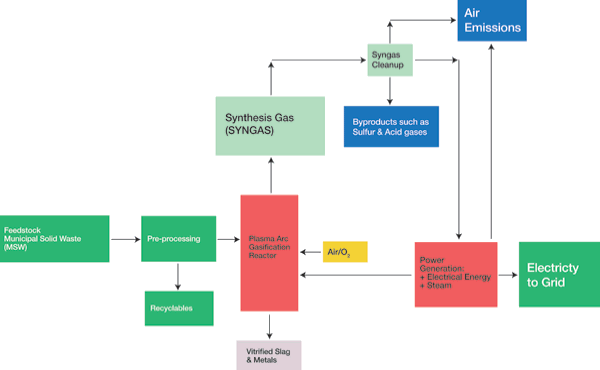
The images here are reproduced from an article in Waste Management World. They illustrate the revenues, efficiencies, and product choices for various methods of incineration and gasification.  The image above is a basic schematic for plasma arc gasification of municipal solid waste for purposes of power generation.
WMW

The graphic above illustrates net energy production of various technologies in kWh per ton and kWh per tonne, of municipal solid waste.
WMW
This graph compares net revenues before taxes for various technologies, illustrating the advantages of gasification technologies.
WMW
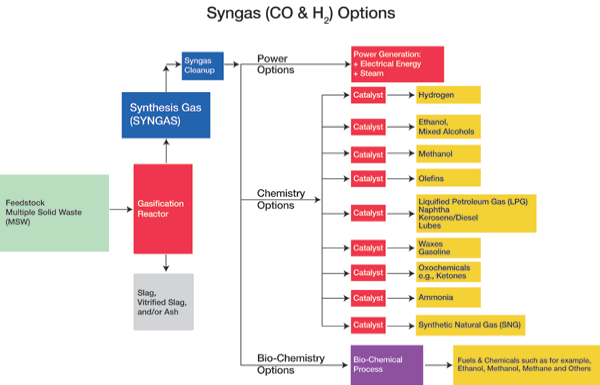
Finally we see the various Syngas options -- power production, chemical production, and bio-chemical production.

It should be noted that plasma arc gasification is shown to be superior to the other technologies shown, in terms of efficiencies and revenues. The end products are likewise far easier to dispose of, with very little if any toxicity compared to waste products of other methods. More at original article.

Despite all of the advantages of plasma arc gasification, loudly vocal lefty-Luddite groups have united in opposing all forms of reliable and abundant energy production -- including arc gasification methods.

It certainly seems as if all faux environmentalists who complain about overpopulation, wail about resource scarcity, and also promote a reduction in human energy use and a reduction in human population -- it seems as if these persons should take the proactive step of self-immolation.

Fortunately, Oynklent Green [OTC:OYNK] has developed just the technology for such as those, which coincidentally enough, consists of a thermochemical approach to the production of fuels and energy. Follow the Oynklent Green label for more information.

Labels: ,

Wednesday, December 15, 2010

"Clean Energy Experts" Waste C$33 Million "Studying IGCC"

Faux environmentalists and so-called "clean energy experts" are happy to take endless amounts of money to study energy solutions. They will not actually help you to solve your energy problems, but they will study your problems for a price, and tell you why they cannot be solved economically.
"It's a very expensive proposition from our perspective," said Dave Butler, executive director of the Canadian Clean Power Coalition, an association of leading electricity producers that has mandate to research, develop and advance commercially viable technologies that lower power plant emissions.

Butler's association, in conjunction with Edmonton,-based Capital Power Corporation, spent C$33 million over the past couple years studying goal gasification technologies.

"With the technologies we've looked at, it's pretty much cost prohibitive," Butler said.

In 2007, Capital Power Corporation proposed developing North America's first IGCC coal gasification and carbon capture plant in Alberta. The company, in partnership with Butler's association, conducted a front-end engineering and design (FEED) study for the proposed Genesee IGCC Project, which wrapped up last spring. _Source
Do you see the problem? The association was not actually looking at IGCC as such, but was rather looking at IGCC when loaded down with unnecessary and wasteful carbon capture. Anyone could tell you without spending C$33 million that carbon capture is a waste of money. But "clean energy experts" have a lot of expenses, and must be funded at high levels.

In reality, coal IGCC without carbon capture is quite clean and economical in comparison with most forms of energy except for NGCC (natural gas combined cycle). Let's look at a couple of US IGCC power generation plants and compare their costs with what a Canadian IGCC plant would cost when saddled with carbon capture.
Tampa Electric Company's Polk Power Plant, located near Mulberry, Florida, was America's first commercial IGCC plant. Completed in 1996 at a cost of roughly $303 million, the plant is capable of generating 313 megawatts of electricity.

...the Wabash River Coal Gasification Repowering Project in West Terre Haute, Indiana, came online in 1994. The full-size commercial IGCC plant cost $417 million and can produce 296 megawatts of electricity.

...Based on the Canadian Clean Power Coalition's research, a 450-megawatt coal gasification plant with carbon capture facilities would cost about $5 billion to build. _Source
A nuclear fission plant producing about 1,000 megawatts of power would cost between $2 billion and $4 billion to build, according to various estimates. So you can see that the IGCC coal power plant without carbon capture is much cheaper than either a nuclear plant or an IGCC plant with carbon capture.

The nuclear plant saves money in operations due to lower fuel costs, however. And if one is soft-headed enough to fall for carbon hysteria, nuclear power is carbon-free without expensive carbon scrubbers or carbon capture.

So if you are thinking about paying "clean energy experts" to study plans for IGCC, save your money. As good "carbon hysterics", they will be looking at the most expensive and irrational possible choices.

You will come out ahead in the long run by educating the public to elect officials who are not carbon hysterics or members of the politicised quasi-religion and pseudo-science of CAGW.

Labels:

Fusion Propulsion, FRC Fusion, Fusion:MSR Fission Co-location

Brian Wang presents a trio of fusion-related articles recently:

Pulsed Field-Reversed Configuration Thrusters

Fusion Plasmoid Space Propulsion

Quasi-Steady Fusion Reactor Based on the Pulsed High Density FRC

From the last link above:
By co-locating a molten salt reactor with FRC QSFRs, a waste mitigating closed nuclear cycle is achieved that is highly proliferation resistant. Only non-fissile material enters the plant in the form of thorium. All fuel for the reactor is produced on-site by the FRC QSFR. Only a relatively small fusion power source is required (~ 7% of the fission reactor output) as it is leveraged by the much larger energy yield from the fissile fuel enriched thorium reactor. The fissile fuel doubling time can be as short as 5 years, and essentially all the thorium can be consumed in fission reactions, thus extending the energy reserves from thorium to several thousand years, limited only by the lithium reserves required for DT fusion. Waste from the thorium cycle is orders of magnitude smaller than that of a current PWR, and decays to background levels in less than 500 years – only slightly longer than that from fusion neutron activation. By using the FRC QSFR to enable a thorium based energy cycle, nuclear power can finally deliver what the current uranium based fission can not: abundant, safe, and clean energy. Most importantly, it can be done in a timeframe to allow fusion to play a role in the effort to move from a carbon based energy economy. _NBF

Brian also points to the Advanced Space Propulsion Workshop by Centauri Dreams, which covered the topics above and more. It would be great if the workshop made videos available of the talks.

Labels: ,

Tuesday, December 14, 2010

Sugar Beets Grow Where Sugar Cane Never Could

...focusing on beet ethanol makes sense for a number of reasons. Green Vision’s figures show that beets produce twice as much ethanol per acre as corn and require about 40 percent less water per gallon of ethanol produced. Using beets instead of corn also sidesteps the controversy associated with using a food product for fuel.

“This is probably the most efficient use for an acre of land for biofuel as there is,” Helgaas said. _CheckBiotech
In the higher latitudes where air temperatures dip far below sugar cane growing levels, sugar beets thrive. Fargo, North Dakota's, Green Vision Group aims to turn sugar beets into fuel, starting small at first -- 3.5 mgy by 2012. Later, they plan to build a dozen more plants at 20 mgy each. That is for one small group in one small US state.
A North Dakota group said Monday it plans to open a test plant that would turn dry land sugar beets into ethanol, with hopes of building a dozen processing facilities throughout the state.

Officials with Fargo-based Green Vision Group said the demonstration facility would produce 3.5 million gallons of ethanol a year using technology developed by an Iowa company. The plant is scheduled to open in 2012.

"I worked at a corn ethanol plant for 28 years. I realized early in the game that corn was not the prefect way to make ethanol," said Rick Whittaker, president of Heartland Renewable Energy of Muscatine, Iowa. "It was clear to us that the best bang for your buck was with beets."

The biofuel would be produced from so-called energy beets, which are different from beets grown for human consumption. Energy beets are genetically bred specifically for the making of renewable fuels. Researchers involved in the project said the beets can produce twice the amount of ethanol as compared to corn.

Unlike corn used for ethanol, energy beets would compete against the petroleum market, not the food market, Whittaker said.

"You won't have the food controversy like you have with corn," he said.

...The process separates sugar from the beets in the form of juice, which is then fermented and distilled into alcohol. The waste material from the fermentation process is then converted into a powder that's used as fuel to help power the plant. The leftover ash could be used as fertilizer.

"This reduces the plant's waste stream to almost nothing," Whittaker said.

Water costs are cheaper than corn processing because energy beets contain 70 percent water, Whittaker said. It would take 1.5 gallons of water to make 1 gallon of ethanol for beets, as opposed to 2.5 gallons of water per gallon of ethanol for corn, he said.

Energy [beets] were grown successfully over the summer at test plots in Carrington, Hannaford, Oakes, Turtle Lake and Williston, said Cole Gustafson, professor of agribusiness at North Dakota State University.

Researchers in Michigan, Pennsylvania and Colorado also are testing energy beets, project officials said.

"There's absolutely no reason this won't work in Iowa," Whittaker said. "We just have to convince them that corn isn't king." _DailyRepublic_via_Biofuelsdigest
Energy beets are also being grown in Maine and New York state. As biomass and bioenergy crops are adapted and modified for a wide range of climates and growing conditions, it helps to remember that nature has been doing this for hundreds of millions of years.

Sugar beets modified to grow on cold saltwater would extend croplands considerably.

Labels: ,

Sunday, December 12, 2010

Cellulose to Sugars Using Engineered Stealth Enzymes

GCC

A new enzyme engineering technology promises to provide abundant, cheap sugars in temperate climates, for conversion to fuels, chemicals, plastics, and feeds. Agrivida Inc. and Syngenta Ventures are collaborating on a plant cell wall engineering technology which promises to provide abundant sugars from biomass. The engineered biomass will come from altered maize, sorghum, miscanthus, switchgrass, and other forms of grass. The enzymes which will hydrolyse cellulose to sugars, will be built into the plants themselves, and only activated under specific, carefully controlled conditions.
In July, Agrivida announced breakthroughs in its development of sugar production from enzyme-expressing crops at the annual BIO industry conference, which followed recent awards from the US Department of Agriculture (USDA) (earlier post) and Advanced Research Projects Agency–Energy (ARPA–E) (earlier post) to further develop its proprietary technology platforms in sorghum and switchgrass.

The results reported at the BIO meeting showed increased cell wall degradation by up to 100% compared to non-engineered plants, while significantly decreasing enzyme loadings, following a mild pretreatment and heat activation. The study presented at the meeting determined that embedding Agrivida’s engineered enzymes in the cell walls of the crops was an effective strategy for improving the biofuels processing characteristics of the plants and dramatically decreasing external enzyme loadings, while still protecting the plants’ development and growth the scientists said. The study compared the appearance, processing characteristics, and other parameters of the intein-modified plants with non-engineered, native plants.

Agrivida transgenic corn stover was demonstrated in this study to have a conversion of more than 60 percent of cellulose to glucose, compared to approximately 30 percent seen with the control plants. Further, the enzyme loadings used with Agrivida’s engineered plants can be reduced well over 50 percent and still provide improved performance relative to the full enzyme loadings on non-engineered plants, thereby significantly lowering external enzyme requirements. Our new data provide additional proof that Agrivida transgenic crops can facilitate cellulose degradation in a way that greatly reduces the need for hydrolytic enzymes and expensive pretreatment processes. This capability suggests that cellulosic ethanol production can be greatly expanded at lower costs and with fewer emissions, chemicals, and other downstream requirements.

—Michael Raab, Ph.D., President of Agrivida
The ability to reduce external enzyme requirements is a critical development that should help enable the growth of the cellulosic biofuels industry, Raab says. In the absence of such technology, the external enzyme production capacity build-out required to meet the US Renewable Fuels Standard would exceed a cost of $5 billion. Agrivida’s plant traits aim to eliminate those enzyme production costs for producers.

In earlier studies, Agrivida had reported that embedding CWD enzymes in plant material during the growth phase enables more efficient processing of biomass by initiating hydrolysis of plant polysaccharides from within the plant. _GCC
The requirement to add costly exogenous enzymes to cellulosic biomass, for conversion to sugars) has driven the cost of cellulosic biofuels out of the realm of profitability for years. Some companies are developing microbes capable of converting cellulose to sugars, others are developing better enzymes or solid-state forms of enzymatic conversion which helps extend the economic life of the enzymes.

The Agrivida approach requires significant genetic modification of the plants themselves, which is apt to run into faux environmental opposition along the way. Still, the economic benefits of being able to grow high yield grass crops in temperate climates -- and being able to achieve a yield of sugar comparable to the finicky water-hog sugar cane -- are significant and motivating goals.

Labels: ,

Saturday, December 11, 2010

Obama's EPA Runs Screaming Over the Cliff With Biomass Carbon Hysteria

RenewableEnergyWorld

It may take years to clear the insanity from the EPA after Obama's tenure is completed. It has gotten so bad that new EPA regulations will treat biomass power generation as equivalent to coal power generation, in terms of CO2 greenhouse gas penalties and taxes.
Although the environmental neutrality of burning biomass as a fuel has long been acknowledged by the EPA, biomass will be treated the same as fossil fuels when new greenhouse gas permitting regulations come into play in the New Year.

The new regulation provides extra incentive to U.S. biomass fuel companies planning to export biomass pellets to the United Kingdom and other European countries where biomass-fueled power production is encouraged by governments.

EnergyBoom reported Monday that high-priced coal is driving the UK to double its electricity generation from biomass in the next two years. According to a spokesperson for the owner of Western Europe's largest coal-fired power plant, switching from coal to biomass is a win for everyone: "It will remove coal from the energy mix and replace it with significant, reliable, cost-effective and dispatchable renewable power."

Power companies such as Duke Energy Corp. (NYSE: DUK) , which is awaiting permitting to use biomass to displace some coal at its coal-fired Buck Steam Station in North Carolina, weigh the economics carefully before adding biomass. Greenhouse gas regulations and permitting would be a strike against using biomass, the company has said.

Another power company, The Southern Company (NYSE: SO), which is considering nuclear, biomass and natural gas to displace coal from several of its generation plants, has said the EPA’s regulation “could kill biomass in its tracks.” _RenewableEnergyWorld
So, let's see: Obama wants to bankrupt coal companies, his EPA wants to shut down shale gas and the importation of Canadian oil sands, his NRC is stonewalling licensing of safe new nuclear fission technologies, and his Interior Department has put most US oil reserves off limit for drilling.

What kind of energy is the Obama administration willing to permit? Importing oil from Venezuela and MENA is acceptable to Obama and his pack. Buying wind and solar equipment from China would be simply lovely. But, you say, wind and solar are not reliable, and buying oil from state sponsors of terror only make the world worse? True, but then no one could accuse the Obama administration of being rational now, could they?

Labels: , ,

Thursday, December 09, 2010

Fighting Political Peak Oil and Resisting Other Carbon Hysteria

The graphic below illustrates what happens when third world bureaucrats and dictators mis-manage a world-class oil field.
Image Source

Mexico's Supreme Court has given PEMEX permission to contract with private hydrocarbon development corporations, in an attempt to clean up the mess that Mexico's government has made of Cantarell and other fine fields. But just as in other oil dictatorships, Mexico's bureaucrats have destroyed a most valuable resource. It will cost dearly to even partially remedy their mistakes. Political peak oil -- from Mexico to Venezuela to Ecuador to Libya to Russia, etc etc.

Meanwhile, new oil and hydrocarbon discoveries are being made around Africa, offshore of Brasil, in Colombia, in Argentina, and elsewhere around the world. The North American technologies applied to unconventional hydrocarbons are certain to set off a tsunami of new hydrocarbons development worldwide.

Arabian nations are planning to develop their unconventional gas reserves -- which will more than double their current reserves. Russia will almost certainly follow the same plan eventually.

Warren Buffet and Bill Gates are taking a close look at coal resources in Wyoming. Coal is another vast hydrocarbon resource which is much underutilised -- particularly in the light of new cleaner technologies which can make good clean use of even the cheapest, lowest-quality coal.

Labels: ,

Another Possible Use for CO2 Produced from CTL and BTL

NewEnergyandFuel
The best use for CO2 was evolved over eons by biological life on Earth. Humans have many uses for CO2 in chemical and beverage plants as well. With a recent concern for the CO2 generated by biomass / fossil fuel use, researchers have been looking at new uses for excess CO2 produced by human activity.

University of Illinois’ scientists Dr. Paul Kenis and graduate student Devin Whipple are developing a number of catalytic conversions of CO2 to useful chemicals. Another team on a similar quest is led by Liviu M. Mirica, PhD, assistant professor of chemistry at Washington University in St. Louis. Turning CO2 into useful products requires a lot of concentrated CO2, a lot of energy, and the proper catalysts. The approaches taken by the two research teams above are are detailed by Brian Westenhaus at the links provided.

It is useful to look at such research, since there is a convergence of sorts developing. First, cheap, reliable, and safe nuclear power is being developed via factory-built small modular fission reactors. These can easily provide the energy needed for the reaction, and can be co-located with a variety of CO2 - producing industrial plants. Second, there is a growing societal interest in recycling waste products -- including CO2. While CO2 is not properly thought of as a "pollutant", it is certainly a waste product of industry and power production. Third, there is a need to develop the vast coal, gas, heavy oil, oil sands, and biomass resources around the world, to supplement the energy needs of emerging nations such as China, India, and California.

The graphic below looks at carbon which might be retrieved from various carbon energy and fuels production processes, using various technologies.
GCC

A detailed study by researchers from China and the US has concluded that Fischer-Tropsch synthetic liquid fuels (FTL) are typically less costly to produce when electricity is generated as a major coproduct than when the plants are designed to produce mainly liquid fuels.

Furthermore, coproduction systems that utilize a co-feed of biomass and coal (CBTL) and incorporate CO2 capture and storage (CCS) in the design offer attractive opportunities for decarbonizing both liquid fuels and power generation simultaneously. Such co-production systems, when considered as power generators, can provide decarbonized electricity at lower costs than is feasible with new stand-alone fossil fuel power plants under a wide range of conditions, according to the study by Liu et al. published in the ACS journal Energy & Fuels. _GCC
If one's goal is to sequester CO2 from carbon (fossil fuels plus biomass) power plants as economically as possible, then Liu et al. may be onto something. Certainly if one had an economic use for the CO2 being sequestered, the entire combined process would provide a better return.

In reality, IGCC + CHP -- integrated gasification combined cycle + combined heat and power -- of coal and biomass, is more economical than IGCC plus carbon sequestration. But as the methods of making use of concentrated CO2 from power plants, cement factories, etc. become more economical, perhaps carbon sequestration will begin to make sense, economically.

The US EPA and Interior Department under President Obama, are full of carbon hysterics. The same is true for other governments of the Anglosphere and governments in the EU. As long as these fools have any influence on industrial and energy policy, carbon sequestration -- as uneconomical as it is on its own -- may well play a part in energy policy. If that is the case, one may as well develop as many technologies as possible to mitigate the economic harm that these idiot policies are certain to bring.

Labels: , , , ,

Wednesday, December 08, 2010

North America as the New Energy Kingdom?

With rising production from shale fields, the U.S. surpassed Russia last year to become the world’s largest supplier of natural gas. Shale now accounts for 10 per cent of the country’s natural gas production – up from 2 per cent in 1990. Chesapeake’s production from its next Texas project, expected by the end of 2012, will by itself supply the energy equivalent of 500,000 barrels of oil a day. _Globe&Mail
We know that Canada is overflowing with hydrocarbons from shale oil to oil sands to coal to natural gas to methane hydrates.... But the US was supposed to be "all tapped out" ever since oil production peaked back around 1970. Is it possible that all of the peak oil and peak energy doomers who foretold the end of US oil & gas may have been a bit premature?
U.S. domestic production for the year will be 140,000 barrels a day higher than last year (which was 410,000 barrels a day higher than 2008). Although the U.S. Energy Information Administration (EIA) says U.S. production will decline next year, who knows?

...As an article last month in The New York Times observed: “Just as it seemed that the world was running on fumes, giant oil fields were discovered off the coasts of Brazil and Africa, and Canadian oil sands projects expanded so fast, they now provide North America with more oil than Saudi Arabia. In addition, the United States has increased domestic oil production for the first time in a generation.” Further still: “Another wave of natural gas drilling has taken off in shale rock fields across the United States, and more shale gas drilling is just beginning in Europe and Asia.”

...For natural gas, the U.S. has the four largest fields in the world: the Haynesville field in Louisiana (with production up by 77 per cent in 2009); the Fayetteville field in Arkansas and the Marcellus field in Pennsylvania (both with production up by 50 per cent); and the Barnett field in Texas and Oklahoma (with production up by double-digit increases). The EIA reports that proven U.S. reserves of natural gas increased last year by 11 per cent to 284 trillion cubic feet – the highest level since 1971.

Beyond shale oil and shale gas, there’s the awesome energy promise of methane hydrates, frozen crystals of water and gas that lie beneath the northern permafrost and beneath oceans floors around the world in quantities that boggle the imagination.

“Assuming 1 per cent recovery,” the U.S. Geological Survey says, “these deposits [in U.S. territory] could meet the natural gas needs of the country (at current rates of consumption) for 100 years.” _Globe&Mail
Gas producers are scurrying to find ways to export gas to cold, hungry customers in Asia and Europe. LNG -- liquified natural gas -- is one approach which is being developed for the export market. GTL -- gas to liquids -- is another approach that is likely to be developed inside the US within the next 10 years. Both approaches will allow for easier entry into the lucrative export markets. The GTL approach will also -- if economical -- allow gas to be converted into liquid fuels at a profit. That should help reduce North American dependency on overseas oil, once developed.

Cross-posted to Al Fin

Labels: ,

Tuesday, December 07, 2010

Looking for Clean, Abundant Energy


Greentechmedia


Greentechmedia
Governments of the western world appear more focused upon shutting down fossil fuels -- out of carbon hysteria -- than in providing their economies and industries with abundant and clean energy supplies. You might think that shale gas is an exception, given the graphics above, but shale gas was a natural evolutionary development of the petroleum industry.

As far as official bureaucracies are concerned, shale gas fell into the laps of the North American energy markets almost like manna from the sky. Governments cannot claim credit for it, nor can any particular research agency, university, or corporate lab. Neither official policy nor planning had anything to do with it. But governments are busily at work attempting to shut shale gas down -- particularly Obama's EPA -- out of vastly inflated faux environmental concerns. Not the attitude of a government that cares about the energy supply of its people and its industries, eh?


NewEnergyandFuel

Brian Westenhaus points to two important viewpoints on energy here and here. The graph from the first source above, demonstrates current dysfunctional energy policies on the left, contrasted with more intelligent policies which might be instituted on the right.

The graphic below from the second source illustrates the connection between a concept called "Energy Intensity Ratio (EIR)" and the state of the economy. When the EIR drops for the dominant energy/fuel sources, economies tend to go into recession. More detail at Brian's blog and at the original source PDF.


NewEnergyandFuel

When energy starvation becomes official government policy, a prolonged recession is virtually certain to come. Investors and venture capitalists will go where energy is not artificially constrained by faulty government policy. Banks and other lendors will be reluctant to lend funds in an environment of anti-energy, anti-market regulations and tax policy.

This is the impasse faced by much of the western world. The shale gas bonanza was totally unplanned by the higher levels of policy and planning. It has come as a disruptive force which threatens an otherwise solidly-constructed plan of energy starvation by the ruling regime. The US Interior Dept and the EPA are united with groups of useful idiots to try to shut down shale gas production -- but government forces must be subtle, and attempt to build a popular movement against shale gas to use as a shield and smokescreen.

Coal supplies are far more vast and easily accessed than popular media and official government sources are willing to admit. And clean coal is a very real possibility, quite within reach. Integrated gasification combined cycle coal plants -- without carbon sequestration -- would place vast resources of coal inside the "clean energy" category.

This makes two abundant sources of potentially clean fossil fuels which will reach at least to the mid 2100s, coal and gas. If you consider advanced fission technologies as implemented in small modular factory-built reactors as a third abundant source of clean energy, the world has three potentially abundant and clean energy sources to see it through the 21st century and beyond.

If you go further and look at microbial energy and fuels, prolific biomass (land and marine) energy and fuels, methane clathrates, enhanced geothermal, orbital solar, and eventually fusion and other advanced approaches from nuclear and particle physics -- and you should be able to see yourself clear to the 26th century at least.

The worst possible thing you could do for the planet is to cut off humanity's ascent to advanced technologies at its current primitive stage. But if current policies of carbon hysteria and energy starvation continue as at present, that is exactly what will happen.

If the faux environmentalists and neo-Luddites have their way, this planet and all of its precious ecosystems will continue to be vulnerable to a massive dieoff event from terrestrial and/or extraterrestrial agencies. Natural climate change -- ice age -- is a far greater threat to species diversity than the minimal climate change due to anthropogenic greenhouse gases. An impact by comet or asteroid has the potential to destroy more life in one fell swoop than all of man's impacts put together -- including a massive nuclear war.

There is no perspective nor wisdom within most of the world's governments -- only hunger for power and graft. It is up to any humans capable of awakening, to make up the deficit.

Addendum: Here is a short list of "useful idiots" on the local level of the US Pacific Northwest, who are vocal in opposing a biomass CHP plant in Port Angeles, WA:
Mania and Toby Thayler, attorney for the seven environmental groups filing the appeal, argued that selling the electricity could overtake the primary use of the mill.

"Obviously they listened and carefully considered their decision," Thayler said.

"I think they are wrong, but they listened carefully."

The environmental groups -- Port Townsend AirWatchers, Olympic Forest Coalition, Olympic Environmental Council, No Biomass Burn of Seattle, the Center for Environmental Law and Policy of Spokane, the World Temperate Rainforest Network and the Cascade Chapter of the Sierra Club -- said the assessment was incomplete. _Source
These easily manipulated but quite vocal fools are willing to oppose whatever they are told to oppose, and loudly. The attorneys among them are sometimes quite well-paid, however. Particularly those in the higher levels of powerful faux environmental - industrial complex political lobbies such as Sierra Club.

Labels:

Saturday, December 04, 2010

Metabolic Engineering -- Second Verse, Same as the First

Update 7Dec2010:Here is an example of a low profile company announcement for VG Energy, a company devoted to the genetic alteration of algae and other plants, for purposes of increasing oil production.

Contrast the subdued nature of the announcement above with the trumpet's blare of Keasling's Science article and high profile press announcement. A large number of private startups are being financed by oil and chemical companies for purposes virtually identical to that of Keasling's program below -- and have been doing so for almost a decade or even longer.

There is no reason to expect quicker progress toward these goals simply because the US federal government is seeking a higher profile for its own research projects.
GCC
The image above provides an overview of the "metabolic engineering" landscape. The end goal of this badly named "new" enterprise is the same goal that has long been pursued by genetic engineers, synthetic biologists, and bio-hackers of all stripes: the hacking of cell function so as to allow new and/or improved cellular functions or production of valued products. More from GCC:
Metabolic engineering is the practice of altering genes and metabolic pathways within a cell or microorganism to increase its production of a specific substance. In the review in Science, Keasling notes that even with the substantial development of tools for metabolic engineering, and that metabolic engineers must weigh many trade-offs in the development of microbial catalysts:

  • cost and availability of starting materials (e.g., carbon substrates);

  • metabolic route and corresponding genes encoding the enzymes in the pathway to produce the desired product;

  • most appropriate microbial host;

  • robust and responsive genetic control system for the desired pathways and chosen host;

  • methods for debugging and debottlenecking the constructed pathway;
  • and
    ways to maximize yields, titers, and productivities
.
Unfortunately, these design decisions cannot be made independently of each other: Genes cannot be expressed, nor will the resulting enzymes function, in every host; products or metabolic intermediates may be toxic to one host but not another host; different hosts have different levels of sophistication of genetic tools available; and processing conditions (e.g., growth, production, product separation and purification) are not compatible with all hosts. Even with these many challenges, metabolic engineering has been successful for many applications, and with continued developments more applications will be possible.

One area where metabolic engineering has a sizable advantage over synthetic organic chemistry is in the production of natural products, particularly active pharmaceutical ingredients (APIs), some of which are too complex to be chemically synthesized and yet have a value that justifies the cost of developing a genetically engineered microorganism. The cost of starting materials is generally a small fraction of their cost, and relatively little starting material is necessary so availability is not an issue. Most APIs fall into three classes of natural products, and many of the biosynthetic pathways for their precursors have been reconstituted in heterologous hosts.
—Jay Keasling

These three classes are: alkaloids; polyketides and nonribosomal peptides (NRPs); and isoprenoids. Keasling notes that bulk chemicals such as solvents and polymer precursors currently are rarely produced from microorganisms, because they can be produced inexpensively from petroleum by chemical catalysis. However, he adds, due to fluctuations in petroleum prices and recognition of dwindling reserves, trade imbalances, and political considerations, “it is now possible to consider production of these inexpensive chemicals from low-cost starting materials such as starch, sucrose, or cellulosic biomass (e.g., agricultural and forest waste, dedicated energy crops, etc.) with a microbial catalyst”. The key to producing bulk chemicals (e.g., polymer precursors) by using metabolically engineered cells will be to produce the exact molecule needed for existing products rather than something “similar but green” that will require extensive product testing before it can be used.

By far the highest-volume (and lowest-margin) application for engineered metabolism is the production of transportation fuels...Recent advances in metabolic pathway and protein engineering have made it possible to engineer microorganisms to produce hydrocarbons with properties similar or identical to those of petroleum-derived fuels and thus compatible with our existing transportation infrastructure. Linear hydrocarbons (alkanes, alkenes, and esters) typical of diesel and jet fuel can be produced by way of the fatty acid biosynthetic pathway. For diesel in cold weather and jet fuel at high altitudes, branches in the chain are beneficial—regularly branched and cyclic hydrocarbons of different sizes with diverse structural and chemical properties can be produced via the isoprenoid biosynthetic pathway. Both the fatty acid–derived and the isoprenoid-derived fuels diffuse (or are pumped) out of the engineered cells and phase separate in the fermentation, making purification simple and reducing fuel cost.

Although the pathways described above produce a wide range of fuel-like molecules, there are many other molecules that one might want to produce, such as short, highly branched hydrocarbons (e.g., 2,2,4-trimethyl pentane or isooctane) that would be excellent substitutes for petroleum-derived gasoline. Additionally, most petroleum fuels are mixtures of large numbers of components that together create the many important properties of the fuels. It should be possible to engineer single microbes or microbial consortia to produce a mixture of fuels from one of the biosynthetic pathways or from multiple biosynthetic pathways. Indeed, some enzymes produce mixtures of products from a single precursor—maybe these enzymes could be tuned to produce a fuel mixture ideal for a particular engine type or climate.

To make these new fuels economically viable, we must tap into inexpensive carbon sources (namely, sugars from cellulosic biomass). Given the variety of sugars in cellulosic biomass, the fuel producer must be able to consume both five- and six-carbon sugars. Because many yeasts do not consume five-carbon sugars, recent developments in engineering yeast to catabolize these sugars will make production of these fuels more economically viable. Engineering fuel-producing microorganisms to secrete cellulases and hemicellulases to depolymerize these sugar polymers into sugars before uptake and conversion into fuels has the potential to substantially reduce the cost of producing the fuel.

—Jay Keasling

In the paper, Keasling discusses the roadblocks that stand in the way of a future in which microorganisms and molecules can be tailor-made through metabolic engineering, including the need for debugging routines that can find and fix errors in engineered cells. However, he is convinced these roadblocks can and will be overcome. _GCC

There is nothing wrong with what Keasling aims to accomplish, and I wish him good fortune in his courting of ever more tax-funded grants for his research. The fact that he uses the poorly chosen phrase, "metabolic engineering," to describe his approach, suggests that he may not be as independent a thinker as the enterprise will ultimately demand, however. Some revolutionary tasks require more than a good administrator and team player.

No matter. The payoff at the end of this research rainbow is large enough to attract the full spectrum of bio-hackers. Even if the governments of the world waste hundreds of billions of $US financing dead-end groupthink approaches, someone is bound to reach the pot of gold eventually.

Labels:

Don't Worry About Peak Cheese: Microbes Multiply Exponentially

FastCompany
Environmental writer Ariel Schwartz worries in a Fast Company article that we may be in for "Peak Cheese." She is worried that if lactococcus lactis bacteria are modified to produce biofuels, that a shortage of cheese may be forthcoming.
Lactococcus lactis is a hard-working bug. Designated as the state microbe of Wisconsin, Lactococcus is used in the production of buttermilk, cheese, and yogurt. And according to researchers from Concordia University, the microbe could help turn plant matter into biofuels.

So should we gear up for a cheese shortage, considering how ethanol subsidies diverted corn crops and raised global food prices? _FastCompany
Later Ariel hastens to assure us that we don't need to worry about a cheese shortage, because "other bacteria could be used for the same fuel producing purpose." What Ariel should know -- but clearly doesn't -- when writing this type of piece, is that bacteria multiply exponentially. As long as these bacteria have milk, they will multiply fast enough to make any amount of cheese one may want. Ask a beer-maker about a shortage of yeast, due to ethanol biofuels. Prepare to be laughed at.

Environmentalists are "concerned" about any sort of energy which may be reliable, safe, and abundant. Faux environmentalists protest against biomass gasification and pyrolysis, against all forms of nuclear energy, against hydroelectric power, against biofuels, and naturally they protest against all forms of hydrocarbons, such as shale gas, crude oil, coal, and oil sands.

Ariel Schwartz, like all good environmentalists and Luddites, believes that if more of one product is made using a resource (lactococcus), that there will necessarily be less of other products which are made using the same resource. Zero sum thinking. The dangers of just a little knowledge, but no perspective. You see the same thing in religions of peak oil, carbon hysteria, dieoff.orgies, and the rest of faux environmentalism.

Microbial energy and fuels change the traditional rules of the game, but that is not what this is all about. Lefty-Luddite greens are determined that there be shortages, regardless of the underlying reality. If necessary, they will contrive shortages out of whole cloth, and declare them inevitable and beyond correction.

More on how the lactococcus may eventually be able to construct biofuels:
New research from Concordia University shows that bacterium can be engineered to transform plant material into biofuels or other chemicals.

Concordia biology professor Vincent Martin and student Andrew Wieczorek demonstrated how structural or scaffolding proteins on the surface of the bacteria can be engineered in Lactococcus lactis towards the breakdown of plant material.

"This is the first study to show how the scaffolding proteins, can be secreted and localized to the cell surface of Lactococcus," said Martin.

"Exporting these proteins and localizing them to the outside of the cell is a huge milestone. This can enhance the efficiency of any bioprocesses or the breakdown of organic materials."

What's promising about this research, he stresses, is how the scaffolding proteins of Lactococcus lactis appear to bond with multiple compounds.

"Our next step will be to engineer larger more complex scaffolds that can encourage other bio-processes that can eventually enhance the yield of fuels in a manner that is commercially viable."

The study appears in the journal Microbial Cell Factories. (ANI) _Sify

Labels:

Friday, December 03, 2010

Why Do Greens Hate and Fear Abundant Energy?

New Republic recently admitted that, "Utopian environmentalism...is a form of escapism and disengagement from reality." The extremists scoff at science and would apparently prefer scarcity so that bureaucratic rationing will enforce a change in American lifestyles.

Instead of producing more of the cheap, abundant energy that fueled America's dynamic growth, the extremists who support and surround Obama dream of drastically cutting American consumption. _ReasonMag
Powerful green (and Luddite) lobbies believe that a source of clean and abundant energy would be an unmitigated disaster to their cause (and their livelihood). That is one reason that the Obama administration is trying so hard to bankrupt coal before clean technologies can gain a foodhold, and to prohibit shale gas and oil sands through backdoor faux environmental regulations. Abundant, clean energy would be a boon to the private sector of the economy and to economic growth. Greens and Luddites hate nothing more than a prosperous, growing private sector.

Geoffrey Styles confronted the energy starvationists on a recent webinar, where the fanatical zeal of energy starvationists and dieoff.orgiasts was on full display.
Yesterday I participated in a webinar on The Energy Collective examining the sustainability aspects of the shale gas revolution. The online audience asked good, probing questions, and if there was a theme to them, it seemed to be that somehow the sudden abundance of natural gas resulting from a novel combination of shale-exploitation technologies--as well as the technologies themselves--must at a minimum be considered a mixed blessing, if not actually too bitter a pill to swallow, because of its perceived shortcomings and the potential threat it poses to other, favored energy technologies.

The biggest uncertainties associated with shale gas don't concern the size of the resource or our ability to extract it safely, but whether we will decide to allow this to be done on a scale that would make a meaningful difference in our energy and emissions balances, or under such tight restrictions that we will forgo its game-changing potential. Like anything, shale gas drilling and fracking must be done responsibly, in accordance with state and local regulations and to industry standards that are constantly improving. Post-Deepwater Horizon, that's a much tougher sell, but it doesn't make it any less important. Shale gas isn't perfect energy, not because of any unique imperfections, but because there is no perfect energy source. It requires mature, reasonable assessments of its risks that don't assume that there is. _GeoffreyStyles
Greens and Luddites want nothing more than to starve the developed nations down to a much smaller size. Their motives are mixed, being based on both political biases and faux environmental premises. The end result -- if Salazar, Holdren, Obama, Boxer, etc. are allowed to succeed -- is an industrial collapse in the west due to "voluntary" energy starvation.

The rest of the world will survive in better condition, because China, Russia, India, Brazil, and other nations are not so foolish as to destroy their own nations' industrial and commercial capacity via energy starvation. Unfortunately, the EU and the Anglosphere may be too invested in carbon hysteria and faux environmentalism to reverse course before running aground on its own idiocy.

More 9Dec2010: Amory Lovins:"If you ask me, it’d be a little short of disastrous for us to discover a source of clean, cheap, abundant energy because of what we would do with it. " From Mother Earth News interview. H/T Pushback and Truth about Energy.

Labels: ,

Thursday, December 02, 2010

Religious Cults and Peak Oil: Contriving Doom

Unless we believe, preposterously, that human inventiveness and adaptability will cease the year the world reaches the peak annual output of
conventional crude oil, we should see that milestone (whenever it comes) as a challenging opportunity rather than as a reason for cult-like worries and paralyzing concerns. _Vaclav Smil "Peak Oil a Catastrophic Cult" 2006
Humans have invented all types of religions, from the Church of Satan to the Church of Holy Rollers to the Church of Global Conquest and Jihad. There is a religion for all tastes, but an uncommon number of religions contain the seeds of apocalypse and catastrophic doom.
Hubbert himself put the peak of global oil extraction between 1993 and 2000. In 1977 the Workshop on Alternative Energy Strategies forecast the global oil peak as early as 1990 and most likely between 1994 and 1997. In 1979 the U.S. Central Intelligence Agency believed that global output must fall within a decade. In the same year British Petroleum, the world’s second largest oil company, predicted the world production peak in 1985 and the total output in the year 2000 nearly 25 percent below that maximum. In reality, global oil output in the year 2000 was nearly 25 percent above the 1985 level! Some of the latest peak-oil proponents have already seen their forecasts fail:
Campbell’s first peak was to be in 1989, Ivanhoe’s peak was in 2000, Deffeyes had it in 2003 (and now, ridiculously, on Thanksgiving 2005). But they would argue that this makes no difference as that inevitable event will take place within months or years.Moreover, they claim that matters are now entirely different. _Vaclav Smil
The dates may change, but the dogma stays the same. Every jump in oil futures ratchets their faith upward. Every drop in price is a pitfall for the unwary.

Religions that are based upon doom should be careful about predicting dates. All of the prophets of peak oil and resource scarcity who have been so foolish as to set dates, have made themselves fools. As long as the doom is "out there" in a nebulous cloud of uncertainty, the prophet is safe to collect his alms from the faithful without anxiety of being found out as a fraud.

We are due for a number of economic shocks and collapses within the not-so-distant future. That is a safe prediction, judging from current trends in debt and demography for the developed world. Some developed nations which now exist may fail to exist in ten years time. Also a safe bet, when considering the current non-existence of Czechoslovakia, the USSR, East Germany, South Vietnam, etc.

Change is inevitable. Try to invest for a range of possible future changes which are either likely or somewhat probable. Otherwise you will have spent too much of your life amusing yourself in the circular jerkular world of mutually reinforced doom cult.

Labels:

Newer Posts Older Posts