Sunday, August 21, 2011

Obama's Energy Starvation Agenda: Still Killing Jobs

... the most activist Department of the Interior in our nation's history is trying to change the rules and seize from Exxon Mobil one of the largest oil finds ever in the Gulf of Mexico. I thought that we were a better country than that. The Department of the Interior under the Obama administration has cost this country hundreds of thousands of jobs with their regulatory overreach. Not only has their ban on offshore drilling cost us thousands of jobs, it now appears that they are trying to take back leases from Exxon Mobil on a never before used technicality that will steal billions of dollars of profits from this US corporation that has acted in good faith. _FXStreet
Mr. Obama's agenda of national energy starvation continues to generate an economic recession without end. The Obama regime's relentless attacks against coal, oil sands, shale gas and oil, offshore oil, nuclear, oil shale kerogens, and every conceivable form of energy which is reliable and affordable are helping to destroy the US economy, bit by bit.

The ongoing battle between the Obama - Salazar US Department of the Interior, and Exxon Mobile, over billions of barrels of oil in the Gulf of Mexico Julia field, is a prime example:
ExxonMobil, and its Norwegian partner Statoil made the biggest discovery of all — a field worth a billion barrels of oil — 7,000 feet below sea level in its "Julia" field in 2007.

Exxon tried to keep its discovery secret to keep marauders away. Sadly, the pirates in this instance are U.S. regulators — and their aim is to stop them.

That's right: Instead of marvel at the continuing treasures of the New World, or hail the human ingenuity that made retrieval of so much oil possible, or simply quantify how this discovery will boost U.S. energy security, Interior Department bureaucrats moved instead to snatch Exxon's permits and shut the whole thing down.

...in the Obama era, which demonizes oil production in American waters by American companies, the bureaucrats came up with this permit technicality to effectively expropriate the entire operation.

Exxon is now fighting the permit action in a federal court in Lake Charles, La., calling it "arbitrary," "capricious" and "an abuse of law." It's also a textbook case of the anti-business climate fostered by the Obama administration which should be bending over backward to help Exxon create jobs and profits. _IBD
Obama should be helping Exxon to create new, lucrative US jobs, to help boost the depressed Gulf of Mexico and national economies. Instead, the regime is pursuing -- energy starvation.

Exxon has been keeping this huge oil find a secret, and is only coming out in the open due to the need to sue the Obama regime in court, in order to maintain its right to develop the Julia field.
... the fact that Exxon had made perhaps the largest discovery ever in the Gulf, and one of the largest in the company’s century-long history, wasn’t revealed until it sued the Interior Department in a Lake Charles, La., federal court last week over leases for the oil.

The find was made in 2007, and Exxon and Statoil did disclose it in January 2008, calling it significant. But the possibility of one billion barrels wasn’t spelled out.

... Exxon had kept mum on two 2009 and 2010 discoveries in the Hadrian prospect until it could resume drilling in the area after the end of a months-long exploration moratorium. Last June, after it found a third prospect that confirmed the area contained 700 million barrels of recoverable oil and gas, it announced the finds with great fanfare.

But Exxon’s reluctance to talk openly about the huge 2007 find, known as the Julia field, was also a result of circumstances. The oilthat Exxon found there is in a deeply buried layer of rock known as the Lower Tertiary, which is far from shore and requires large investments in pipelines and remote platforms. So Exxon may not have known for a while how much oil it could get out of the ground, or whether it had the technology to do so, say analysts who have talked with the company _GCaptain
The Julia field likely holds the potential to produce far more than 1 billion barrels, due to the conservative nature of oil geologists when quantifying reserves, and due to the "long tail" phenomenon of oil field production over time.

There are undoubtedly many more "billion barrel fields" sitting around, waiting to be found by competent, ambitious, and "hungry" oil explorers and prospectors. Some of them will be far offshore, such as Julia. Others will be in shallower waters or on land, but perhaps lying deeper beneath the surface.

Over the next 20 years, proven global oil reserves are likely to continue growing. Most of this growth in proved reserves will come from improved drilling and recovery technologies, in previously discovered fields. But as oil exploration technologies continue to develop and improve, expect large new oil field discovery to ramp up once again.

Labels: , , , ,

Saturday, August 20, 2011

Process Heat from Gas Cooled Nuclear Reactors Changes Everything

With plentiful process heat provided at temperatures between 700 C and 950 C, a person could kill peak oil and have plenty of energy left to power industry and a broad spectrum of industrial processes.   Specifically, one could:
  1. Unlock the trillions of barrels oil equivalent in oil sands (PDF)
  2. Unlock the trillions of barrels oil equivalent in coal to liquids and gas to liquids (PDF)
  3. Unlock the trillions of barrels oil equivalent in shale oil kerogens 
  4. Provide abundant industrial process heat for production of fertilisers, refining fuels, making plastics, etc 
  5. Split CO2 into CO to use as a hydrogen carrier 
  6. Overturn conventional fears of EROEI and Peak Oil 
Those things, and many more, will be accomplished by next generation gas-cooled high temperature nuclear reactors. Helium gas coolant will run gas turbine generators at high temperatures, which provides electrical power at higher efficiencies than older steam cycle generation systems. And as mentioned above, the higher temperature process heat will find a wide range of practical uses in industrial processes and energy production.

Conventional fears about EROEI and peak oil will be overturned since the energy used to produce hydrocarbon fuels, fertilisers, plastics, and other products of industry and energy, will come from the high temperature heat effluent of nuclear reactions -- of which there is no conceivable near term shortage.

These promising prospects are all vulnerable to political misbehaviour, stupidity, and incompetence. The forces of faux environmentalist lefty-Luddism are strong in governments of the developed world. Energy starvation and carbon hysteria are powerful influences among governmental and inter-governmental policymakers. If industry and commerce are starved of energy -- whether by political design or by political incompetence -- continued economic decline is likely.

Choose wisely at the ballot box.

Adapted from an earlier article on Al Fin, The Next Level, and cross-posted to Al Fin

Labels: , , , ,

Friday, August 19, 2011

Biofuels Infrastructure: Berkeley's New Lab for Demonstration of Advanced Biomass to Biofuels Technologies and Processes

When it comes to the best way of making advanced biofuels, scientists, engineers, and industrialists are still working their way up the learning curve. The entire enterprise may have received a big boost recently, when Lawrence Berkely National Labs opened its shiny new Advanced Biofuels Process Demonstration Unit (ABPDU). The ABPDU will let researchers try a large number of different approaches to making advanced biofuels from biomass -- and at a large enough scale to test the fuels in different engines and powerplants.
Berkeley Lab’s ABPDU will feature pre-treatment of biomass capabilities and bioreactors for the production of microbial or fungal enzymes that can break down biomass into fermentable sugars. The facility will also have substantial capabilities for fermentation or further conversion of sugars into advanced biofuels, along with the capacity to purify these fuels.

...Jay Keasling, Berkeley Lab’s Associate Director for Biosciences, noted that the design capacity of the ABPDU is 45-to-90 kilograms/day for biomass pretreatment and 11-to-20 liters per day for biofuels production. These quantities are sufficient for engine testing.
Scaling the production of advanced biofuels from liter quantities to tens of liters can be a huge challenge. The ABPDU will help us meet that challenge.
—Jay Keasling
Major use of the ABPDU is expected to be made by researchers with DOE’s three Bioenergy Research Centers (BRCs). _GCC

The East Bay area is rapidly becoming a highly active center for advanced biomass to fuels and biomass to chemicals development and production. It is becoming a "Cellulose Valley" of sorts, to compete with Silicon Valley located to the southwest across the bay.

The revolutionary potential of biomass is vastly underestimated on a daily basis by mainstream energy and industrial analysts. That is how it usually works with incrementally disruptive technologies which hide in plain site.

Labels:

Thursday, August 18, 2011

Advanced Biomass Pyrolysis vs. Advanced Bacterial Fermentation

GCC
Biomass to liquid fuels (BTL) conversions will assume increasing importance as the technologies achieve greater yields and economies. Both thermochemical and fermentation approaches are capable of producing high quality substitute fuels and chemical feedstocks. And both technological approaches are receiving a lot of attention as the race for substitute fuels heats up.

UCSB researchers have developed an advanced pyrolytic method of biomass to fuels conversion, using methanol as a super-critical reaction medium.
Researchers at the University of California, Santa Barbara (UCSB) have developed a one-pot process for the catalytic conversions of wood and cellulosic solids to liquid and gaseous products in a reactor operating at 300–320 °C and 160-220 bar. Little or no char is formed during this process.

The reaction medium is supercritical methanol (sc-MeOH) and the catalyst—a copper-doped porous metal oxide—is composed of earth-abundant materials, they report in a paper published in the Journal of the American Chemical Society. The major liquid product is a mixture of C2–C6 aliphatic alcohols and methylated derivatives thereof that are, in principle, suitable for applications as liquid fuels.

There have been two types of approaches conventionally considered for the conversion of woody biomass to liquid fuels, Matson et al. note: (a) acid pretreatment and separation followed by fermentation or liquid phase processing, or (b) high temperature conversion such as gasification or pyrolysis to bio-oils. Each of these process has problems related to their efficiency. _GCC
Meanwhile, dozens of research centers around the world are tweaking the genomes of microbes in the attempt to create self-reproducing factories for the production of high value chemicals and fuels from cheap biomass feedstock.
A new microbe engineering trick could potentially make butanol, a promising biofuel, so cheaply that it could compete with ethanol. By tapping into a highly efficient metabolic pathway, scientists at Rice University engineered E. coli to convert sugars to butanol 10 times more efficiently than any other organism.

...Cobalt Biofuels, a biobutanol startup based in Mountainview, California, uses Clostridium bacteria to break down plant matter and convert the resulting sugars into a mix of butanol, acetone, and ethanol. Gevo, a company based in Englewood, Colorado is working with E. coli that are altered to divert some of their metabolites, which would otherwise be involved in synthesizing amino acids, toward alcohol production. And Butamax, a joint venture between Dupont and BP, is using genetically modified yeast.

...Gonzalez and his colleagues [Rice U.] outlined their new approach in a paper published online in the journal Nature. The researchers tapped into a pathway that microbes use to break down fatty acids, which are hydrocarbon molecules, to generate energy. They modified about a dozen genes in E. coli to reverse this beta-oxidation pathway so that the microbes build fatty acids.

The method is more efficient than others because it adds two carbon atoms at a time, rather than one, to the hydrocarbon molecules being formed. "What makes it really efficient is that the mechanism by which those two carbon atoms are added to the chain doesn't require [energy]," Gonzalez says.

By selectively manipulating genes, the researchers can program the microbes to synthesize many different fuels and chemicals. In addition to butanol, the bacteria can produce various useful fatty acids that existing processes derive from plant and animal oils. _TechnologyReview

Microbial fermentation produces chemicals and fuels at lower temperatures, saving energy. But living organisms are somewhat fragile compared to inorganic catalysts and methods. None of the approaches are ready to compete head to head with the petroleum industry just yet. But things are looking very promising for breakthroughs within the next 5 to 10 years in thermochemical fuels, and the next 10 to 15 years for advanced microbial fermentation, according to Al Fin analysts.

Labels: ,

Wednesday, August 17, 2011

Can Oil Production in the Americas be Boosted by 16 mmbd?

By the 2020s, the capital of energy will likely have shifted back to the Western Hemisphere, where it was prior to the ascendancy of Middle Eastern megasuppliers such as Saudi Arabia and Kuwait in the 1960s. The reasons for this shift are partly technological and partly political. Geologists have long known that the Americas are home to plentiful hydrocarbons trapped in hard-to-reach offshore deposits, on-land shale rock, oil sands, and heavy oil formations. The U.S. endowment of unconventional oil is more than 2 trillion barrels, with another 2.4 trillion in Canada and 2 trillion-plus in South America -- compared with conventional Middle Eastern and North African oil resources of 1.2 trillion. The problem was always how to unlock them economically.

But since the early 2000s, the energy industry has largely solved that problem. With the help of horizontal drilling and other innovations, shale gas production in the United States has skyrocketed from virtually nothing to 15 to 20 percent of the U.S. natural gas supply in less than a decade. By 2040, it could account for more than half of it. _FP
FP
Brian Wang links to a story in Foreign Policy which suggests that oil production in the Americas could be boosted by up to 16 million barrels per day! Such a large daily production boost would involve multiple sources, including shale oils, heavy oils, oil sands, oil shale kerogens, and offshore wells in the Gulf of Mexico and off of the Brazilian coast. Examples:
...analysts are predicting production of as much as 1.5 million barrels a day in the next few years from resources beneath the Great Plains and Texas alone...

...Brazil is believed to have the capacity to pump 2 million barrels a day from "pre-salt" deepwater resources, deposits of crude found more than a mile below the surface of the Atlantic Ocean that until the last couple of years were technologically inaccessible. Similar gains are to be had in Canadian oil sands, where petroleum is extracted from tarry sediment in open pits. And production of perhaps 3 million to 7 million barrels a day more is possible if U.S. in situ heavy oil, or kerogen, can be produced commercially... _FP

US President Obama's ongoing de facto drilling moratorium in the Gulf of Mexico, US Arctic, etc. is costing the US roughly one quarter of a million jobs or more, and a huge amount of daily oil production.

Petrobras is showing strong profits, and has ambitious plans for offshore production.

Energy companies are rushing to Ohio to develop large shale oil deposits

Texas is riding high on new oil discoveries and technologies

Development of the huge bitumen and heavy oil deposits in Canada and Venezuela, and oil shale kerogens in the US, will be a challenge. But if the market demand for liquid hydrocarbons expands as has been predicted, new technologies to develop these resources in an environmentally responsible manner will be developed.

Labels: ,

Oxford's Smith School of Enterprise and Environment Looks at Algae

Algae-derived biodiesel could significantly reduce greenhouse gas (GHG) emissions and deliver a high financial return, whilst also providing a sustainable and realistic alternative to conventional oil according to new analysis from the Smith School of Enterprise and Environment.

Microalgae can grow in waste water or sea water, and therefore does not have the land use and food security impacts of other biofuels. _Smith School _via_GCC

GCC

If algae-derived biodiesel were to replace the annual global production of 1.1bn tons of conventional diesel, a land mass of 57.3 million hectares would be required. This compares highly favourable to other biofuels.

The production process is the current barrier to large scale production. It is currently 2.5 times as energy intensive as conventional diesel, which restricts the current financial and environmental feasibility of algae production.

Investment in genetic and metabolic engineering will optimise the economics of producing microalgae, which, coupled with the decarbonisation of the production chain, will realise the inherent environmental advantages of GHG emissions reduction. _SmithSchool

Article abstract

The authors recommend various economic uses for co-products of algal oil production, such as using the residual oilcake to produce process heat and power, and the glycerol byproduct as animal feed. Even in the best case, however, using algae as an oil source for biodiesel production is not nearly competitive with production of diesel from conventional sources. And with the growth in gas-to-liquids technologies and coal-to-liquids technologies, algal biodiesel will find it hard to compete in the near to intermediate term.

If algae is used as a biomass crop, however, rather than an oil source, any of the thermochemical or fermentation technologies for biomass-to-liquids conversion would work quite well with algal biomass. Even anaerobic production of methane could utilise prolific algal biomass -- although Al Fin energy analysts are not recommending anaerobic digestion as a primary energy production approach, given the current low prices for methane. Anaerobic digestion for purposes of waste disposal, with methane as a useful by - product, might be economical for specific commercial and agricultural entities.

The bottom line: Most algal analysts are still looking at algae as an oil crop, when it will likely take between 10 - 15 years before algae can compete with other sources of liquid hydrocarbons on that basis. But if algae is looked at as a prolific biomass crop -- which can be grown in wastewater, saltwater, brackish water, etc. over 80% of the world's surface (including oceans) -- it should be possible to work up some proposals for nearer-term money making projects at small and medium scales.

The bioenergy infrastructure is still in its nascent stages. Over the next 20 years, this infrastructure is likely to grow impressively, along with market conditions which are likely to become more favourable to non geological approaches to energy production.

Labels: ,

Tuesday, August 16, 2011

Nuclear Fusion On a Scale People Can Appreciate

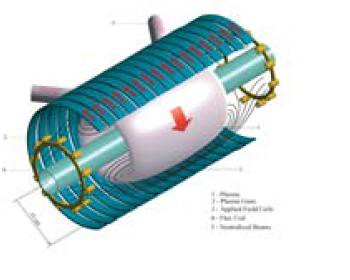
Small scale nuclear fusion startups are approaching the problem of fusion energy from several different directions. This glorious lack of consensus allows human ingenuity to test many promising technologies at a relatively low cost. New Scientist offers a small look at 3 small fusion startups (free registration is required to read the article at NS):
The Redmond device, dubbed the Fusion Engine, is the brainchild of a company called Helion Energy, and relies on a very different method of establishing and confining plasmas known as a field-reversed configuration. Discovered at the US Naval Research Laboratory in Washington DC in 1960, this process involves accelerating two small, compact balls of plasma into one another at a speed of hundreds of kilometres a second. The conditions created by the collision should, in theory, be sufficient to force the nuclei together, heat them and ignite fusion.

...In a peer-reviewed paper published in April this year, Helion researchers show how they used the technique to smash two plasmas together and achieve a temperature of 25 million degrees. That's still well below what is needed to ignite fusion, but the team also published calculations showing that ignition - and even break-even - should be possible in a device just three times the size of their prototype (Nuclear Fusion, vol 51, p 053008).

...Also pursuing the dream is the Canadian firm General Fusion based in Burnaby, British Columbia, using a method called magnetised plasma fusion. This set-up also emerged from the US Naval Research Laboratory, this time in the late 1970s. It involves igniting fusion in a plasma violently compressed within a cavity created in a spinning sphere of liquid metal.

...Tri Alpha Energy, a secretive California-based company, is believed to have raised $90 million for its variant of the field-reversed technique; among its investors is Microsoft co-founder Paul Allen. In a rare public communication a year ago, Tri Alpha researchers showed how they had collided two plasma balls at a temperature over 5 million degrees and held them together for up to 2 milliseconds (Physical Review Letters, vol 105, p 045003). Tri Alpha says it will produce a working commercial reactor some time between 2015 and 2020 - possibly before ITER fires up for the first time.... _Much more information and background at NS


Brian Wang also takes a look at the NS article

Special Encore:
A Gallery of Small Fusion Startups

Bussard IEC Fusion

Bussard inertial electrostatic confinement fusion (EMC2 Fusion) involves an electrostatic plasma confinement to achieve fusion. The history and development of the concept is explained in a video reached via the link above. The Bussard IEC has been financed almost entirely by the US Navy. EMC2 is based near Santa Fe, New Mexico.
Dense Plasma Focus Fusion

Lawrenceville Plasma Physics is based in New Jersey. The dense plasma focus approach uses a special pulsing "spark plug" to ionise a gas, and to form a plasmoid "pinch," with the emission of high energy photons, ions, and fusion neutrons.
HyperV

Hyper V Technologies utilises a spherical array of mini railguns to accelerate plasma beams into a central target of deuterium or deuterium-tritium, to achieve fusion (hopefully).
TriAlpha

TriAlpha is an Irvine, California venture, which has been fairly successful in the venture capital game. TriAlpha is a bit secretive with non-investors, but you can read their patent for yourselves. The concept seems to involve the highly sophisticated evolution from an earlier colliding beam fusion approach.
General Fusion

General Fusion is a small startup headquartered near Vancouver, BC. The compression of plasma to achieve fusion is accomplished by a coordinated spherical plasma compression, using pneumatics and advanced switching.
Helion

Helion Energy is located in Redmond, Washington. It is based on a principle of "colliding plasmas," and like all the rest of the small fusion approaches, it is a long shot.

Labels:

Monday, August 15, 2011

Russia's Arctic Oil Rush May Run Into Asia's Coming Econ-Crash

Within the next year, the Kremlin is expected to make its claim to the United Nations in a bold move to annex about 380,000 square miles of the internationally owned Arctic to Russian control. At stake is an estimated one-quarter of all the world's untapped hydrocarbon reserves, abundant fisheries, and a freshly opened route that will cut nearly a third off the shipping time from Asia to Europe.

The global Arctic scramble kicked off in 2007 when Russian explorer Artur Chilingarov planted his country's flag beneath the North Pole. "The Arctic is Russian," he said. "Now we must prove the North Pole is an extension of the Russian landmass."

In July, the Russian ship Akademik Fyodorov set off, accompanied by the giant nuclear-powered icebreaker, to complete undersea mapping to show that the Siberian continental shelf connects to underwater Arctic ridges, making Russia eligible to stake a claim. Around the same time, Defense Minister Anatoly Serdyukov announced the creation of an Arctic military force tasked with backing up Moscow's bid. _CSMonitor
Russia certainly sounds serious about this Arctic seafloor grab. But will there be enough global demand for oil remaining -- once these expensive arctic wells come in -- to pay back the huge investment which will be required to hold and develop this territory?

The future of the great Chindian economic boom may not be as exalted as conventional forecasters have thought. North American and European economies have been cutting back on oil demand, and a lot of analysts are beginning to think that the emerging economies may follow suit -- at least until they can work out the troubling bugs in their systems.
There is bleaker demand outlook for next year, according to recent reports by Opec and the International Energy Association, the organisation based in Paris that represents 28 major consuming nations.

Some fear oil prices could to sink as far as during the 2008 downturn, when Brent, the European benchmark, dipped to $36 a barrel from a high of $147.

"The prices could very easily go into free fall," says Jason Schenker, the president of Prestige Economics in Texas. "A lot of oil producers are going to feel a lot of pain." _thenational
If conventional oil producers are due to feel a lot of pain in the not-so-distant-future, imagine the pain which Russia will feel -- if it overextends itself by trying to develop the deep energy resources of an ice-bound Arctic? Russia already needs oil prices of $125 a barrel just to balance the budget. If the nation goes all-out to seize and develop Arctic energy resources, the budgetary requirement for oil price could go up to $200 a barrel.

Russia is a sick and dying nation, with sky-high rates of suicide, alcoholism, HIV, Tuberculosis, depression, crime, poverty, child abuse etc. and quite low birthrates among the core Russian population. The core Russian population is shrinking and being slowly replaced by outsiders with no loyalty to the Russian nation.

Russia will not be able to hold onto Siberia for many more decades. How much less will Russia be able to keep Arctic developments profitable and keep Arctic shipping lanes open -- in the face of a coming global cooling?

Putin is playing a fool's game, a Potemkin game of one - upmanship. As long as he is playing against Obama, his bluffs are likely to succeed. But if he ever plays against a real opponent, Russia and Russians will suffer badly.

Labels: , ,

Sunday, August 14, 2011

Oil & Gas Briefs and Links

Proved oil reserves continue to grow larger every year, despite ongoing levels of global oil consumption. The reason for this growth is mainly due to better methods of recovery from existing oil fields more than from discovery of new fields. But it would be a mistake to think that oil discovery days are over -- far from it. When it comes to oil discovery, the best is yet to come.

Brian Wang looks at operations in North Dakota's Bakken play with graphics and projections
Oil Production by state in 2011

Top six oil producing states in 2011

1. In January 2011, crude oil production in Texas averaged 962,338 barrels a day.
2. Alaska is the second-largest oil producer of crude oil with average daily production of 670,553 barrels in February 2011 (includes natural gas liquids).
3. In December 2010, California reported average daily production of 536,800 barrels of oil from both onshore and offshore areas. This doesn't include offshore production from the Outer Continental Shelf that is regulated by the federal government, which typically averages about 35,000 barrels per day.

The state's largest oil field is the Midway Sunset field which averaged production of 85,100 barrels per day in December 2010.

4. North Dakota is producing 384,676 barrels of oil per day in June, 2011
5. New Mexico is the fifth-largest domestic oil producer with average daily production of 177,815 barrels per day in 2010.
6. Oklahoma comes in sixth in oil production, with average daily production of 147,341 barrels per day in 2010 (through November) _NBF


A busy exploration season on Alaska's North Slope

Permits for exploratory drilling in Texas' Permian Basis for August 7-14 suggest heavy drilling

New oil discoveries in New Zealand

New Norwegian Statoil discovery "high impact"

New discovery in Iraqi Kurdistan

Global oil & gas summary

Unconventional oil equivalent resources are huge, and more likely to be discovered

Time for Obama's rules for energy starvation to be revoked

Some US Federal Judges may finally be waking up

Labels: ,

Friday, August 12, 2011

Direct Biomass to Alcohol: Boosting Yields from Clostridium Thermocellum

The discovery of the gene controlling ethanol production in a microorganism known as “Clostridium thermocellum” will mean that scientists can now experiment with genetically altering biomass plants to produce more ethanol. Current methods to make ethanol from a type of biomass found in switchgrass and agricultural waste require the addition of expensive enzymes to break down the plant’s barriers that guard energy-rich sugars. Scientists, including those at BESC, have been working to develop a more streamlined approach in which tailor-made microorganisms produce their own enzymes that unlock the plant’s sugars and ferment them into ethanol in a single step. Identifying this gene is a key step towards making the first tailor-made microorganism that produces more ethanol. _Energy.gov_via_GCC
Clostridium thermocellum is a promising bacterium capable of direct biomass to alcohol transformation. Oak Ridge National Labs scientists are learning how to make C. thermocellum more tolerant of higher ethanol concentrations, so that it can produce higher concentrations of ethanol. Such improved yields should reduce the overall costs of ethanol, and eventually the same approach will be used to achieve higher yields of other chemicals from biomass.
Ethanol intolerance is an important metric in terms of process economics, and tolerance has often been described as a complex and likely multigenic trait for which complex gene interactions come into play. Here, we resequence the genome of an ethanol-tolerant mutant, show that the tolerant phenotype is primarily due to a mutated bifunctional acetaldehyde-CoA/alcohol dehydrogenase gene (adhE), hypothesize based on structural analysis that cofactor specificity may be affected, and confirm this hypothesis using enzyme assays.

...Future determination of compounds resisted by these strains may reveal the selective pressures that led to evolution of altered cofactor specificity of AdhE and suggest further paths for metabolic engineering of this organism for industrial biofuel production. Finally, the ability to identify and characterize sets of biological components linked to desired phenotypes, such as the mutated AdhE gene in this study, or overexpression of endogenous genes offers the prospect for improved rational design of systems in the future that will be best suited to particular feedstocks and desired processes. _GCC

Another study on the metabolic analysis of C. thermocellum for improved bioethanol production

As mentioned many times here at AFE, the race is on between different approaches to produce high yields of biofuels and high yield chemicals directly from biomass and wastes.
  • The above approach involves exhaustive genomic studies of promising organisms, with focused alterations of the genome.
  • Another approach involves the attempt to "pack the genome" of a particular microbe with all the enzyme-genes it will need to carry out all the necessary reactions to produce the fuel or chemical from the inexpensive feedstock.
  • Yet another approach involves the use of multiple micro-organisms working as a team, either in batch form, in stages, or separated by membranes which are permeable to the chemicals of interest.
  • Still another approach will utilise biological enzymes packaged inside protective spheres which allow them to catalyse specific reactions but protect them from potentially harmful compounds in the broth.
  • Finally, the use of nanotechnological catalysts, mimics of biological enzymes, is likely to be the ultimate winner of this contest -- given the greater hardiness of non-organic materials to potentially toxic alcohols and chemicals.
Al Fin has often joked about developing a strain of yeast which will let him brew 100 proof beer with a simple homebrew kit. While such an achievement may have to wait a while, if scientists can jazz up a microbe to achieve fermentation yields of 20% or more alcohol from cheap biomass or waste, the cost of biofuels is likely to take a nosedive.

Labels: ,

Thursday, August 11, 2011

Clever Reversal of Natural Cycle Yields Rapid Synthesis

"Rather than going with the process nature uses to build fatty acids, we reversed the process that it uses to break them apart," Gonzalez said. "It's definitely unconventional, but it makes sense because the routes nature has selected to build fatty acids are very inefficient compared with the reversal of the route it uses to break them apart."

The beta oxidation process is one of biology's most fundamental, Gonzalez said. Species ranging from single-celled bacteria to human beings use beta oxidation to break down fatty acids and generate energy.

In the Nature study, Gonzalez's team reversed the beta oxidation cycle by selectively manipulating about a dozen genes in the bacteria Escherichia coli. They also showed that selective manipulations of particular genes could be used to produce fatty acids of particular lengths, including long-chain molecules like stearic acid and palmitic acid, which have chains of more than a dozen carbon atoms.

"This is not a one-trick pony," Gonzalez said. "We can make many kinds of specialized molecules for many different markets. We can also do this in any organism. Some producers prefer to use industrial organisms other than E. coli, like algae or yeast. _Physorg
Nature abstract Reversed B Oxidation Cycle

Researchers at Rice University have engineered E. Coli bacteria to synthesise bio-butanol using a clever reversal of the natural beta oxidation cycle for fatty acids. By running oxidation enzymes in the reverse direction, the researchers achieved a far more rapid synthesis than was achievable from the normal fatty acid synthesis pathway.
In a biotechnological tour de force, Rice University engineering researchers this week unveiled a new method for rapidly converting simple glucose into biofuels and petrochemical substitutes. In a paper published online in Nature, Rice's team described how it reversed one of the most efficient of all metabolic pathways -- the beta oxidation cycle -- to engineer bacteria that produce biofuel at a breakneck pace.

...Just how fast are Rice's single-celled chemical factories? On a cell-per-cell basis, the bacteria produced the butanol, a biofuel that can be substituted for gasoline in most engines, about 10 times faster than any previously reported organism.

"That's really not even a fair comparison because the other organisms used an expensive, enriched feedstock, and we used the cheapest thing you can imagine, just glucose and mineral salts," said Ramon Gonzalez, associate professor of chemical and biomolecular engineering at Rice and lead co-author of the Nature study. _Physorg
Abstract from Nature

In other bioenergy news, the US DOE has released an updated Billion Ton report on biomass production for fuels. The updated report reaffirms the potential to replace up to 30% (or more) of the US petroleum consumption, using energy and fuels from biomass. The report also describes the best environmental approaches to biomass energy production, which could result in environmental benefits overall.

Once a bioenergy infrastructure has been built, it will be possible for the machinery of bioenergy to run on its own produced energy and fuels.

Microbes such as E. Coli tend to continue dividing as long as conditions allow them to do so. If you think of microbes as reproducing factories of high value products, you may begin to realise that as long as you feed them, provide the proper environment, and carry away their waste -- high value chemicals and fuels -- these little factories will keep producing.

Biomass itself will soon be the cheapest source for sugars, to feed the microbial factories. Other biomass will be used to produce chemicals and fuels via thermochemical methods. Some will be torrefied and mixed with coal, or gasified and the syngas burned with natural gas or by itself -- to produce combined heat and power.

The bottom line is that no scientist, engineer, or agriculturalist has any idea how much biomass the Earth can produce, when given the chance. Micro and macro algae appear to be the highest yielding crops -- capable of growing on over 80% of the planet's surface. But high yielding terrestrial biomass crops are being cooked up every day, along with the means of turning the biomass into sugars. And the microbes -- the microbes are getting a lot more sophisticated in terms of synthesis speed and yields.

As long as we understand that all of these converging efforts are in the pipeline, and should not be expected to replace petroleum right away, things will come together in time.

In the meantime we are floating in hydrocarbons. Time to get away from the dieoff.orgiasts and the carbon hysterics and set to work building a civilisation that feels at home in the larger universe.

Labels: , , ,

Wednesday, August 10, 2011

Dynamic Fuels Plant Produces 5.4 Million Gallons of Synthetic Fuel in July 2011

Dynamic Fuels LLC is a 50/50 joint venture of Syntroleum and Tyson. Unlike the ethanol and biodiesel industries, which use food ingredients such as corn and soybean oil to produce fuel, Dynamic Fuels uses non-food-grade animal fats and greases.

...To date, the Geismar plant has manufactured renewable diesel with a cloud point as low as minus-26 degrees Fahrenheit and cetane as high as 88, more than twice that of the ASTM petroleum diesel specification. The facility’s renewable diesel fuel product meets all ASTM D975 specifications for diesel fuel.

Gary Roth, chief executive officer of Syntroleum, said, “Our U.S. plant is producing some of the highest quality diesel fuel in the world, and best of all, it is renewable with a carbon footprint 75 percent below that of petroleum diesel. We can also make renewable, high value specialty distillate products that can be used in a wide variety of applications such as dry cleaning, ink cartridges and drilling fluids, and we are actively pursuing these markets.” _ReliablePlant


Turkey king Tyson Foods is helping to turn tonnes of waste chicken, beef, pork, and turkey fat into a better diesel than most oil refineries produce. 5.4 million gallons of high quality synthetic fuels were produced last month, with the potential to produce roughly 7.5 million barrels a month from the one plant.
Syntroleum Corporation reported that the Dynamic Fuels plant in Geismar—its 50/50 joint venture with Tyson Foods (earlier post)—produced 5.4 million gallons (20.4 million liters) of drop-in synthetic fuel in July, a production level representing 87% of the plant’s design capacity.

The 5.4 million level implies an annual run rate of 65 million gallons per year, Syntroleum noted. The Geismar Plant was designed to produce 75 million gallons per year and the plant has demonstrated production rates of 120% of its design basis.

We have focused 100% of our energy since last October on bringing our first of a kind advanced biofuels plant up to commercial production rates. Now that we have accomplished this, we intend to focus our efforts on optimizing the plant’s performance enabling us to produce more and more of the drop-in renewable fuels needed to meet the growing demand for biofuels.
—Gary Roth, CEO

...Syntroleum Corporation owns the Syntroleum Process for Fischer-Tropsch (FT) conversion of synthesis gas derived from biomass, coal, natural gas and other carbon-based feedstocks into liquid hydrocarbons, the Synfining Process for upgrading FT liquid hydrocarbons into middle distillate products such as synthetic diesel and jet fuels, and the Bio-Synfining technology for converting animal fat and vegetable oil feedstocks into middle distillate products such as renewable diesel and jet fuel using inedible fats and greases as feedstock. _GCC
The venture has lost money during the ramping up phase, of course. But as production approaches 100% -- and perhaps 120% -- of designed capacity for the one plant in Geismar, Louisiana, the profit picture should improve. Tyson is also hoping for more government subsidies such as the renewable diesel tax credit which expired in December, 2009. But if Tyson cannot make a profit without government handouts, perhaps it should stick to its core business and let others take over the synthetic fuels line.

Labels: ,

Tuesday, August 09, 2011

Waste Plastic to Fuel Ratcheting Up

JBI, Inc. has entered into an agreement with Rock-Tenn Company to convert mill by-product waste into fuel using JBI’s Plastic2Oil technology. The products of the P2O process are naphtha, fuel oil, and an off-gas similar to natural gas. Naphtha is similar in many respects to gasoline, and fuel oil is similar in many respects to diesel fuel.

...RockTenn’s paper mills and MRFs currently produce thousands of tons of plastic per day. To handle the plastic waste stream, RockTenn has been storing this by-product in company-owned plastic-only monofill sites for several years. The agreement gives JBI the exclusive rights to mine plastic from these sites. _GCC
Rather than looking at used plastics as garbage, an increasing number of industrial companies are beginning to look at waste plastic as the starting point for producing valuable fuels and chemicals. JBI's process is said to be clean and economical, and time will tell.
JBI’s P2O process converts waste plastic into fuel without the need of further refinement. JBI scaled a 1kg process to a 20MT commercial processor in less than one year...The Plastic2Oil conversion process is similar to pyrolysis, and involves the cracking of plastic hydrocarbon chains at ambient pressure and low temperature using a reusable catalyst.

In addition to liquid fuel, the P2O process produces off-gas, which is similar to natural gas. In order to avoid having to flare the off-gas, JBI uses a gas compression system that buffers and regulates the off-gas and then feeds the off-gas into the P2O processor’s furnace, creating a closed loop operating system.

Excess off-gas is stored in mobile tanks and can be sold or used to cold-start the P2O processor’s furnace. In other words, the P2O process requires minimal external energy to operate since the processor can operate on its own captured and stored off-gas, according to JBI.

To most efficiently load the P2O processor, the plastic feedstock is passed through a shredder and granulator. A hopper is loaded with approximately 1,800 pounds of waste plastic using a forklift. The plastic is loaded into the processor by a continuous conveyor belt between the hopper and reactor. The plastic is then fed into the processor chamber where it is heated by burning off-gas produced from the conversion process.

In the reactor, plastic hydrocarbons are cracked into various shorter hydrocarbon chains and exit in a gaseous state. Any residue or non-usable substances remain in the processor chamber and must be removed periodically. From the processor, the gasses containing fuel oil and naphtha are condensed and separated, then proceed into temporary fuel tanks.

...A 20 MT capacity P2O processor at the Niagara Falls Facility resides in an approximately 10,000 square foot building and is about 24 feet high at its highest point. Operations and general maintenance for this processor requires approximately 3,000 square feet of space. The process is automated, and the machine is equipped with 63 different sensors. General operations involve monitoring the display screen to track the machine’s operating parameters, and the loading of plastic onto the machine’s in-feed system. _GCC
Waste plastics can be high value feedstocks for producing fuels, chemicals, and other products if industrial engineers are clever enough. Once clean and efficient processes are developed, the key for economical reclamation of wastes is a strong cooperation between the producers of waste plastics and the industrial consumers of those waste plastics.

Labels:

Monday, August 08, 2011

Civilian Marine Nuclear Propulsion

The 22,000 tonne US-built NS Savannah, was commissioned in 1962. It had a 74 MWt reactor delivering 16.4 MW to the propeller.

The 1960s era US civilian nuclear power vessel, Savannah, functioned as both a cargo and a passenger ship.
For a few brief years during the Kennedy and Johnson administrations, the vessel was a nautical superstar, touring the world as an ambassador for the peaceful use of nuclear energy and playing host to royalty. In May 1964, it drew more than 13,000 visitors during a call here.

...Still owned and maintained by the Federal Maritime Administration and regulated by the Nuclear Regulatory Commission, the ship is occasionally opened to visitors. Groups can arrange tours by request, as long as they don't expect too much in the way of air conditioning, elevators or other modern comforts. _LATimes

The German-built 15,000 tonne Otto Hahn cargo ship and research facility sailed some 650,000 nautical miles on 126 voyages in 10 years without any technical problems. It had a 36 MWt reactor delivering 8 MW to the propeller.
The 8000 tonne Japanese Mutsu was the third civil vessel, put into service in 1970. It had a 36 MWt reactor delivering 8 MW to the propeller. It was dogged by technical and political problems and was an embarrassing failure. These three vessels used reactors with low-enriched uranium fuel (3.7 - 4.4% U-235).

In 1988 the NS Sevmorput was commissioned in Russia, mainly to serve northern Siberian ports. It is a 61,900 tonne 260 m long LASH-carrier (taking lighters to ports with shallow water) and container ship with ice-breaking bow. It is powered by the same KLT-40 reactor as used in larger icebreakers, delivering 32.5 propeller MW from the 135 MWt reactor, and it needed refuelling only once to 2003.

A more powerful Russian icebreaker of 110 MW net and 55,600 dwt is planned, with further dual-draught ones of 32,400 dwt and 60 MW power at propellers. The first of these third-generation icebreakers is expected to be finished in 2015 at a cost of RUB 17 billion. _WorldNuclearNews
The Russians are devoting a good deal of effort to the development of a floating nuclear infrastructure that can be used to develop rich Arctic energy resources. To this point, no other nation's industries are as devoted to the development of non-military nuclear marine propulsion.

The world's naval forces have a good safety record with regard to nuclear marine propulsion. More from Rod Adams:
No Western nuclear ship has been lost because of a power failure.

Nuclear propulsion is clean. A nuclear engine can push a sealed submarine for months at a time without affecting the atmosphere in the ship.

Nuclear engines can be very powerful for a given total propulsion plant weight. Though the exact numbers are classified, it is obvious that an engine that can drive an 80,000 ton aircraft carrier at 35 knots into the wind while launching aircraft with steam driven catapults has a significant power capacity.

Based on the amount of payload on nuclear carriers compared to fossil fuel driven carriers, the nuclear engines require less space and weight than the oil fired steam turbines that they replaced.

Purely on capability, nuclear power is worth a look. Cost is a hurdle, however, since aircraft carriers and large submarines are several billion dollar machines. _RodAdams
High cost is a problem for civilian applications, and the highly-enriched nature of the fuel used in marine reactors could also be a problem.
they deliver a lot of power from a very small volume and therefore run on highly-enriched uranium (>20% U-235, originally c 97% but apparently now 93% in latest US submarines, c 20-25% in some western vessels, 20% in the first and second generation Russian reactors (1957-81)*, then 45% in 3rd generation Russian units, 40% in India's Arihant)

...The long core life is enabled by the relatively high enrichment of the uranium and by incorporating a "burnable poison" such as gadolinium - which is progressively depleted as fission products and actinides accumulate. These accumulating poisons would normally cause reduced fuel efficiency, but the two effects cancel one another out.

However, the enrichment level for newer French naval fuel has been dropped to 7.5% U-235, the fuel being known as 'caramel', which needs to be changed every ten years or so. This avoids the need for a specific military enrichment line, and some reactors will be smaller versions of those on the Charles de Gaulle. In 2006 the Defence Ministry announced that Barracuda class subs would use fuel with "civilian enrichment, identical to that of EdF power plants," which may be an exaggeration but certainly marks a major change there. _NWN
The French use of 7.5% U-235 is a promising development, which could help open the way to easier approval for civilian marine reactors.

Another promising trend for civilian nuclear marine power is the development of factory-built and transportable small modular reactors (SMRs), which are being designed to provide power anywhere between 25 MW and 250 MW. Many of these smaller designs could be fitted onto a large ship, perhaps in multiple-reactor configurations.

One other application for civilian nuclear marine propulsion which should be mentioned, is the civilian seastead. A seastead is a permanent floating workplace and residence for large numbers of people. Well designed seasteads could float the open oceans, performing many jobs which require long periods of time offshore. Nuclear power is a natural fit for such floating cities.

Most naval reactors can go 10 years or more without re-fueling. This is a definite advantage for extended cruises. And nuclear fuel is relatively inexpensive, in comparison with fossil fuel costs. It is the up-front costs for nuclear power which represent the greatest expense. And those up-front costs represent enormous opportunities to the innovative engineer.

Labels: ,

Sunday, August 07, 2011

Looking at Algal Energy

A new study from the University of Virginia compares 4 different energy-from-algae approaches by VKT -- vehicle kilometres traveled.
In this new study, reported in the ACS journal Environmental Science & Technology, Clarens et al. assess four algae conversion pathways resulting in combinations of bioelectricity and biodiesel:
  1. Anaerobic digestion of bulk algae biomass to produce methane-derived bioelectricity;
  2. Production of biodiesel from algae lipids with anaerobic digestion of residual algae biomass to produce methane-derived bioelectricity;
  3. Production of biodiesel from algae lipids with direct combustion of residual algae biomass to produce bioelectricity;
  4. Direct combustion of bulk algae biomass to produce bioelectricity.
_GCC
Images from GCC

...their results suggested that conversion pathways involving direct combustion for bioelectricity production generally outperformed systems involving anaerobic digestion and biodiesel production, and they were found to generate four and fifteen times as many vehicle kilometers traveled (VKT) per hectare as switchgrass or canola, respectively. _GCC

Among the many findings:

Algae EROI values computed in the study ranged from 0.65 to 4.10. Previously reported EROI for corn ethanol has been on the order of 1.25. It has been suggested, the authors noted, that the minimum sustainable EROI is roughly 3 but that values from 5 to 10 will be required to maintain quality of life in the absence of readily abundant fossil energy.

Direct combustion of algae to produce bioelectricity is seemingly more efficient than anaerobic digestion regardless of whether or not algae lipids are extracted to make biodiesel.

Selected algae systems dramatically outperform the terrestrial crop systems in terms of VKT production per hectare. Algae generates, on average, 4.2 times and 15.7 times more VKT than the switchgrass and canola systems, respectively.

Misalignment of system boundaries precludes direct comparison with corn ethanol, the authors note, but they estimate that the average algae VKT is roughly nineteen times greater than could be derived from corn ethanol (27,000 km/ha-yr) even when accounting for ethanol coproducts. 29

In terms of VKT, algae bioelectricity systems outperform algae combined biodiesel/bioelectricity systems.

Algae biodiesel and bioelectricity systems exhibit higher net energy use but lower water use and GHG emissions per km than their respective terrestrial benchmarks.

...the tremendous demand for transportation energy, increasing fuel prices, and a lack of mechanisms for monetizing environmental performance in the US make it reasonable to expect that algae’s excellent land use efficiency could render it financially attractive over the next several decades. For this reason, environmental and economic LCA studies will be key tools for improving the overall sustainability of algae-derived transportation energy systems. _GCC

Once again we see the benefits of cellulosic electricity -- or biomass to electric power -- when compared to most current methods of creating biofuels from biomass.

The authors of the study missed a prime opportunity to compare efficiencies from pyrolysis of algal biomass, and gasification of algal biomass via IGCC and CHP, with the 4 approaches analysed.

Anaerobic digestion of algal biomass to produce methane is unlikely to be economical for at least the next 50 years, as the global shale gas bonanza works its way through the markets.

One of the biggest problems with public perception of biomass energy and biofuels, is the expectation that if biofuels cannot replace all other forms of energy, then there is no use pursuing their production. That type of magical thinking, with its hair-trigger relapse to utter futility, is profoundly destructive.

There are no magic bullets. A wide range of approaches will have to be taken before humans can emerge from their fossil fuels Earth-bound economies to more sustainably abundant and widespread economies of the future.

Labels: , ,

Saturday, August 06, 2011

US Gas for Canadian Oil

Energy and Capital

Canada needs US natural gas to help produce its bitumen oil sands. As oil sands production ratchets up from 1.5 million barrels per day to 5 mbpd by 2020, Canada's demand for US gas should continue to rise.
The emergence of shale gas over the last six years has fueled our hopes that we'll be able to safely transition away from our oil addiction.

Not only do we have an abundance of it trapped in the various shale formations across our country, but developing that resource is inevitable, because we're not the only ones counting on that future supply...

You see, it's not just the United States that's depending on U.S. gas production. Remember Canada's trouble with peak natural gas?

It turns out natural gas exports to Canada have doubled in just five years!

We may be relying heavily on an ever-increasing amount of Canadian crude to meet our oil fix, but Canada's natural gas troubles will only worsen as production from the oil sands grows to more than five million barrels per day in the coming decade. (Natural gas plays a vital role in the extraction process of deeply-buried bitumen.)

Remember, more than three-quarters of Alberta's oil production comes from oil sands operations.

As if that weren't enough, Canada isn't the only country crossing her fingers for more U.S. natural gas. South of the border, Mexico is also relying more on our supply.

U.S. exports to Mexico have also jumped significantly. Prior to 2000, we barely exported any natural gas to either Canada or Mexico. Today's a different story.

Just like Canada, Mexico can't get enough of it...

Last year, natural gas production from the Marcellus averaged 1.3 Bcfe/d. By the start of 2011, production was around two billion cubic feet per day. And this is only the beginning.

Within the next eight years, production is expected to jump more than 775% to 17.5 billion cubic feet per day. In the process, it'll add at least 250,000 jobs and tack on over $20 billion in revenue to Pennsylvania's economy.

We're also expecting the drillers to have a field day. Even though natural gas prices have been lackluster since crashing in 2008, drilling more than doubled in 2010. There are more rigs drilling the formation than ever before...

_EnergyandCapital

Canada has plenty of shale gas too, but for now it is more lucrative to produce oil than gas, given current price spreads. Once the nascent gas to liquids (GTL) industry revs up, prices should slowly converge, and gas will become a more lucrative product.

Cross-posted from Al Fin blog

Labels: , ,

Korea's 330 MW SMART Reactor Hoping for Commercial Approval in 2011

SMART is a 330MWth pressurized water reactor (PWR), designed to generate up to 100MWe for thermal applications such as seawater desalination.

MEST believes that SMARTs are more cost-effective and safer than the current generation of conventional reactors. _Nuclear Energy Insider
Korea's Ministry of Education, Science, and Technology has developed a 330 MW modular reactor that it hopes to get approved for commercialisation this year. It hopes to begin exporting the reactor beginning next year.
The Ministry of Education, Science and Technology has succeeded in developing a system-integrated modular advanced reactor (SMART) by investing 170 billion won ($160 million) since 1994. The reactor is likely to receive approval for commercialization this year, opening the way for exporting the model as early as next year.

SMART is a small-sized reactor with a generating capacity of 330 megawatts. Just as other modular reactors, SMART is manufactured at a plant and brought to the site fully built. This reactor can be constructed on smaller sites to provide stable power to towns with around 100,000 residents.

The ministry is making efforts to help export the SMART model to some 20 countries needing small-sized reactors. The model has already received a positive evaluation from the International Atomic Energy Agency (IAEA). _KoreaTimes
The main threat to implementation of Korea's SMART reactor strategy is competition from another Korean ministry, the Ministry of Knowledge and Economy, which wants to develop its own reactor design. Best not to dig too deeply into this governmental internecine competition to determine winners and losers in large industrial designs and contracts. They could tell you, but then they'd have to kill you. ;-)

Nuclear power is under siege on many fronts internationally, particularly since the Japanese earthquake and tsunami - caused nuclear meltdown. There are many ways to make nuclear power safer, cheaper, and potentially cleaner in terms of waste products. But as long as governments are making it difficult or impossible for new designs to be properly tested and developed, it will be difficult for nuclear to realise its potential.

Labels:

Thursday, August 04, 2011

New Forbes Blog: The Future of Energy by Kirk Sorensen

Kirk Sorensen has operated the Energy from Thorium blog for over 5 years now, and has recently begun to blog for Forbes magazine in "The Future of Energy". Here is an excerpt from one of Kirk's recent TFoE postings:
In 10000 atoms of natural uranium, only 72 of them will be uranium-235. If the red marbles represented uranium-235 and the white marbles represented uranium-238, then the picture above (taken with my wife’s cake pan) would be a pretty good depiction of how rare uranium-235 is in natural uranium.

As I mentioned, uranium-235 is the only naturally-occuring fissile material in the world. It’s really too bad that there isn’t some way to release all of that energy from the rest of the uranium, right? Well, it turns out that there is.

Uranium-238 will transmute into plutonium-239 over the course of a few days if it absorbs a neutron. Plutonium-239 is fissile, uranium-238 isn’t. But uranium-238 is cheap and abundant, accounting for 9927 of 10000 atoms of natural uranium. So there’s a way to make uranium-238 into fissile material, but it takes a neutron.

...Most fissions release two or even three neutrons and that opens up an exciting possibility. Like the Midas touch, these neutrons can turn worthless uranium-238 nuclei which aren’t fissile into plutonium-239 nuclei which are fissile. And this new fissile material that has been made is even better than turning lead to gold–made from something cheaper than lead into something worth six times more than gold.

There’s another way to exercise this Midas touch, using natural thorium. If thorium is struck by a neutron it will turn into uranium-233 over a period of about 40 days. Uranium-233 is fissile and will release energy too.

...So unlike gold that can only be sold for money once, fissile material if properly used has the Midas touch–it can keep turning worthless uranium-238 or thorium into fissile material indefinitely.

The bad news is that we are not using fissile material properly in today’s nuclear reactors. We’re wasting its Midas touch. The good news is that we can build new reactors that will be able to exercise this amazing ability. They will change the world. They will be the future of energy. _KirkSorensen
This excerpt allows you to get the feeling of Kirk's approach on his Forbes blog. Oriented toward the general public, the language is non-technical and easy to understand. The mood is extremely up-beat -- a refreshing change from the general doom and gloom approach to energy taken by mainstream journalists.

For those who are interested in thorium energy and require a more technical information fix, the Energy from Thorium blog contains an immense repository of technical downloads and links, as well as videos. We should all hope that Kirk's Forbes blog captures a large public following, for the sake of future energy supplies.

Labels:

Wednesday, August 03, 2011

Underground Coal Gasification: One Path to Clean Coal Power?

The reserve limits for coal, for China as well as the rest of the world, can be postponed for several generations if the technology to gasify coal underground can be commercialized. Underground Coal Gasification (UCG) enables the access of deeper coal layers hitherto unavailable through conventional mining. Several modern pilot projects have been successfully completed in recent years and commercial projects are underway. _Rembrandt
The writer known as "Rembrandt" provided a very useful article on underground coal gasification at the Oil Drum blog. The images shown below are all taken from Rembrandt's article.
The technology has gained substantial interest in the last ten years as fossil fuel prices increased and concerns over rising fossil fuel imports in Europe have grown. There are now over 30 pilot projects either operating or in the planning stage in more than 25 countries, including the U.K., Australia, the U.S., South Africa, and China. Of special importance are:

• The 1 km deep 5 MW coal pilot carried out by ENN in China that ran for 26 months. The Chinese government last month signed a 1.5 billion USD commercial partnership with the UK government for commercial development of the technology to be deployed in Inner Mongolia.

• The Swan Hills project supported by the government of Alberta in Canada that should start in 2012 and become operational in 2015. The 300 MW syngas electricity plant is intended to be equipped with a carbon capture and storage facility. The commercial project follows a trial project in the region which successfully gasified coal in-situ at 1.4 km’s of depth.

• The Chinchilla project in Australia operated by Linc Energy which since 2008 was combined with a Gas-to-Liquids plant to produce 20 barrels per day from the UCG syngas. The company is presently finalizing the engineering aspects to begin construction of a 20.000 barrels of oil equivalent per day UCG-GTL plant in 2012. Linc Energy claims it can commercially produce a barrel of oil equivalent at a price of 30 dollars. _Rembrandt

The latest standard of the technology incorporates horizontal directional drilling. To obtain the gas two wells are drilled, an injection well which brings steam and oxygen or air underground to ignite the coal seam and maintain the process, and a production well which pumps out the raw syngas. Previously vertical wells were used which are difficult to connect and limit control over the formation of the underground cavity as they cannot be steered. Today's horizontal wells can be connected using a magnetic target and detector positioned in the tip of the wells. The injection well is retracted along the borehole to gasify the coal which flows to the production well. The process is monitored above ground based on measurements of pressure, temperature, gas flow rates, gas composition at the wells. These are informed by simulations carried out to model the process. The control of the process comes from the injection of the oxidant, as too low or a halting of flows will stop the process.

The produced syngas varies in composition depending on the coal quality and for a standard horizontal two well retractable injection point technique (CRIP) includes hydrogen (11-35%), carbon monoxide (2-16%), methane (1-8%), carbon dioxide (12-28%) and other smaller components. Specific alteration of the gasification system can also result in a variance of the syngas composition. Yang et al. (2008) published about a field test to manufacture hydrogen using a two stage gasification process with multiple steam injection points to raise the temperature. In the test syngas was succesfully produced with on average 50%+ hydrogen content with a range between 40% to 73%, and both CO and CH4 contents of over 6%. _Rembrandt

Costs for Production and Electricity Produced

Costs for Natural Gas per MMBTU for Comparison

Several estimates have been made of the cost of an electricity plant based on UCG syngas. The main physical variables are the quality of the coal, depth and thickness of the coal seam, linking distance of the injection and production well, distance between the cavities, and sweep efficiency. The calculations based on theoretical and actual operations point to a cost range of 1 to 8 USD per GJ of produced syngas. The main cost variation is the usage of air or enriched oxygen for injection, the thickness of the coal seam, and the depth of drilling. The later two factors determine the number of wells that need to be drilled and their required length. Oxygen-blown gasification is preferred in case of adding Carbon Capture and Storage technology.

• The estimate of Marc Mostade of Clean Coal is a production cost of 2.5 to 4.5 USD per GJ of syngas, based on a 800 meter deep 500 MW thermal size UCG plant and a coal seam of 4 to 6 meters thickness at 800 meters of depth. The difference is caused by the usage of air-blown or oxygen-blown syngas. Information about the variables underlying his calculation can be found in his ASPO 9 presentation.

• Based on the Chinese ENN Pilot a total cost of 0.9 to 1.7 USD cents per cubic meters of syngas was documented, which translates into 1 to 1.9 USD per GJ of syngas assuming a higher heating value of 9 MJ/Nm3

• In 2007 GasTech carried out an analysis of costs based on coal in the US Powder River Basin using air-blown and oxygen-blown gasification. These were estimated at a cost of 1.5 to 2.4 USD per GJ of syngas.

• In 2011 the School of Public and Environmental Affairs of Indiana University calculated the production costs for air-fired syngas via UCG in the state of Indiana in the US at 4.6 to 7.7 USD per GJ of syngas for respectively syngas produced via enriched or air, assuming a coal seam thickness of 2 to 3.5 meters at 200 meters of depth or more.

These cost levels are when averaged equal to or below the present day price of natural gas in the US, EU and Asian markets, as shown in figure 4 below. The lower cost range is on par with today’s coal price on a GJ energy basis. _Rembrandt

Until the potential problem groundwater contamination with coal tars can be worked out, widescale adoption of this technology near populated zones is unlikely to take place outside of China and perhaps Africa. But it is quite likely that a variant of in situ coal gasification will be adopted within the next 20 years -- if crude oil prices continue to trend upwards and if national governments continue with their suicidal anti-nuclear policies and general policies of energy starvation.

The general technology approach is not that difficult to implement, and with further refinements over time it should be possible to prevent groundwater contamination. In selected locations where environmental concerns are not as widespread as in most western nations, this technology is apt to go forward within the next few years.

Labels:

Tuesday, August 02, 2011

Ethanol to Isobutene Direct Conversion from PNNL

With increased availability and reduced cost of bio-ethanol, conversion of this particular bio-based feedstock to highly valuable fuels and chemicals has been an especially important research goal. Currently, research on bio-ethanol conversion to value-added chemicals focuses mainly on ethanol dehydration to ethylene, or ethanol dehydrogenation to acetaldehyde and then to acetone via Aldol-condensations pathways...

Research on direct bio-ethanol transformations to other types of highly valuable fuels and chemicals has not been carried out. In large part, this is due to the fact that such a process requires catalysts with multiple functions in order to yield more valuable chemicals such as isobutene. Isobutene is of special interest because it is widely used as an intermediate for the production of a variety of industrially important products. _GCC
Ethanol to Isobutene_via_ACS

The biofuels market could become overloaded with ethanol as more producers worldwide jump into the game, and as more bio-feedstocks -- including cellulosic biomass -- can be efficiently converted to ethanol. But ethanol may well be more valuable as a chemical feedstock than as a fuel. A growing substitution of bio-ethanol for petroleum in the production of chemicals, plastics, fuels, lubricants, etc. will only extend the world's supply of petroleum that much further.
Researchers at the Department of Energy’s Pacific Northwest National Laboratory (PNNL) and Washington State University (WSU) have developed a new nanosized ZnxZryOz mixed oxide catalyst for the direct and high-yield (83%) conversion of bio-ethanol to isobutene, a widely used intermediate chemical used for the production of fuel additives, rubber and solvents.

...The PNNL and WSU researchers had been trying to make hydrogen from ethanol. To improve on a conventional catalyst, they had taken zinc oxide and zirconium oxide and combined both into a mixed oxide—the zinc and the zirconium atoms woven through a crystal of oxygen atoms. Testing the new material, PNNL postdoctoral researcher Junming Sun found not only hydrogen, but unexpectedly quite a bit of isobutene.

Investigating the catalyst in greater depth, the researchers found that a catalyst made from just zinc oxide converted the ethanol mostly to acetone; if the catalyst only contained zirconium oxide, it converted ethanol mostly to ethylene. Isobutene only arose in useful amounts when the catalyst contained both zinc and zirconium.

Zirconium oxide is capable of converting acetone into isobutene; for the isobutene yield found, however, something would have to prevent zirconium oxide from turning ethanol into ethylene.

The team reasoned the isobutene probably arose from zinc oxide turning ethanol into acetone, then zirconium oxide—influenced by the nearby zinc oxide—turning acetone into isobutene. At the same time, the zinc oxide’s influence prevented the ethanol-to-ethylene conversion by zirconium oxide. Although that’s two reaction steps for the catalyst, it’s only one for the chemists, since they only had to put the catalyst in with ethanol and water once.

To get an idea of how close the reactions had to happen to each other for isobutene to show up, the team combined powdered zinc oxide and powdered zirconium oxide. This differed from the mixed oxide in that the zinc and zirconium atoms were not incorporated into the same catalyst particles. These mixed powders turned ethanol primarily into acetone and ethylene, with some amounts of other molecules and less than 3% isobutene, indicating the high isobutene selectivity of their catalyst came from the microstructure of the mixed oxide material.

The researchers explored the microstructure using instruments and expertise at EMSL, DOE’s Environmental Molecular Sciences Laboratory on the PNNL campus. Using transmission electron microscopes, the team saw that the mixed oxide catalyst was made up of nanometer-sized crystalline particles.

A closer look at the best-performing catalysts revealed zinc oxide distributed evenly over regions of zirconium oxide. The worst performing catalyst—with a 1:1 zinc to zirconium ratio—revealed regions of zinc oxide and regions of zirconium oxide. This suggested to the team that the two metals had to be close to each other to quickly flip the acetone into isobutene. _GCC
If PNNLs catalyst can provide high enough yields at economic prices, commercial producers should be willing to license the technology.

Did you notice from the excerpt above, that the researchers were initially working on a grant to turn ethanol into hydrogen, when they unexpectedly discovered the isobutene by-product? Only then did they proceed to fine-tune the catalyst to maximise isobutene production. "Accidental science" is one of the most prolific producers of new tools, technologies, and scientific theories in existence. That is one reason it is so difficult to predict future discoveries and breakthroughs.

Labels: ,

Monday, August 01, 2011

How to Double the World's Supply of Diesel -- And Make It Better!

GCC

Researchers at Annamalai University in India have discovered how to blend ethanol and dimethyl ether -- both potentially renewable chemicals -- with diesel to produce a significantly improved fuel. The graphic above shows the results of comparative testing with pure petro-diesel, a 50:50 emulsion of diesel and ethanol, and a mix of 93% 50:50 diesel:ethanol and 7% DME. The best results were obtained from the mixture containing 46.5% diesel. Widespread use of such a mixture could result in doubling the effective supplies of diesel.
In a study published in the ACS journal Energy & Fuels, M. P. Ashok of Annamalai University, Tamil Nadu, India reports that adding dimethyl ether to an ethanol/diesel emulsion results in an increase in brake thermal efficiency and a decrease in specific fuel consumption (SFC), particulate matter, smoke density, and oxides of nitrogen compared to either the emulsion or a base diesel fuel.

...Ashok added DME on a 7% by volume basis with the selected emulsified fuel ratio of 50D/50E and carried out performance, emission, and combustion tests, along with performance and emission tests with diesel no. 2 and emulsified fuel 50D/50E.

Testing was done in a one-cylinder, four-stroke 5.2 kW engine with a compression ratio of 17.5:1. Speed was constant 1500 rpm, injection timing was 23 ° before TDC, and injection pressure was 220 kgf/cm2 (215 bar). _GCC
Much more at the link above.

Engineers and scientists worldwide have barely begun to discover how to extend the supplies and effectiveness of the Earth's finite supplies of fossil fuels. As the price of oil edges upward by fits and starts, booms and busts, our facility for substituting additives and fuels for petroleum will only get better.

Labels: , ,

Newer Posts Older Posts