Sunday, February 25, 2007

Think of the Energy Needed to Run This World's Fair


Travel back in time, to the 1939 NY World's Fair. Empty your mind of 2007 ennui, and enter the child mind that is clamoring to be loosed. Futures past. Pay particular attention to the premonitions of nanotechnology and replicator technology.

Courtesy of Ephemeral Isle

Labels:

Sunday, February 11, 2007

The Coming Ice Age--Were the 1970's Doomsters Right After All?

Little by little, intelligent people of good conscience are breaking their silence on the absurd crusade of the climate inquisition. Scientists who work with the IPCC are finding their work perverted to the ends of politicians, and that is not science. Nigel Calder, former editor of New Scientist, is just the latest person of integrity to say "enough!"
When politicians and journalists declare that the science of global warming is settled, they show a regrettable ignorance about how science works. We were treated to another dose of it recently when the experts of the Intergovernmental Panel on Climate Change issued the Summary for Policymakers that puts the political spin on an unfinished scientific dossier on climate change due for publication in a few months’ time. They declared that most of the rise in temperatures since the mid-20th century is very likely due to man-made greenhouse gases.

....Twenty years ago, climate research became politicised in favour of one particular hypothesis, which redefined the subject as the study of the effect of greenhouse gases. As a result, the rebellious spirits essential for innovative and trustworthy science are greeted with impediments to their research careers. And while the media usually find mavericks at least entertaining, in this case they often imagine that anyone who doubts the hypothesis of man-made global warming must be in the pay of the oil companies. As a result, some key discoveries in climate research go almost unreported.

....Disdain for the sun goes with a failure by the self-appointed greenhouse experts to keep up with inconvenient discoveries about how the solar variations control the climate. The sun’s brightness may change too little to account for the big swings in the climate. But more than 10 years have passed since Henrik Svensmark in Copenhagen first pointed out a much more powerful mechanism.
More at Source.

Here is a call for sanity from a cooling (not warming!) New Zealand in the midst of the global warming stampede:
“Now, we are presented with an IPCC document that is a summary of a draft of an unfinished report not due for release until May, yet this summary is intended to guide policymakers. It is a document that ignores natural climate influences such as sun-related effects and cycles, and tries to pin the whole of the blame on human beings.

“I hope that people will take the time to read the measured and scientifically restrained comments of Dr Ross McKitrick and his co-writers, who sum up their findings with these words: ‘Consequently, there will remain an unavoidable element of uncertainty as to the extent that humans are contributing to future climate change, and indeed whether or not such change is a good or bad thing.’
Source.

And here is more from a foremost world expert in atmospheric science:
A GCM is a weather forecasting model in which the coefficients and parameterizations are tuned so as to obtain long-term results that have an air of realism. The model is then run for several tens of years. There are no penetrating studies of the way slight software mismatches might affect the average values of key output parameters fifty years from now. A forecasting model can make do with relatively crude parameterizations because the short-time evolution of the atmospheric circulation is primarily governed by its internal dynamics. Sloppy representations of boundary conditions, clouds, convection, evaporation and condensation do not mess weather forecasts up all that fast. But the long-term evolution of the general circulation is to a large extent determined by boundary conditions.

....I want to lobby for decency, modesty, honesty, integrity and balance in climate research. I hope and pray we lose our obsession with climate forecasting. Climate simulations are best seen as sensitivity experiments, not as tools for policy makers. I said it in 1990 and I am saying it now: the constraints imposed by the planetary ecosystem require continuous adjustment and permanent adaptation. Predictive skills are of secondary importance. We should stop our support for the preoccupation with greenhouse gases our politicians indulge in. Global energy policy is their business, not ours. We should not allow politicians to use fake doomsday projections as a cover-up for their real intentions. If IPCC does not come to its senses, I’ll be happy to let it stew in its own juices. There is plenty of other work to do.
Source.

Climate science has been hijacked by unscrupulous individuals both within and without the climatological community. The mad rush for power by these individuals will not be forgotten.

Labels: ,

Monday, February 05, 2007

Nuclear Power Plant Construction to Accelerate Internationally


This post links to information on the rapidly accelerating plans for new nuclear power construction worldwide. The TVA in the southern US has immediate plans to build two new plants, with longer range plans for more.

This link will take you to a table listing different countries with their current nuclear plants, those under construction, those planned, and those proposed.

  • Canada* 18 now, 2 under construction 1.54 GW, 2 planned 2 GW
  • China 10 now, 5 under construction 4.1 GW, 13 planned 13GW, 50 proposed, 36GW
  • India 16 now, 7 under construction 3.2GW, 4 planned 2.8GW, 15 proposed, 11.1GW
  • Japan 55 now, 2 under construction 23GW, 11 planned 15GW
  • South Korea (1,7) and Russia (3,8) have a lot under construction and planned


Nuclear energy is getting safer, and newer reactor designs are more efficient. Even newer designs promise the ability to productively burn all those tons of nuclear waste that would otherwise require thousands of years of secure storage. Things seem to be working out all around for nuclear power.

Labels:

Sunday, February 04, 2007

Energy from Garbage: Another Approach

Ordinary matter contains large amounts of energy. Even garbage contains energy that can be retrieved and made to do useful work.
Researchers tested the first tactical biorefinery prototype in November and found that it produced approximately 90 percent more energy than it consumed, said Jerry Warner, founder of Defense Life Sciences LLC, a private company working with Purdue researchers on the project. He said the results were better than expected.

The U.S. Army subsequently commissioned the biorefinery upon completion of a functional prototype, and the machine is being considered for future Army development.

The tactical biorefinery first separates organic food material from residual trash, such as paper, plastic, Styrofoam and cardboard. The food waste goes to a bioreactor where industrial yeast ferments it into ethanol, a "green" fuel. Residual materials go to a gasifier where they are heated under low-oxygen conditions and eventually become low-grade propane gas and methane. The gas and ethanol are then combusted in a modified diesel engine that powers a generator to produce electricity.
Source.

Other approaches to extracting energy from garbage involves high intensity plasmas which create very high temperatures. The higher the temperature the better, when it comes to turning garbage into useful matter and energy.

Labels: ,

Friday, January 26, 2007

Evidence Against Climate Alarmism Builds

Climatologists are being pressured by politically motivated alarmists to paint the climate as a "catastrophe." An appearance of objectivity would lack the fanatic zeal that many political crusaders demand of climate spokespersons.

The recent "Stern Report" is a good example of an alarmist approach to "catastrophe-making." The upcoming IPCC "political report for policymakers" is another fascinating window into the political drivers behind climate catastrophism.

The general public can be excused for being duped by such dissimulation. The quality of schools has sagged badly in recent decades, leaving much of the public susceptible to blatant propaganda. People who claim to be scientists, engineers, and "science journalists" (an oxymoron?) have no such excuse.

Time is not on the side of the alarmists, so they must push rapidly for drastic and draconian policies to be put in place, to face a catastrophe of their own creation. Once the policies and massive, costly new institutions and regulations are in place, it will be virtually impossible to get rid of them--even after better science refutes the alarmist's assumptions and projections.

Then it will be too late. So we must all bend over now, and let the propagandists in the media and politicized institutions of science and government do their worst. Hey! At least use some K-Y jelly, would you?

Labels:

Sunday, January 21, 2007

Basic Concepts of Energy--Physics Lecture


It may be useful to provide a Physics review of basic energy concepts. Eventually, we will be covering some fairly technical developments in energy production and storage. This review may help some to follow along when things start moving very quickly.

Wednesday, January 17, 2007

Termites to the Rescue--Secrets of Cellulosic Ethanol and Butanol

Metagenomics is the clever art of stealing DNA from one species to use for the benefit of another--namely, us. Presently, humans need a good way to convert cellulose--from plant waste and prolific grasses and woods--into sugars for fermentation to useful alcohols such as butanol and ethanol. Termites have been hosting bacteria that perform that conversion for millions of years. Perhaps we could learn something from termite guts?
Scientists are sequencing the genomes of entire microbial communities in the hope of uncovering new genes and organisms that can create fuel, mine metals, or clean up superfund sites. Known as metagenomics, the field relies on studying bits of DNA from a variety of organisms that live in the same place. Thanks to ever-improving sequencing methods, the number of metagenome projects is growing, giving scientists myriad new genes to explore.

...Converting cellulose in trees and grasses into the simple sugars that can be fermented into ethanol is a very energy-intensive process. "If we had better enzymatic machinery to do that, we might be better able to make sugars into ethanol," Bristow says. "Termites are the world's best bioconverters."

Researchers at the Joint Genome Institute, which sequenced some of the human genome and is now largely devoted to metagenomics, have just finished sequencing the microbial community living in the termite gut. They have already identified a number of novel cellulases--the enzymes that break down cellulose into sugar--and are now looking at the guts of other insects that digest wood, such as an anaerobic population that eats poplar chips. The end result will be "basically a giant parts list that synthetic biologists can put together to make an ideal energy-producing organism," says Hugenholtz.
Source.

So you see, metagenomics may help to break the chokehold of petroleum on the modern global economic infrastructure. And much, much, more.

Labels: , ,

Monday, January 08, 2007

Crude Oil Too Thick? Zap It With Cold Electron Crackers!


Cold cracking uses beams of high-energy electrons to transform the thick parts of crude oil into oils, gasoline, and other petroleum products thin enough to pump through a pipeline. The question is whether a conservative, capital-intensive oil industry will buy the idea. To hear Brainerd tell it, refining could certainly use something like it. A lot of new oil fields have oil that’s too thick to pump, and that’s a shame, because there’s so much of the stuff. There are an estimated 2.5 trillion barrels of ultrathick oil locked up in the sands of Alberta, Canada, alone.
Source.

Cold cracking will have to be significantly better than traditional cracking practices to get the oil industry to adopt it. Accelerating electrons to suitable energies is not a process the chemical engineers in the industry have perfected or grown comfortable with.

For more information consult this literature review on cold cracking.

Friday, December 29, 2006

Dean Kamen's Advanced Stirling Engine and Slingshot Purifier

Yes, it is true. It is possible to provide clean water, and reliable electricity from dung, and urine. Can you think of many places that significant numbers of humans live where there is not ample supply of both?

Dean Kamen--successful college dropout, inventor extraordinaire--provides the means to make energy from dung or other bio-combustibles, and pure water from piss--or any impure water source. The ingenious devices that provide clean water and plentiful energy can be mass produced cheaply, and transported anywhere.

Wealthy inventor Dean Kamen does not hesitate to drink his own urine(!)--once it has passed through his patented "Slingshot" purification system. He does this in front of audiences to convince them that it is possible to do away with water-born illness around the globe. Would George Bush or Nancy Pelosi drink their own urine to help make the world a better place? Interesting question.

There should be no shortage of clean water, no one without electricity. The only real shortages existing are shortages of intelligence, ingenuity, cooperation, and tolerance for other religions and ideologies. Dean Kamen has provided the ingenuity for plentiful freshwater and energy--no matter how remote the village.

Labels:

Friday, December 22, 2006

High Altitude Wind Power

Flying Electric Generator (FEG) test flight video. There is enough energy in high-altitude winds to satisfy the world's demands. Wind-tunnel data suggests a cluster of 600 flying electric generators, or FEGs, could produce three times as much energy as the United States' most productive nuclear power plant. High-altitude winds could provide a potentially enormous renewable energy source, and flying windmills could put an end to dependence on fossil fuels. At 15,000 feet, winds are strong and constant. On the ground, wind is often unreliable - the biggest problem for ground-based wind turbines. For FEGs, the winds are much more persistent than on ground-based machines, more power and greater concentration. Having conducted tests with models, Sky WindPower wants to scale up experiments and produce a commercial-sized flying windmill with four rotors. The rotorcraft will go into the first layer of the atmosphere, called the troposphere. Sky WindPower estimates the craft will produce 200 kilowatts per hour of electricity in an area that at ground level would produce none because of a lack of wind.

Somewhere, the wind is blowing.

Labels:

Thursday, December 21, 2006

Inertial Electrostatic Confinement Fusion--Talk by Bussard at Google

This is an alternative approach to magnetic confinement and inertial confinement fusion. It has an interesting history and may end up being the fusion reactor of choice for outer space applications, due the small size of reactor.

This talk by Bussard is almost an hour and a half long, but if you are fascinated by unique approaches to fusion, this might hold your interest.

Labels:

Sunday, November 19, 2006

Nuclear Reactor Construction to Surge

In a response to the threat of CAGW (catastrophic anthropogenic global warming), more environmentalist and leftist politicians are declaring the need for more nuclear power plants. This is of course an abrupt about face for these ideologues, and suggests a massive special interest attitude adjustment.

Energy Blog recently reported on an agreement between General Electric and Hitachi to build 100 new nuclear plants in the US and Japan over the next 20 years. If you add new plants to be built by Westinghouse/Toshiba, you may begin to understand the type of new construction activity that is likely to occur.

GE will receive a net payment of ``several hundred million'' dollars once the transaction is closed, John Krenicki, head of GE Energy, told reporters today. GE will keep 60 percent of its nuclear business and get 20 percent of Hitachi's Japanese segment, Hitachi President Kazuo Furukawa and Krenicki said.

The combination gives both companies more technology and access to licenses globally to compete with Toshiba, which bought Westinghouse Electric Co., the world's biggest designer of nuclear reactors, for $5.4 billion this year. Hitachi has used GE's licenses to build plants since 1967 and forecast 100 new reactors worldwide in the next 20 years as energy demand grows.

``We'll just have a much better economic outcome for our customers and ourselves if we're closer aligned and take advantage of both experiences as this nuclear renaissance happens,'' Krenicki said.

The GE-led venture, with about 1,500 employees and based in Wilmington, North Carolina, will bid for projects outside Japan, while the Hitachi-led venture will focus on Japan and have about 2,000 employees, the executives said.

The companies, which together earlier this year bid for Westinghouse and lost to Toshiba, plan to sign a contract for the alliance in the first half of next year. They already sell nuclear fuels through a six-year-old alliance, Krenicki said.

.... GE, based in Fairfield, Connecticut, is the world's biggest maker of power-plant equipment and services. The alliance helps GE get a foothold on service sales from new plants more quickly as Hitachi is building more plants in Japan ``than in the U.S. or than in Europe for that matter,'' Krenicki said.

The companies, which make so-called boiling water reactors, also will look to develop pressurized reactor technology like those made by Westinghouse and Areva, Krenicki said.
Source.

Labels: ,

Saturday, October 21, 2006

A Better Biodiesel from NExBTL--This Sounds Good

A recent story from Green Car Congress highlights a fascinating new approach to producing biodiesel that appears to be much better than the conventional transesterification approach, and different from Fisher Tropsch.

NExBTL's approach uses a high pressure hydrogenation of fatty acids from either plant or animal sources. It should also be able to use animal offal from meat processing plants and abbatoirs.

Neste Oil’s refinery-based proprietary NExBTL technology is based on the high-pressure hydrogenation of fatty acids. The product is a synthetic diesel fuel, free of oxygen and aromatic compounds. Side products include propane and gasoline. The process can use a flexible input of any vegetable oil or animal fat to produce a product with characteristics similar to Fischer-Tropsch output. (Earlier post.)

The NExBTL process is different than both the transesterification process used to produced fatty acid methyl ester (biodiesel) and Fischer-Tropsch conversion used in BTL projects.

The trial, to start in fall 2007, will last until the end of 2010 and will embrace around 700 buses and 75 waste trucks. The aim is twofold: to reduce urban emissions and promote the use of biofuels on the road.

Vehicles in the trial will use either a 30% NExBTL – 70% conventional diesel oil mix or 100% NExBTL. Between 5,000 and 10,000 tons of the biofuel will be used annually, equivalent to 15-30% of the fuel used by buses and waste trucks in the Helsinki region. The trial includes the option to test other fuels for comparative purposes.

This public transport trial in Greater Helsinki is an important step for us, as it is a large-scale, highly visible and highly credible public initiative to test the operational and emissions performance of a second-generation biodiesel. We believe that our biodiesel will enable urban transport emissions to be cut significantly.

—Kimmo Rahkamo, Neste Oil Executive Vice President, Components
The trial will require national public funding, and an application will be lodged for a tax concession on the biocomponent to be used. Alternatively, use will be made of incentives linked to biofuel legislation planned for introduction in Finland in 2008 or an investment grant to cover the logistics costs involved.


Porvoo Refinery in July 2006. Photo: Suomen Ilmakuva Oy
The first NExBTL production plant is currently under construction at Neste Oil’s Porvoo refinery. With a rated capacity of 170,000 tonnes/year, the facility is scheduled to come on stream in summer 2007.

Neste Oil intends to extend NExBTL biodiesel trials to public transport in other EU capitals in the future. Neste Oil’s Board of Directors has approved a strategy aimed at making the company the world’s leading producer of second-generation renewable diesel fuel. The company also has NExBTL joint ventures with Total and OMV.

Comment excerpt:
In terms of feedstock, this competes against fatty acid methyl esters (FAME), known colloquially as biodiesel. Pure FAME is subject to biological contamination. Even blended, FAME is more aggressive toward certain vehicle fuel system components (filters, seals, Bosch unit injectors etc.) than mineral diesel - the vehicle manufacutrer may requrie a relatively inexpensive retrofit. The cloud point is relaitively high, though work on additives is bringing it down so FAME blends can be used in mild winter weather.

The Neste process yields alkanes rather than esters, meaning it can more easily be used for winter diesel blends. Instead of highly viscous glycerol, the by-product is propane gas, which can be used as a feedstock for the steam reformer that yields the neccessary hydrogen.

More information and comments at the source.

As noted in the comment above, the new process should make biodiesel more useful for cold weather use.

Eventually the modern world needs to move away from combustion style energy production, due to the chemical byproducts of combustion, but for the time being biofuels that can substitute for petro-fuels--even in combustion engines--will be extremely useful.

Labels: , , , ,

Tuesday, September 26, 2006

James Hansen Threatens the World: Not One Degree More Dammit! I'm Warning You, Not One Degree More!!!

James Hansen appears to have gone around the bend in his latest claims of measurement precision for temperatures over the past million years! One degree--ultra precision by proxy. Amazing.

Climate Audit blog re-introduces a huge dollop of sanity into the debate by placing Hansen's claim into context. Be sure and read the comments too. Climate Audit allows a rough and tumble debate that you will never find at the heavily censored "realclimate" site.

The article itself is a bizarre and undisciplined hodgepodge in which they discuss Hansen’s congressional testimony in 1988 for a while, an ocean sediment record in the Western Equatorial Pool, then sea levels and species extinctions, musing on Dangerous Anthropogenic Intervention and the Framework Convention - which Stephen Schneider set out as an objective some time ago. (Ross twigged to the increasing mentions of Dangerous Anthropogenic Interference - the trigger phrase for the Framework Convention - to which the U.S. is a party.


The article was presumably peer reviewed, but then in today's atmosphere of "fashion science", the criteria for publishing are a bit skewed from conventional scientific standards.

The fascinating thing is the number of people who take these latest claims by Hansen seriously. Independent thought must have been bullied out of them by their conformist educations, or perhaps they never had the facility to begin with.

Wednesday, September 20, 2006

Reduce Energy Use? Don't Be Ridiculous!

Bringing in the promise of the future requires vastly increased energy production and use, not less! This new energy should be increasingly from clean and renewable sources, of course, and energy use efficiencies must constantly increase. But thinking in terms of cutting energy production and use is stone-aged thinking, not worthy of anyone who intends to walk into the future as a free person.

MIT engineering student Carl Dietrich is continuing to develop his flying car. Dietrich recently started the company Terrafugia to continue the development and marketing of the "roadable aircraft", as Dietrich likes to call it.

The Transition is designed for jumps of 100 to 500 miles. It will carry two people and luggage on a single tank of premium unleaded gas. It will also come with an electric calculator (to help fine-tune weight distribution), airbags, aerodynamic bumpers and, of course, a navigation unit with a global positioning system.


....Dietrich came up with the idea while a student at MIT's Department of Aeronautics and Astronautics. Earlier this year he won the Lemelson-MIT Student Prize, which recognizes invention and innovation. He also holds a patent for the centrifugal direct injection engine, a low-cost, high-performance rocket propulsion engine. Dietrich conducted his rocket engine research as an undergraduate at MIT.
Source.

The conventional wisdom on technological innovation is that it requires large teams of engineers working under the auspices of a large corporate research lab. That is of course rubbish. Take a recent significant improvement in the design of lead-acid batteries. Any half-way creative 8 year old given the proper education could have devised this patented improvement, daydreaming in the classroom.

# 4 times greater surface area for electroplates
# 60-68% efficiency (compared to 30-40% for conventional batteries)
# 30-50% smaller and lighter
# Environment friendly - Uses significantly less lead then typical lead-acid batteries
# Recharge quickly at any standard household outlet
# Utilizes same external case as conventional batteries
# Can instantly increase energy output and replace conventional battery with no retrofitting of vehicle
More details and links at source. A simple innovation that promises improvements on many fronts.

On the other hand, this revolutionary new engine required the effort of a distinguished professor of chemical engineering, and many graduate students.

* The StarRotor engine is projected to be very efficient (45-60%). By simply replacing conventional engines (15-20% efficiency) with a StarRotor engine, fuel economy will double or triple. For example, a conventional luxury car getting about 25 mpg on the highway would get about 75 mpg. A conventional economy car getting 40 mpg would get about 120 mpg.

* It should produce very low pollution. Advanced combustor technology reduces pollution, including unburned hydrocarbons, carbon monoxide, and nitrogen oxides.

* It has multi-fuel capability. Any liquid or gaseous fuel can be burned, including gasoline, kerosene, jet fuel, diesel, alcohol, methane, hydrogen, and even vegetable oil.

* It should be inexpensive to mass produce. The parts count of the engine is about 10% of a conventional automobile engine, and the majority of parts do not require complex machining.

* There should be no vibrations. All moving components are in pure rotation; there are no oscillating components therefore it is in balance.

* It should be quiet. Because the gas is fully expanded, there is low exhaust noise.

* The engine is expected to have a long life and low maintenance. The compressor and expander of the StarRotor engine have a slight clearance between the rotors, resulting in no friction or wear. Also, it should require very infrequent oil changes, perhaps every 100,000 miles. Because it has very few moving parts, it is expected to be very reliable and require very little maintenance.

* The engine should be smaller than conventional internal combustion engines. The StarRotor engine volume and mass are about half that of a conventional internal combustion engine. A 130-hp engine will occupy approximately 2 cubic feet.

* It should have a high turn-down ratio. The engine is efficient over a wide range of speeds and torques.

* The StarRotor engine should be easily scalable. Designs from 50 W to 50 MW are possible.
I encourage those of you with mechanical minds to visit the source website and think about the concepts involved. Lectures explaining this innovative engine are available at this link.

Finally, adjusting to climate reality. Frances Cairncross, president of the British Association for the Advancement of Science, says it is time to start learning to adjust to a warming world. The Kyoto Protocol is worthless, she suggests, and continuing to ignore the necessary adjustments that have to be made will only make conditions worse for humans and other living inhabitants of the globe.

On Monday Cairncross described the Kyoto protocol as "ineffectual" and called for the world to accept that "a hotter, drier world" is coming - even if everyone fulfils their obligations under Kyoto and pegs levels of carbon dioxide back below the 1990 baseline. "Adaptation policies have had far less attention than mitigation," she told the BA. “A hotter drier world is coming even if everyone fulfils their obligations under Kyoto.”

Now Cairncross is saying the UK should prepare for the inevitable by developing drought-resistant crops, constructing flood defences and perhaps even banning dwellings close to sea level. "We cannot relocate the Amazon or insulate coral reefs, so we need mitigation too, but the [UK] government could and should put in place an adaption strategy straight away," she said.
Source.

Mping at Fat Knowledge Blog presents a very thought provoking post dealing with levels of carbon dioxide in earth's past, and why CO2 may not be the boogeyman that so many evangelical proponents of catastrophic anthropogenic global warming try to portray it.

The earth's climate system is temporarily warming, although there is a lack of scientific consensus in explaining the cause of the warming. Climate models project a wide range of scenarios, in spite of the rampant "fudging" and "tweaking" involved.

Labels: ,

Revolutionary Superconducting Power Transmission Cable

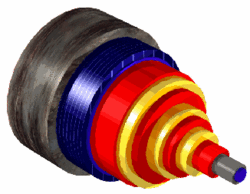
A second generation superconducting power transmission cable, using liquid nitrogen as the coolant, has been energised at a station outside Columbus, Ohio. The Triax HTS cable utilises 3 concentric super-conducting layers to allow 3-phase current transmission in a single cable!

-A new technology that holds promise to transform the global transmission and distribution of electric power was formally energized today near Columbus, Ohio. The $9 million project uses a second-generation High Temperature Superconducting (HTS) cable system to efficiently deliver electric power to approximately 8,600 homes and businesses in suburban Columbus.

The Columbus project is the first demonstration of the new Triax HTS cable design, which dramatically reduces the cost of superconducting systems and brings the technology one step closer to commercial viability. The system was developed by Southwire Company and its partners, American Electric Power (NYSE: AEP), Praxair (NYSE: PX), American Superconductor (NASDAQ: AMSC) and the U.S. Department of Energy's Oak Ridge National Laboratory (ORNL).

Approximately 200 meters (660 feet) of Triax HTS cable from Southwire are part of the system distributing electric power to residential, commercial and industrial customers through AEP's Bixby substation in Groveport, Ohio. The installation phase of the two-year demonstration project came in on time and on budget.
Source.

Superconducting cables, operating at extremely low temperatures, eliminate virtually all resistance to the flow of electric current. HTS cables can deliver up to five times more electricity than traditional conventional copper or aluminum cables and have the potential to address the challenge of providing sufficient electricity to densely populated areas. In an increasing number of cities, there is little room to expand underground cable networks and the cost to lay additional cable, including building new tunnels or ducts, is prohibitive. With their higher capacity, superconducting cables have the potential to increase the supply of electricity to an area using the existing underground cable footprint. Additionally, because HTS cables can carry more current at a lower voltage over longer distances, large power transformers could be located farther from urban centers and densely populated areas freeing up valuable real estate for development or green space.
Source.

Check out the flash animation at this website, that shows how an urban landscape can be transformed by the space efficiencies of superconducting cable such as the Triax HTS system. Urban real estate can be highly expensive, and anything that can free up land for more profitable use would be welcomed.

High-temperature superconductive cables are simple enough in principle. Encase a ceramic material in a silver tape, submerge it in liquid nitrogen, and run current through it. Temperature is the key. A conductor that carries 200A at -321 °F can carry 240A at -334 °F. Turn the refrigeration up and you get more capacity. You’ll lose about 0.5 percent of the power you transmit, where traditional power cables lose from three to eight percent. The trick is being able to manufacture your design. In the center of Southwire’s superconducting cable is a flexible pipe carrying liquid nitrogen. Superconducting tapes wrap around the pipe, followed by a dielectric layer, then a second layer of superconducting tapes that act as a neutral conductor. A double-walled outer cryostat surrounds the cable core and provides a return path for the nitrogen.
Source.

Hat tip to Energy Blog.

Tuesday, September 12, 2006

Improved Oil Discovery Under the Sea--Expect More

The recent discovery of a huge new undersea oil reservoir in the Gulf of Mexico is causing more intelligent people to rethink the issue of "peak oil."

The well sustained a flow rate of about 6,000 barrels a day, strong enough to encourage analysts to predict that the field may contain anywhere from three billion to fifteen billion barrels of oil, although the results of a second well test scheduled for 2007 will sharpen the accuracy of those figures considerably. If the higher-end estimate is correct, though, the discovery would approach Prudhoe Bay in size, and possibly increase total U.S. reserves by some 50 percent.
Technology Review.

This huge undersea oil field was found by improved seismic techniques. But oil discovery science is not limited to seismic methods. A new generation of petroleum prospectors are learning to use these new techniques, which promise a new wave of oil discovery that could last for decades.

Other parts of the world that once appeared beyond the pale may also come into play. Areas believed to have oil deposits extremely deep beneath the ocean floor, which could now become commercially recoverable, include the North Sea off the coast of Britain, the Nile River Delta off the coast of Egypt, and possibly coastal Brazil, says Andrew Latham, a vice-president at energy consultancy Wood Mackenzie in Edinburgh, Scotland. Other analysts say West Africa could harbor lots of ultra-deep deposits. The areas have produced oil before but never from these depths.
Source.

Of course, these huge new oil fields will take time to develop. Much of the new oil reserves will probably lie undisturbed, like the ANWR oil fields in Alaska, due to lack of desperate need for it. Oil prices of $70 US per barrel are not economy busters by any means. Yet those prices are high enough to encourage development of renewable sources of energy, as well as novel uses for coal, and increased use of nuclear energy. The current price level also encourages oil companies to stretch their nets of oil discovery wider and deeper.

So, although the move away from petroleum and toward alternative fuels is real and probably irreversible, it is still in the early phase, and is not due to any hardship associated with the old "catastrophic peak oil" quasi-religious belief. It is basic economics combined with a desire by developed societies to move toward cleaner and ultimately more sustainable forms of energy.

Labels: , ,

Sunday, August 27, 2006

How "Environmentalists" Could Achieve Respect


"Environmentalist" is a term often euphemistically substituted for "political activist." Someone with no practical skills and nothing to offer, in other words. Someone always looking for money to help promote a political agenda that has little chance, if any, of improving the world.

Environmentalists could change this general conception of their money-grubbing pencil-pushing polemics by actually creating something meaningful and good. Take the concept of a seascape, for example, and Seascape 1 in particular. This particular seascape is designed for self-sufficiency, sustainability, and extensive use of renewable energy technologies.

Wind turbines, hydro turbines and millions of square feet of solar cells will provide electrical energy for guests and businesses, onboard desalination stations will provide fresh water, and recycled wastewater will be used to irrigate landscaped areas and hydroponic crops for food production. Grassi expects that the fully sustainable environment he envisions will serve as a model for future generations of developers.
Source.

If only "environmentalists" could design something useful and practical, and perhaps even build it. That would really show the rest of us what they were made of. It would force us to respect them, rather than to view them with contempt.

It is unlikely for politically oriented "environmentalists" to ever do more than to attack their political enemies, and eternally work toward consolidating political power for the same corrupt reasons as all politicians. We can still always hope, however. At least on the rare occasion that we can spare to actually think about them.

Update: This article displays some of the unsavory tactics that "environmentalists" often use to demonize those with whom they disagree.

....``This is the criminalization of opposition to global warming," says Lindzen, who adds he has never communicated with the auto companies involved in the lawsuit. Of course Lindzen isn't a fake scientist, he's an inconvenient scientist. No wonder you're not supposed to listen to him.

Read more about the dirty laundry of partisan "environmentalists: at the source.

Labels: , ,

Friday, August 04, 2006

Geothermal Energy--Enough for the Next 250,000 Years

There are 100 million exojoules (quads) of energy available from geothermal energy in the earth. The total human energy use per year is a mere 400 exojoules per year. At that rate, it would take 250,000 years for humans to use all the energy available from the earth's stored heat.

This Technology Review interview with MIT Chemical Engineer Jefferson Tester sheds a great deal of light on this vastly under-utilised energy technology:

Technology Review: How much geothermal energy could be harvested?

Jefferson Tester: The figure for the whole world is on the order of 100 million exojoules or quads [a quad is one quadrillion BTUs]. This is the part that would be useable. We now use worldwide just over 400 exojoules per year. So you do the math, and you know you've got a very big source of energy.

How much of that massive resource base could we usefully extract? Imagine that only a fraction of a percent comes out. It's still big. A tenth of a percent is 100,000 quads. You have access to a tremendous amount of stored energy. And assessment studies have shown that this is thousands of times in excess of the amount of energy we consume per-year in the country. The trick is to get it out of the ground economically and efficiently and to do it in an environmentally sustainable manner. That's what a lot of the field efforts have focused on.

TR: We do use some geothermal today, don't we?

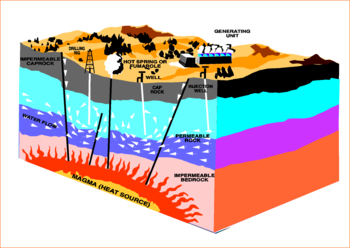
JT: In some cases nature has provided a means for extracting stored thermal energy. We have many good examples. The Geysers field in California is the largest geothermal field in the world -- it's been in production for over 40 years and produces high-quality steam that can readily be converted into electric power, and it's one of the rarities nature-wise in terms of what we have worldwide. In the mineral vernacular they would be regarded as sort of high-grade gold mines.

....TR: How do you plan to harvest stored heat from more areas?

JT: What we're trying to do is emulate what nature has provided in these high-grade systems. When we go very deep, [rocks] are crystalline. They're very impermeable. They aren't heat exchangers like we really need. We'd like to create porosity and permeability. [The rock] actually is filled with small fractures, so what you're trying to do is find those weak zones and reopen them. We need to engineer good connectivity between an injection set of wells and a production set of wells, and sweep fluid, in this case, water, over that rock surface so that we extract the thermal energy and bring it up another well.

TR: What technology do you need to open up the rock and harvest the heat?

JT: All the technology that goes into drilling and completing oil and gas production systems, [such as] stimulation of wells, hydraulic fracturing, deep-well completion, and multiple horizontal laterals, could in principle be extended to deep heat mining. Hydraulic methods have been the ones that hold the most promise, where you go into the system and you pressurize the rock -- just water pressure. If you go higher than the confinement stress, you will reopen the small fractures. We're just talking about using a few thousand pounds per square inch pressure -- it's surprising how easy this is to do. This is a technique that's used almost every single day to stimulate oil and gas reservoirs.

....TR: You're working on new drilling technology. How does this fit in?

JT: We feel that as part of a long-term view of the possibility of universal heat mining, we should also be thinking about revolutionary methods for cutting through rock and completing wells. Most of the drilling that's done today is made by crushing and grinding our way using very, very hard materials to crush through and grind through minerals in the rock. And it's been very successful. It's evolved tremendously over the past century, and we can do it, certainly, routinely, to 10 kilometers. But it costs a lot. So we're looking for a fundamental way to change the technology that would change the cost-depth relationship, and allow us to drill deeper in a much more cost-effective manner. It would open up the accessibility tremendously.

TR: What are the advantages compared with other renewable sources of energy?

JT: Geothermal has a couple of distinct differences. One, it is very scalable in baseload. Our coal-fired plants produce electricity 24 hours a day, 365 days a year. The nuclear power plants are the same way. Geothermal can meet that, without any need for auxiliary storage or a backup system. Solar would require some sort of storage if you wanted to run it when the sun's not out. And wind can't provide it without any backup at 100 percent reliability, because the typical availability factor of a wind system is about 30 percent or so, whereas the typical availability factor of a geothermal system is about 90 percent or better.

....TR: How fast do you think artificial geothermal systems can be developed?

JT: With sufficient financing and a well-characterized field, you can go into existing areas right now and build a plant, getting it operational within a few years. But to get universal heat mining is going to take an investment which won't be quite that quick. It might take 10 or 15 years of investment to get to the point where you have confidence that you can do this in virtually any site that you can go to. Once it gets in place, though, it can be replicated. I think it's very reproducible and expandable. That's the great hope at least.
Source.

Between solar power and geothermal power, you would think there would be no need to burn oil, coal, or gas. Unfortunately, it takes time to develop alternative technologies. But knowing they are available, and on a scale that humans will never exhaust, should give forward thinking persons something to work on. Working productively is a good alternative to wetting your pants over ever-present fears of doom.

Labels: ,

Tuesday, August 01, 2006

Oil from Manure

Agricultural researchers are determined to help solve the energy shortages the industrial world is experiencing. Previously I posted on University of Illinois Urb/Champ researchers who developed a process to produce crude oil from pig manure. Now researchers from Iowa State University are mixing corn stalks and cow manure to produce oil and charcoal.

The researchers are working to take wastes from Iowa farms -- manure and corn stalks -- and turn them into a bio-oil that could be used for boiler fuel and perhaps transportation fuel.

"The way I see manure, it's not waste anymore," Sadaka said. "It is bio-oil."

But it takes a few steps to make that transformation.

First, the manure needs to be dried so it can be burned. Sadaka's idea for low-cost and low-odor drying is to mix the manure with corn stalks, put the mix in a big drum, use a small blower to keep the air circulating and use an auger to turn the mixture once a day. Within about five days, bacteria and fungi working to decompose the mix have naturally raised the temperature to about 150 degrees Fahrenheit. Within another 20 days or so the moisture content is down from 60 percent to about 20 percent. Sadaka calls the process bio-drying.

That makes it possible to move to the next step: rapidly heating the mixture in a bubbling, fluidized bed reactor that has no oxygen. It's a process called fast pyrolysis. The process thermochemically breaks the molecular bonds in the mixture. It produces charcoal that can be used to enrich soil. And it produces vapors that are condensed to a thick, dark bio-oil.

Preliminary tests indicate every kilogram of dried mixture produces .2 to .5 kilograms of bio-oil depending on the operating conditions.

Sadaka said the energy content of dry manure is 12 to 18 gigajoules per ton. Canada's Office of Energy Efficiency says one gigajoule of electricity will keep a 60-watt bulb continuously burning for six months. Sadaka figures if half the animal manure in the country were processed into bio-oil, that would produce the equivalent of 45 million tons of oil.

Sadaka is experimenting with the process in 900-liter drums at the Iowa Energy Center's Biomass Energy Conversion Center in Nevada. So far, he has dried a mixture of cow manure and corn stalks. Next he'll test the process with poultry manure. And then he'll try pig manure.
Source.

This process is similar to other processes used to make oil from poultry process waste. Here is more information on the process from the US Government renewable energy program.

These processes are attempts to utilise more of the byproducts of agriculture in producing renewable energy. Growing animals for food is inherently wasteful when viewed in perspective, but there are ways of making it more efficient than it is. Here is a fine overview from Mechanical Engineering Magazine, discussing this family of technologies and their application to farm waste.

Besides thermolyis and thermal depolymerisation to produce oil, manure can produce methane to substitute for natural gas. Corn stubble and rice, wheat, barley etc. straw can be broken down to sugars and fermented to make ethanol or butanol, and the methane from manure used as fuel to distill the resulting "beer" to pure ethanol.

Researchers in agricultural sciences simply do not want to be left out of the action, when it comes to solving the renewable energy problem. There seems to be enough glory to go around, even for manure research.

Labels: , , , ,

Newer Posts Older Posts