Friday, June 10, 2011

MIT Study: Climate Policy Must Destroy the World to Save It

GCC

According to an MIT study, the conversion of coal to liquid fuels via gasification and Fischer Tropsch, has great potential for clean and economical replacement of petroleum fuels, as the price of oil edges higher. Unless, that is, a global climate policy is in place -- which will force additional costs to the technology so as to make it uneconomical.
Coal-to-liquid technology has been in existence since the 1920s and was used extensively in Germany in 1944, producing around 90 percent of the national fuel needs at that time. Since then, the technology has been largely abandoned for the relatively cheaper crude oil of the Middle East. A notable exception is South Africa, where CTL conversion still provides about 30 percent of national transportation fuel.

But will there be a resurgence of CTL technology? To determine the role that CTL conversion would play in the future global fuel mix, researchers examined several crucial factors affecting CTL prospects. Different scenarios were modeled, varying the stringency of future carbon policies, the availability of biofuels and the ability to trade carbon allowances on an international market. Researchers also examined whether CTL-conversion plants would use carbon capture and storage technology, which would lower greenhouse gas emissions but create an added cost.

The study found that, without climate policy, CTL might become economical as early as 2015 in coal-abundant countries like the United States and China. In other regions, CTL could become economical by 2020 or 2025. Carbon capture and storage technologies would not be used, as they would raise costs. In this scenario, CTL has the potential to account for about a third of the global liquid-fuel supply by 2050.

However, the viability of CTL would be highly limited in regions that adopt climate policies, especially if low-carbon biofuels are available. Under scenarios that include stringent future climate policies, the high costs associated with a large carbon footprint would diminish CTL prospects, even with carbon capture and storage technologies. CTL conversion may only be viable in countries with less stringent climate policies or where low-carbon fuel alternatives are not available. _MIT_via_GCC
MIT study PDF 512 KB

In other words, costs for energy are likely to be driven far higher with top-down carbon penalties than with more market-oriented energy policies. Given the rather shaky nature of global economic regimes, the pursuit of expensive carbon penalties is apt to depress global trade and western economies beyond the current troubles.

Climate change science has been forced to backpedal on a number of over-wrought alarmist claims recently, and has had its nose rubbed in some rather unsavoury insider activity as a result of the public release of a number of emails between some rather unscrupulous climate scientists (ClimateGate).

It would be a shame to discover that world economies had been subjected to ruinously expensive carbon policies which were based on nothing more than sham science. And yet, such may well be the case.

More: A single but dramatic example of the destructive impact of Obama's EPA climate regulations on US energy supply These governmental and inter-governmental bureaucrats of the faux environmentalist persuasion do not care how many lives or enterprises they destroy. Still, you cannot claim that Obama did not give fair warning of what he planned to do. The promise of energy starvation is one that he aims to keep, and damn the costs.

Labels: ,

Thursday, June 09, 2011

Bringing Fischer Tropsch into the 21st Century

The Fischer–Tropsch process involves a series of chemical reactions that lead to a variety of hydrocarbons. Useful reactions give alkanes:

(2n+1) H2 + n CO → CnH(2n+2) + n H2O

where 'n' is a positive integer. The formation of methane (n = 1) is generally unwanted. Most of the alkanes produced tend to be straight-chain alkanes, although some branched alkanes are also formed. In addition to alkane formation, competing reactions result in the formation of alkenes, as well as alcohols and other oxygenated hydrocarbons. Usually, only relatively small quantities of these non-alkane products are formed, although catalysts favoring some of these products have been developed. _Wikipedia
hte AG Heidelberg is collaborating with BP to improve efficiency and yields for Fischer Tropsch (F-T) catalysts and processes. F-T catalytic synthesis takes syngas from several different sources and converts it to synthetic fuels, lubricants, and other valuable chemicals. The process was invented in Germany in the 1920s and has been tweaked and modified ever since in attempts to improve throughput and quality of product, as well as the economic bottom line.

As demand for hydrocarbons grows due to rising global populations and the industrialisation of emerging nations, more interest is being shown in F-T and similar catalytic synthesis approaches to making hydrocarbons. The higher the price of petroleum, the greater the interest in F-T will grow.
The BP Conversion Technology Centre is continuing to work with hte in the field of Fischer-Tropsch catalysis and process. The Fischer-Tropsch process is used to convert syngas into synthetic fuels and lubricants, and due to the global resources situation is currently gaining importance. Syngas itself can be formed from gaseous or solid carbon sources such as natural gas, coal or biomass.

hte has provided in-house developed testing capacities as well as an experienced project team. Over the period of the collaboration, hte’s technology platform has been continuously refined and advanced for the Fischer-Tropsch synthesis reaction allowing BP to perform a large number of rapid and precise data measurements in support of catalyst and process scale-up. Used systematically this data rapidly generates information on reaction kinetics, the fundamentals of start-up and activation and the impact of key process parameters. This builds confidence in BP’s implementation of their FT technology across a variety of potential applications and feedstocks.

...BP and hte are now set to extend their successful cooperation in the field of Fischer-Tropsch for another year. Dirk Demuth, CEO at hte, is encouraged by this successful cooperation, commenting:
"We are delighted to continue working as a reliable partner to BP. From a strategic perspective, performing catalyst quality control and process optimisation for our customers is becoming increasingly important to us. hte will continue to add value to the BP Fischer-Tropsch project through its high-profile scientific team and its leading technology platform "
_hte AG Heidelberg
h/t GreenCarCongress

The BP / hte collaboration is one of many projects into synthetic fuels being spurred by current high oil prices and geopolitical instability -- particularly in oil dictatorships.

Fischer Tropsch Archives -- a large collection of documents dealing with F-T and related processes

Labels:

Wednesday, June 08, 2011

World Oil Reserves Continue to Rise Year on Year

In the absence of replenishment by successful exploration or reserves growth, so-called 'reserves replacement', proved reserves would tend to decline over time as production depleted the existing reserve base. However, the tendency has been for proved reserves at the aggregate level to increase over time as reported discoveries, extensions and improved recovery have exceeded production.

Global oil reserves rose by 6.6 billion bbls to 1,383 billion bbls in 2010. That represents an increase of 25% over the 2000 figure of 1,105 billion bbls, despite an estimated cumulative production of 318 billion bbls during the intervening ten years. Thus global reserves additions amounted to around 596 billion bbls between 2000 and 2010. _BP Statistical Review of World Energy
As oil prices continue to trend higher, more resources will be devoted to exploration, discovery, and production of new reserves. In addition, more work will continue to be put toward substitution of alternative synthetic liquid fuels in place of conventional petro-fuels.

Something that peak oil doomers need to ask themselves: "If oil production hasn't crashed under the Obama energy starvation regime, under the lax maintenance and production regimes of Russian, Venezuelan, and Iranian national oil companies, and under the general incompetence and corruption of state oil companies around the world -- what will it take to crash global oil production far enough to bring about the collapse?"

The world is floating in hydrocarbons of all kinds. The only shortages in the human world are the shortages of human ingenuity and human will.

Downloads for the BP Statistical Review 2011

More: The critical need to give up on lefty-Luddite energy starvation

Labels: ,

Monday, June 06, 2011

Carbon Sciences Claims Better Catalysts for GTL

1. The conventional steam reforming using steam:
CH4 + H2O ↔ CO + 3 H2 (∆H = 206 kJ/mol) …………..( 1.1)
2. Carbon dioxide reforming of methane:
CH4 + CO2 ↔ 2 CO + 2 H2 (∆H = 247 kJ/mol) ……… (1.2)
3. Partial oxidation using oxygen:
CH4 + O2 ↔ CO + 2 H2 (∆H = - 38 kJ/mol) ………….. (1.3)
(Source)
GCC
The race is on to find economical uses for the rich bonanzas of methane being unleashed globally by North American practises of horizontal drilling and various types of fracturing tight shale gas formations. Both gas-to-liquids (GTL) and LNG are being proposed and developed to extend the economic reach of methane deposits -- many of which may be stranded far from lucrative markets.

Carbon Sciences Inc. has developed a catalyst which it claims will make the process of dry (CO2 reforming, #2 above) reforming of methane to syngas more profitable. From high quality syngas, any number of high value chemicals or liquid fuels can be produced.
The UOS catalyst technology, developed over the past decade by Dr. Hui Wang, professor of Chemical Engineering, has demonstrated high performance and reliability. The UOS catalyst achieved 92% conversion into essentially 1:1 H2/CO syngas with no detectable sintering, no significant carbon deposition, and thus no catalyst deactivation. Dr. Wang’s research team has successfully tested the catalyst for 2,000 hours of continuous operation in a bench top reactor.


The catalyst has also undergone 600 hours of commercial testing without regeneration. The company claims that its second-generation catalyst has achieved performance levels close to its theoretical limits.


After achieving very positive commercial test results for our catalyst, we are moving ahead aggressively to accelerate the production of larger quantities of the catalyst, as well as completing the technical and economic analyses in preparation for discussions with strategic partners. Working with the GTL experts at our engineering firm, Emerging Fuels Technology, we also plan to demonstrate an end-to-end process that will produce samples of diesel fuel that can be used by existing diesel vehicles.


—Byron Elton, Carbon Sciences’ CEO
Broadly, the methane dry reforming reaction is:
CO2 + CH4 → 2CO + 2H2
...Carbon Sciences’ claims that using its catalyst can achieve a 20% to 30% capital cost advantage over the alternatives because dry reforming is a simpler process, does not require an oxygen plant, uses small amounts of steam and has high conversion efficiency. Additionally, the feedstock cost of dry reforming syngas may be lowered by as much as 25% because CO2 is a zero cost feedstock (and often negative value) that occurs naturally in methane gas fields.
... _GCC
In situations where plentiful CO2 is freely available, the dry reforming method may well offer several advantages, and Carbon Sciences Inc.'s new catalyst may find itself a very lucrative niche in the brave new world of synthetic liquid hydrocarbons and high value chemicals.

But in the long run, better catalysts will lead to GTL processes which will bypass the energy-intensive gasification stage. It is commonly known that micro-organisms break down hydrocarbons in the environment to methane. Other micro-organisms have enzymes which perform reverse, synthesis reactions to create medium and longer chain hydrocarbons. It is these lower temperature synthesis reactions which will win out in the end, probably using robust biomimetic inorganic nano-catalysis. While humans will eventually move away from hydrocarbon fuels, they will likely be using hydrocarbon based chemicals and plastics for many centuries to come.

Labels: , ,

Friday, June 03, 2011

Risk in Perspective: Who Is Afraid of Nuclear Power

Dan Yurman has published an excellent review of the German government's decision to close down all of its nuclear power plants by the year 2022. The decision's costs to German society and the German people will be incalculable, and once again call to our attention the fact that ordinary humans have no valid perspective on risk.

The chart below comes from an an article out of the Journal of Physicians and Surgeons, in PDF format. Risks from a wide range of events and phenomena are ranked according to days of lost life expectancy. The risks at top are measured in thousands of days in lost expectancy. As you drop down through the chart, lesser risks are measured in days of lost life expectancy. As you can see, risks from nuclear power occupy the very lowest position -- a small fraction of a single day of lost life expectancy on average -- if calculated by government sources.
Journal of Physicians and Surgeons (US) PDF

And yet, Germany's government and much of the entire nation of Germany has panicked itself into a dangerous and expensive restricting of its own future energy resources. Sometimes government can undo damage that government has done previously -- at least in part. Future German governments will curse what Merkel's government has done, but they will deal with it -- and almost certainly return to nuclear power out of necessity.

But they will be forced to buy massive amounts of power from neighboring countries at much higher rates than would have been necessary if they had preserved their nuclear power resources. And when Germany does choose to go nuclear again, it will have to buy reactors and fuels from other countries -- countries which instead of panicking, chose to develop safer, cleaner, cheaper, and more reliable nuclear reactors.

Labels: ,

Thursday, June 02, 2011

ZeaChem and Procter & Gamble's Green Chemistry Venture

Cellulosic ethanol producer ZeaChem utilises both biomass gasification and microbial fermentation to produce biofuels from cellulose. But the small startup is joining with commercial giant Procter & Gamble to use ZeaChem's biorefinery platform for producing larger and more sophisticated high value chemicals from cellulose:
In Colorado, ZeaChem announced a binding multi-year joint development agreement with Procter & Gamble. The agreement will accelerate development of ZeaChem’s product platform beyond C2 through the commercialization of “drop-in” bio-based chemicals and other products.

The two companies will utilize ZeaChem’s existing infrastructure at its lab in Menlo Park, Calif., pilot facility at Hazen Research in Golden, Colo., and demonstration-scale biorefinery in Boardman, Ore. Together, P&G and ZeaChem will research, develop and demonstrate, scale-up, and commercialize this new product platform.

...ZeaChem’s technology is a parallel hybrid system of fermentation and gasification. This hybrid process achieves 40% higher yield than other cellulosic processes. Theoretical maximum for biochemical and thermochemical players is approximately 100 gallons/BDT compared to ZeaChem’s theoretical maximum of 165 gallons/BDT. At 85% efficiency, actual yield for biochemical and thermochemical only processes will be around 90 gallons/BDT compared to 135 gallon/BDT for ZeaChem’s technology. This significant yield advantage translates into economic saving and environmental benefits. _BiofuelsDigest
Higher yield biorefinery processes will certainly push up the timetable for viable biofuels. In the case of ZeaChem, both gasification and microbial fermentation will be advanced. Other companies will emphasise gasification plus F-T or similar catalytic synthesis -- OR -- will take the microbial path from beginning to end, cellulose to fuels or chemicals.

It is possible that other approaches besides thermochemical, catalytic synthesis, or microbial metabolism, will prove even more viable in the long run. According to Al Fin energy analysts, the year 2020 is the target date for competitively priced drop-in renewable substitutes for petrofuels and chemicals, using microbes (including algae) as primary producers and biomass as the primary feedstock. For competitively priced dropin fuels and chemicals using thermochemical approaches primarily, the year 2015 is the target date.

In the long run, microbes and nano-tech synthesis will sweep every other approach to chemicals and fuels off the stage due to economic and overall energy efficiencies.

Labels: ,

Wednesday, June 01, 2011

Malthusianist Doomerism Haunts Environmental Left

From Paul Erlich's warnings of a population bomb to The Club of Rome's "Limits to Growth," contemporary ecological politics have consistently embraced [leftist] green Malthusianism despite the fact that the Malthusian premise has persistently failed for the better part of three centuries. Indeed, the [capitalist agri-tech] revolution was exponentially increasing agricultural yields at the very moment that Erlich was predicting mass starvation and the serial predictions of peak oil and various others resource collapses that have followed have continue to fail. _Breakthrough.org


One good recent example of frustrated Malthusianism is natural gas supply. Peak oil doomers declared an impending "peak natural gas" throughout the first decade of the 2000s. Even now, in the face of a shale gas bonanza sprouting up over the last few years, the doomers are frantic to justify their Malthusian true faith -- resorting to false claims of rampant water pollution from fracking fluids etc.
Within a year, U.S. recoverable shale gas reserves alone rose from 340 trillion cubic feet to 823 tcf, the Energy Department estimates. That’s 36 years’ worth, based on what the USA currently consumes from all gas sources, or the equivalent of 74 years’ of current annual US oil production. The reserves span the continent, from Barnett shale in Texas to Marcellus shale in Eastern and Mid-Atlantic states – to large deposits in western Canada, Colorado, North Dakota, Montana and other states (and around the world).

Instead of importing gas, the United States could become an exporter. The gas can move seamlessly into existing pipeline systems, to fuel homes, factories and electrical generators, serve as a petrochemical feedstock, and replace oil in many applications. States, private citizens and the federal government could reap billions in lease bonuses, rents, royalties and taxes. Millions of high-paying jobs could be “created or saved.” Plentiful gas can also provide essential backup power for wind turbines.

...Environmentalists voiced alarm. HBO aired “Gasland,” a slick propaganda film about alleged impacts of fracking on groundwater. Its claims have been roundly debunked (for instance, methane igniting at a water faucet came from a gas deposit encountered by the homeowner’s water well – not from a fracking operation). A politically motivated Oscar was predicted, but didn’t happen.

The Environmental Protection Agency revealed a multiple personality disorder. Its Drinking Water Protection Division director told Congress there is not a single documented instance of polluted groundwater due to fracking. (Studies by Colorado and Texas regulators drew the same conclusion.)

EPA’s Texas office nevertheless insisted that Range Resources was “endangering” a public aquifer and ordered the company to stop drilling immediately and provide clean water to area homes. EPA officials then failed to show up at the hearing or submit a single page of testimony, to support their claims.

Meanwhile, EPA Administrator Lisa Jackson announced plans to conduct a “life-cycle” or “cradle-to-grave” study of hydraulic fracturing drilling and gas production techniques, to assess possible impacts on groundwater and other ecological values. Depending on whether the study is scientific or politicized, it could lead to national, state-by-state or even city-by-city drilling delays, bans – or booms. _MasterResource_via_OilPrice

While scientists argue whether water wells located within a mile of shale gas wellheads contain higher levels than normal of dissolved methane, there has been no evidence of water contamination or public health hazard from fracking fluids. Given the incredible financial wealth potential of shale gas deposits, it makes far more sense to let individual states regulate shale gas fracking. This is particularly true when the US government is controlled by an administration packing an "energy starvation agenda."

Malthusian lefty-Luddite Greens litter the landscape of European capitals, and under Obama have become a national hazard in the US as well. Their extreme alarmist rhetoric and anti-commerce stance threatens economies across the western world.
Human technology and ingenuity have repeatedly confounded Malthusian predictions yet green ideology continues to cast a suspect eye towards the very technologies that have allowed us to avoid resource and ecological catastrophes. But such solutions will require environmentalists to abandon the "small is beautiful" ethic that has also characterized environmental thought since the 1960's. We, the most secure, affluent, and thoroughly modern human beings to have ever lived upon the planet, must abandon both the dark, zero-sum Malthusian visions and the idealized and nostalgic fantasies for a simpler, more bucolic past in which humans lived in harmony with Nature. _Breakthrough.org


Cross-posted to Al Fin

More on the safety of shale gas fracking:
Study upon study has concluded that hydraulic fracturing doesn’t pose a risk to drinking water. In fact, the last comprehensive study on the issue was conducted by the federal government in 2004, in which EPA found no substantiated cases nationwide of fracturing fluid contaminating groundwater. That evidence stands today.

Anti-gas activists haven’t let a dearth of evidence silence their claims though. A very telling example is a bizarre report just released by Duke University that set off a media frenzy by attempting to draw spurious conclusions based on the presence of methane in drinking water wells and the proximity of those wells to shale gas drilling sites.

The headlines, however, failed to mention that the report itself admits “the study found no evidence of contamination from hydraulic fracturing fluids or saline produced waters.”

Researchers also failed to collect baseline data on the quantity of methane that existed in the wells before drilling began. This is critical, as methane occurs naturally in water in the region where the study was conducted. In fact, the gas presence is a key tool in finding gas resources. Without this baseline information, it’s impossible to understand the significance of this correlation.

The larger problem stems from the way portentous headlines distract from the real issue. Additives injected deep underground in a well-constructed shale well don’t affect the quality of our water in the same way chemicals contained in a well constructed jet engine don’t affect the health of passengers in the plane. The key is ensuring proper well design and proper wastewater treatment/disposal.

Thankfully, state regulators have been working harmoniously with industry representatives to achieve that goal. Unfortunately, this kind of effective collaboration just doesn’t make for good doomsday headlines. _EnergyTribune

And that is what Malthusian lefty-Luddite dieoff.orgy Greens hate about safe and abundant energy: There is nothing to be alarmed about. Doomers have made the apocalypse into a religion and an addiction. Visit any peak oil forum or carbon hysteria website, if you feel the need for a quick mainlined dose of doom.

Of course, if you are more about solutions and means for creating a better life, you may want to work within a fact-supported reality.

More: Pennsylvania's shale oil and gas helping to prevent a double dip recession in the Quaker State

Still More:  Everything you've heard from the mainstream media about fossil fuels is wrong  

Labels: , ,

Tuesday, May 31, 2011

Europe Turns Away from Nuclear, Asia Embraces It

Germany has panicked and is running away from nuclear power like a frightened child.

Switzerland appears to be joining Germany in its flight from the future.

Europe's reflexive reaction stands in stark contrast to Asian countries' embrace of nuclear power. By the time Europe emerges from its green narcotic trance, it will be desperate to buy Asian-made nuclear reactors and Asian-produced nuclear fuels at any price it can scratch out.

Idaho Samizdat hosts the 54th Carnival of Nuclear Energy Excerpt:
ANS Nuclear Cafe
Dr. Ulrich Decher analyzes wind, solar, and hydro in the Pacific Northwest and California and asks: What is the “good thing” of having so much wind on the Bonneville Power Administration grid? What will be the outcome of California's renewable energy portfolio goal given the intermittency of wind power?

More on Asian nuclear renaissance:
•China’s nuclear build programme is huge – has the potential to shape world nuclear industry for many decades

•Russia internal build of VVER designs will build credibility for export market

•India’s potential buy of imported LWR designs may change the competitive picture, if EPR, ESBWR, or ABWR (or all of these) get orders

•As new nuclear countries make selections, the aggregate world league table will be important

– countries will look for proven designs with real experience and low costs
– will seek a range of support from vendors (government vendors have edge)

Kee also noted that South Korea, China and India were all planning to sell reactors on the global market. Asian reactors cost less than European or American reactors with the Korean APR-1400 costing only 40% of the cost of the French EPR. _NBF
The Anglospheric nations now have a choice of whether to panic like Europe, or to pursue safer, cheaper, more scalable nuclear reactors which are less prone to risk from proliferation, nuclear wastes, or terror attack.

Labels: ,

Monday, May 30, 2011

Synthetic Fuels from CO by Tweaking Molybdenum Nitrogenase

Nitrogenase enzymes allow living organisms to convert atmospheric N2 to organic nitrogen, for growth, development, and metabolism. But Utah State University researchers have discovered that by tweaking molybdenum nitrogenease -- substituting an alanine or glycine in place of the normal valine in a particular position -- the resulting enzyme can do a lot more than convert N2.
...when the nitrogenase MoFe protein α-70Val residue is substituted by alanine or glycine, the resulting variant proteins will catalyze the reduction and coupling of CO to form methane (CH4), ethane (C2H6), ethylene (C2H4), propene (C3H6), and propane (C3H8).

The rates and ratios of hydrocarbon production from CO can be adjusted by changing the flux of electrons through nitrogenase, by substitution of other amino acids located near FeMo-cofactor, or by changing the partial pressure of CO. Increasing the partial pressure of CO shifted the product ratio in favor of the longer chain alkanes and alkenes. _Journal of Biological Chemistry _ via _USU PDF

It is unlikely that the yields are particularly high at this point -- and organic enzymes may well prove too delicate for high volume industrial synthesis of fuels from syngas-derived CO. In that case, biomimetic nano-catalysts are likely to be crafted which can take over for the nitrogenase enzyme.

More from USU:
While studying bacterial enzymes, known as nitrogenases, used in nitrogen reduction, Utah State University biochemists Zhi-Yong Yang and Lance Seefeldt, along with colleague Dennis Dean of Virginia Tech, discovered a molybdenum nitrogenase capable of converting carbon monoxide into usable hydrocarbons. The reaction is similar, they say, to FT synthesis.

“This is pretty profound,” says Seefeldt, professor in USU’s Department of Chemistry and Biochemistry. “Understanding this process paves the way for developing better ways of converting carbon monoxide, a toxic waste product of combustion, into transportation fuel and precursors for plastics — without the time and energy required for conventional extraction of fossil fuels.”

The scientists’ findings appear in the article “Molybdenum Nitrogenase Catalyzes the Reduction and Coupling of CO to Form Hydrocarbons,” in the June 3, 2011 issue (and May 27 online issue) of Journal of Biological Chemistry. The paper was selected as “Paper of the Week” by the journal’s editorial board, an honor bestowed on the top one percent of more than 6,600 manuscripts reviewed annually by the publication’s editors. In the “Paper of the Week” feature, Yang, a doctoral candidate mentored by Seefeldt, is highlighted as an up-and-coming researcher. _USU

Of course if the researchers focused on creating better nitrogenases for converting atmospheric N2 to organic nitrogen, the revolutionary impact on human society would be just as great as discovering a breakthrough in synthetic fuels production.

It is likely that both breakthroughs will be made in time, built upon the crucial work being done at USU and other labs around the world. If so, better nitrogenases will contribute to abundant food AND abundant fuel.

H/T GreenCarCongress

Labels: , ,

Comparing Different Methods for Electrical Energy Storage

Images via ESA (ht NBF)

The Electricity Storage Association provides a useful comparison for different methods for electrical energy storage (via Brian Wang). One significant omission from the list is "Cryonic Energy Storage," which may prove to be the best of the current crop of contenders for now, until "flow batteries" are perfected.
Large -scale stationary applications of electric energy storage can be divided in three major functional categories:

Power Quality. Stored energy, in these applications, is only applied for seconds or less, as needed, to assure continuity of quality power.

Bridging Power. Stored energy, in these applications, is used for seconds to minutes to assure continuity of service when switching from one source of energy generation to another.

Energy Management. Storage media, in these applications, is used to decouple the timing of generation and consumption of electric energy. A typical application is load leveling, which involves the charging of storage when energy cost is low and utilization as needed. This would also enable consumers to be grid-independent for many hours.

Although some storage technologies can function in all application ranges, most options would not be economical to be applied in all three functional categories.

... _ESA

More graphic comparisons from ESA below:


Read the entire ESA comparison sheet for more information.

Cryonic energy storage has far more potential than compressed air storage, given the phase change energies involved.

Among electric battery storage methods, flow cell batteries are most scalable and versatile in application. Newer approaches to flow cells using more viscous electrolyte media should allow the technology to be used in vehicular power storage applications.

Labels: ,

Friday, May 27, 2011

Do We Really Want to Consume All of These Geo-Hydrocarbons?

The doomsayers of the 1970s thought we would have run out of oil by now because they compared knowledge about the state of supply then with rates of consumption then, and concluded that those available supplies would soon be exhausted. But we have consumed 40 more years’ worth of oil since then and yet find ourselves with more reserves than we believed we had in 1970.

That is possible because the supply of oil isn’t only what is in the earth’s crust. Supply is also determined by the application of human intelligence to the problem of finding the oil we need. Today’s extra reserves are not due chiefly to discoveries of new deposits, but from wringing more supply from already known reserves through enhanced recovery techniques.

...We are nowhere near to running out of natural resources. Human creativity and financial resources together will ensure a continued supply of all the resources we need. The exact form those resources will take cannot be known today, however. It relies on future innovations, which are, by their nature, unpredictable because they will be the fruit of our imagination and curiosity. That is why the human mind is the greatest natural resource of all. _FP
IEA 2008 Taken from CSIRO 2011 (PDF)

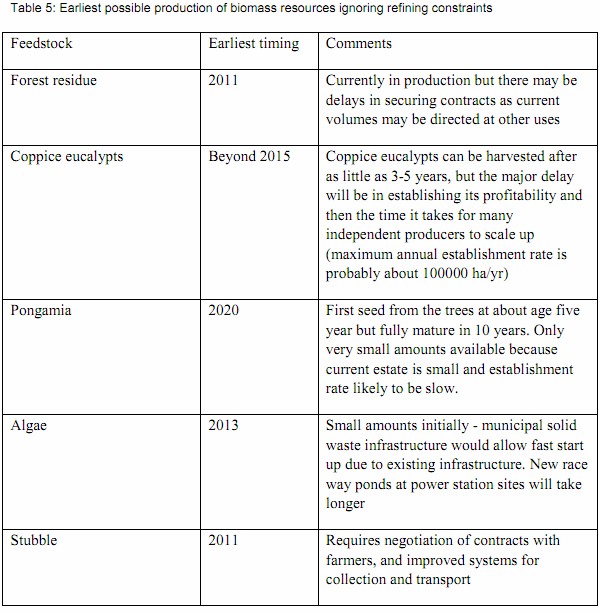
It is only a matter of time before fuels produced from agricultural, forestry, municipal waste, marine biomass, and microbial production become cost competitive with geo-hydrocarbons. Since such renewable fuels can be produced virtually anywhere on the inhabited parts of the planet, once the infrastructure is in place to produce economically competitive renewable liquid fuels, the need for geo-hydrocarbons is likely to shrink steadily, for all parts of the world except for those regions capable of very cheap production of geo-hydrocarbons.
From Data in Rogner 1997 (PDF) via GWPF
Likewise, for electricity production, the development of advanced fission reactors which are safer, cleaner, cheaper, more scalable in production, less prone to proliferation and storage hazards, and capable of burning fuel much more thoroughly -- these newer reactors will make the use of coal, gas, and oil for power production virtually obsolete except for areas rich in geo-hydrocarbons which are unable to afford or operate nuclear reactors. If scalable fusion and LENR reactors become workable, the obsolescence of hydrocarbons for production of heat and power should be that much more complete.

The quantities of geo-hydrocarbon pictured in the graphs above are almost certainly gross underestimates -- and it is likely that to some extent "wet gas" is produced on a quasi-renewable basis deep in the crust or in the upper mantle of the planet. Some of that gas may even migrate to upper levels to become economically recoverable. And some of those "renewable" short-chain geo-hycrocarbons may be converted by bacteria into a crude oil, deep in the crust. If so, estimates of Earth's geo-hydrocarbon complement are hugely underestimated by virtually every published source.
CSIRO_2011 (PDF)

We can find clean and affordable ways to use most of these geo-hydrocarbons, certainly. But the plain truth is that we should not have to. We are developing enough alternatives so that we will not require these resources, most of which should remain in place for the time should humans ever go back to a more primitive, more Luddist age.

Substituting renewable synthetic liquid fuels for conventional transportation fuels, and nuclear powered electricity and heat for power from coal and gas, will allow for a relatively smooth transition from geo-hydrocarbons to fuels and energy that will take us at least to the next millenium.

And if we ever do need the geo-hydrocarbons? There will be more in place then, than there were 200 years ago.

Labels: ,

Thursday, May 26, 2011

Fueling Aviation with Biomass and Other Renewable Feedstocks

More: A 100 page PDF roadmap to aviation biofuels from CSIRO for Australia & New Zealand

A new report from Sustainable Aviation Fuels Northwest touts the ability of the US Northwest region to supply significant quantities of feedstock for sustainable aviation fuels -- via multiple methods of synthesis. PDF Executive Summary of Report
Noting that no single feedstock or technology pathway is likely to provide sustainable aviation fuel at the scale or speed needed to achieve industry goals, the report focuses on a portfolio of options, including different conversion technologies and sources of potentially sustainable biomass, including oilseeds, forest residues, solid waste, and algae.

...SAFN focused on two primary conversion technologies for use with the four feedstocks:

Hydroprocessing. Established hydroprocessing technologies to produce aviation fuels from natural oils. ASTM approval for an aviation fuel using up to a 50% biofuel blend is anticipated later this year. This provides a near-term opportunity to create Northwest supply chains for sustainable aviation fuels utilizing oils from oilseed crops such as camelina, as well as algae and biomass.

Lignocellulosic biomass processing. Emerging technologies that use heat, chemicals and microorganisms to process woody biomass and cellulose into fuels and chemicals. This opens the way to using forest and agricultural residue streams, as well as significant portions of municipal and industrial solid waste. One technology has received ASTM approval and others are in cue. A report chapter provides an overview of emerging technologies and ways to site demonstration facilities in the Northwest.
_GCC

Full SAFN PDF report download 3.7 MB

While the above report focuses on the US Pacific Northwest, in reality other parts of the world are even more prolific producers of biomass, algae, oilseeds, or solid wastes. The tropics are a particularly promising area for feedstock production given the year-round growing climate and abundant sunlight.

As biomass to fuels technology improves and becomes more economical, expect to see and increasing number of wealthy temperate zone nations investing in bioplantations in the tropical zone. As for the politically correct connotations of "neocolonialism" which may accompany such investment in more primitive and impoverished third world nations -- it is best to get away from such blockheaded and reactionary obstacles to clear thinking.

Biofuels feedstock production may be the best fit for a sustainable and appropriate industry that the tropical third world has ever known.

Labels: ,

Tuesday, May 24, 2011

Intelligent Design for Rational Nuclear Evolution

Charles S. Holden founder of Thorenco LLC working with Lawrence Berkeley National Laboratory physicists has proposed a small transportable 50-megawatt-thermal Thorium converter reactor for multiple uses: producing electricity (15 megawatts), burning up high-level actinides from spent fuel, and producing low-cost, high-temperature steam (or process industrial heat). This high-temperature steam can be used for extraction of oil from tar sands, or desalinating, purifying, and cracking water. The reactor’s fuel matrix can be “tuned” to provide the right output for each particular work process.

Designed by specialists, the reactor core is a squat cylinder, about 140 centimeters in diameter and 50 centimeters tall. Its size makes it portable, so that it can be brought to remote locations to work site and supply heat and electricity there without dependence on long-distance transmission lines. Its small size also allows it to be factory-built and transported to its destination, “plugged in” in a deep underground containment structure, and put to work quickly. The core can be shipped back to the factory when the fuel needs to be changed. _Thorenco
The modern world is in desperate need of a compact, scalable, portable source of reliable power. Several startups and established companies are designing small modular reactors to meet that need, but in nuclear and industrial design there is always room for improvement. The new Thorenco LLC 50 MW thermal thorium reactor answers most of the concerns which critics of nuclear power have expressed:
• Neutrons convert Fertile Thorium-232 to
fissile Uranium-233
• No Plutonium Produced
• No melt downs
• No fuel rods
• No cooling ponds
• No 10,000+ year spent fuel storage _Thorenco Presentation PDFvia NBF
More from NextBigFuture:
•10 years at 40 megawatts
•141 Kg. U-233 “burned” during decade
•More than 100 Kg. of fissile produced
•1600 kilograms of U-233 fissile load
•9000 kilograms of Th-232 fertile load
•23 Grams U-232 produced in fuel over the decade of operations
•Hexagonal Prism 160 Cm. Width and Height
•Fuel Volume 2330 Liters
•Fuel 11.65 Metric Tonnes; 1-2 Metric Tonnes Fissile in Fuel
•Coolant 93,200 Liters; 450 Tonnes
•Reflector Volume 1420 Liters 16.65 Metric Tonnes

Thorenco’s ceramic fuel is dispersed in an inert metal matrix covered by Holden’s Patent Cooperation Treaty application. This solid state metal alloy is composed of four materials. The thorium and uranium fuel particles are embedded in the alloy, which both slows and moderates the fissioning process. There are moderating materials dispersed in the alloy along with the actinide particles. Using the metallic alloys as moderators (instead of the water used in other Thorium reactor designs) allows Thorenco’s reactor to operate in a more energetic neutron spectrum so that its core can have a long life.

The self-regulating reactor is expected to operate for 10 years without needing refueling. _NBF

Not only does the small thorium reactor avoid the production of plutonium, it burns nuclear waste from conventional nuclear reactors -- without producing 10,000 years of radioactive waste products. Besides greater safety in terms of proliferation and waste products -- and in making productive use of nuclear waste from mainstream reactors -- these small modular thorium reactors can be installed in remote locations for dedicated use in mining and industrial CHP applications.

Economically, modular reactors allow much greater versatility for both utility planners and for off-grid applications. Rather than being forced to connect to the grid -- or to overdesign a grid to match large reactor outputs -- economic entities can fit the power source to the actual need.

Labels: ,

Monday, May 23, 2011

Energy from Heat: A Variety of Options

Nuclear energy from the heat of fission: Carnival of Nuclear Energy #53 Cool Hand Nuke...Check out the latest carnival of nuclear blog news and views.

New developments in nanoantennas to harvest solar infrared radiative heat...NewEnergyandFuel

Siemens combined cycle turbine technology achieves 60% efficiency...NextBigFuture Combining gas turbines with steam turbines allows the extraction of a larger amount of the heat energy potential contained in coal, gas, biomass . . . . and even nuclear fuels in advanced high temperature gas-cooled reactor designs.

If you add thermal electric technology to combined cycle technology -- to harvest as much waste heat as possible -- you could increase overall efficiency of energy from heat.

Most contemporary energy and power comes from the use of heat energy -- either energy of combustion or energy from nuclear fission. This will be the case for many decades more -- even with the growth of fuel cells, photovoltaics, and other alternative methods of power generation. Advanced biofuels and enhanced geothermal power will continue to utilise heat power and heat engines.

As technology improves, it is crucial for society to make the best use of any energy assets which may be available, rather than to follow the Obama energy starvation approach. Energy is the life's blood of advanced societies. Any persons or groups that are dedicated to the strangulation of energy sources, are enemies of the people who are part of those societies. This is true whether the society derives most of its power from heat, or whether it uses power from matter - antimatter reactors.

Labels:

Friday, May 20, 2011

Biomass on Commodity Markets? More Biomass to Chemicals

Wood fuel, one of the oldest energy sources on the planet, could become the newest commodity market if it can overcome supply limits and green concerns as demand grows for renewable energy.

...utilities are burning biomass in ever greater amounts and now want price certainty and derivatives to manage their cost exposure in forward power sales, although European policymakers are mulling limits on subsidies for burning wood fuel given concerns about deforestation.

“It’s coming very fast,” said John Bingham, a director at consultants Hawkins Wright, referring to the development of an open market, and citing Eurostat data showing EU imports of wood pellets up 42% last year.

He saw increasing evidence of a larger scale market including big producers of wood pellets in Europe and North America and big intermediaries, such as Cargill and Gazprom, to balance large utility buyers. _FP
The article quoted above is looking only at wood pellet fuels for heat and power production. But wood is not the only biomass that can be pelletised. In order for all the various types of biomass pellets, tablets, briquettes, torrefaction products etc. to be featured on commodities markets, their quality characteristics will have to be well defined and standardised.

While converting biomass into combustion fuels is relatively uncomplicated, it is not the most economical or efficient use of the biomass. Converting biomass into high value chemicals returns a higher profit, and converting biomass into transportation fuels provides access to a wider marketplace. Here is one example of how biomass-derived sugars can be converted to chemicals and fuels:
(H2PO4)2 solid acid catalyst in an isobutanol-water (1.6:1/V:V) two-phase system to convert glucose to 5-hydroxymethylfurfural (5-HMF), an important green platform chemical with wide applications in the production of fine chemicals, pharmaceuticals, plastics and liquid alkanes.

Although fructose can be converted to 5-HMF with high yield via acid-catalyzed dehydration, fructose is costly.

With its low cost and wide supply, the conversion of glucose to HMF has attracted the interests of researchers. For gaining a high 5-HMF yield, the choice of catalysts is very important.
—Zhuang et al.
_GCC
As better methods of converting biomass to sugars come along, the cost of sugars will drop rapidly. At that point, industrial applications for the conversion of sugars into chemicals, fuels, plastics, and more... will expand in number very quickly.
ZeaChem, Inc., has signed a long-term binding term sheet with GreenWood Tree Farm Fund (GTFF), managed by GreenWood Resources (GWR), to supply hybrid poplar woody biomass for its first commercial cellulosic biorefinery.

The combination of GTFF’s existing tree farms in close proximity to the biorefinery, GWR’s world leadership in development and management of tree plantations, and ZeaChem’s highly efficient biorefinery technology will enable the supply of low-cost fermentable sugars used in the production of advanced biofuels and bio-based chemicals for years to come, it said. _BrighterEnergy

Labels: , ,

Wednesday, May 18, 2011

Can 60% of India's Transport Gasoline Come from Waste Biomass?

Transforming agricultural waste into biofuel in India could meet up to 59% of the country’s demand for transport gasoline while creating up to one million jobs, according to a new study by Bloomberg New Energy Finance, commissioned by enzyme company Novozymes. _GCC

It is important that societies do not push new forms of energy beyond their economic ability to support themselves. Too many mandates, rebates, taxes, regulations, punitive fees, and other top-heavy government incentives can be the "kiss of death" for any technology which is not economically ready for prime time.
India is the world’s 6th largest consumer of energy with current consumption of 17.3 billion liters (4.57 billion gallons US) per year of gasoline. Demand is expected to grow 8.5% every year till 2020. Assuming a barrel of crude oil costs US$100, India will spend US$19.4 billion on importing gasoline by 2020.

The Bloomberg study “Next-generation Ethanol: What’s in it for India’s commissioned by Novozymes was presented at event organized under the aegis of the Danish Embassy in India in cooperation with India’s Ministry of New and Renewable Energy. According to the report, biofuels from agricultural residues are an important existing alternative to liquid fuel which is environmentally sustainable and should be pursued aggressively.

By converting agricultural residues into fuel ethanol, India has the potential to reduce its dependence on imported petroleum. What’s more interesting is that this can be achieved without changing today’s agricultural land-use patterns or cultivating new energy crops. In addition, we already have the technology ready for deployment.

—Thomas Nagy, Executive Vice President, Novozymes
While the potential is high, the report states that issues like lack of policy implementation, absence of any incentive for collection of agriculture residue (only 25% of the waste is recovered from the fields) and requisite infrastructure need to be addressed for the optimum development of India’s advanced biofuel potential. _GCC
What would it take to obtain 25% or more of a society's transport fuel from biomass? It would take a lot of biomass, for starters. More than can be obtained merely from agricultural, forestry, or municipal waste. Dedicated terrestrial and marine biomass farms growing highly prolific biomass species would be necessary.

Better methods for harvesting, drying, and concentrating the biomass near the point of growth are mandatory. In other words, integrated infrastructures for local, regional, and central processing and distribution must be constructed at significant cost -- but in a scalable and modular manner, as markets grow.

Significantly better efficiencies for converting densified biomass to refined chemicals and proto-fuels would be required. Synthetic biological entities along with advanced nano-catalytics will likely be involved in lower temperature conversion to high energy fuels.

In the intermediate processes between today's thermochemical approaches (pyrolysis, gasification, torrefaction, etc.) and tomorrow's advanced low temperature synthesis of fuels, much better management of process and waste heat will be necessary, to conserve as much energy as possible.

More efficient ways of extracting hydrogen from biomass for hydrotreatment of proto-biofuels will be useful.

Don't forget fuel cells which can use biomass and biomass by-products -- such as sugars derived from biomass -- as fuels. Such non-combustion means of utilising biomass may well improve overall efficiency of biomass use on a large scale.

Whether a society derives 10% of its transport fuels from biomass or 80%, will depend upon its land and sea resources for biomass production, as well as its innate hydrocarbon resources and its ability to pay for imported hydrocarbon fuels.

Labels:

Tuesday, May 17, 2011

Why Bio-Energy Continues to Take a Backseat to Hydrocarbons

GCC
Society will require crucial transportation fuels for several more decades. Over that time period, synthetic fuels produced from renewable biomass will become more and more competitive with fuels derived from fossil fuel hydrocarbons. But for now, the infrastructure for biomass feedstock production and fuel processing is virtually nonexistent. And the economic justification for building and scaling that biomass fuels/chemicals infrastructure will require time to fall into place.
Researchers from the Stevens Institute of Technology, BASF Catalyst and Golden BioMass Fuels Corporation report on their investigation of an energy balance, in broad outline, for the production of a high-quality synthetic diesel from residual crop biomass via a Fischer-Tropsch route in a paper published in the ACS journal Energy & Fuels.
The particular process explored in the paper consists of:
harvesting surplus biomass (such as crop residue);
locally pyrolyzing the biomass into pyrolysis oil (PO), char, and noncondensable gas (NCG);
transporting the PO to a remote central processing facility;
converting the PO at this facility by autothermal reforming (ATR) into synthesis gas (CO and H2); and
Fischer–Tropsch (FT) synthesis of the syngas into diesel fuel.
...The team found that the process considered, in which a portion of the char and noncondensable gas are used to supply heat to the drying and pyrolysis steps and under the assumptions made, has an energy efficiency to liquid fuel on the order of 40%—i.e., 40% of the initial energy in the biomass will be found in the final liquid fuel after subtracting out external energy supplied for complete processing, including transportation as well as material losses.

...Using the process modelled, replacing ~15% of current petroleum consumption in the United States would require the gathering of biomass from a substantial portion of the land area of the major crop-producing states...
_GCC
ACS Abstract of biomass FT study

Due to the relatively low energy density of biomass, a large growing area must be devoted to producing biomass feedstock for whichever energy densification and refining process is chosen.

The study above is based upon a reasonable process, and probably represents nearly the state of the art for biomass to diesel conversion at this time. Local pyrolytic densification of biomass allows for more efficient shipping to a central gasification and F-T catalytic refinery. It would not be a bad method of producing diesel except for one thing: It is much more economical at this time to use either crude oil using conventional refineries -- or even coal or natural gas, using F-T approaches.

Fischer-Tropsch technologies are improving for the use of either gas or coal as gasification feedstocks. Here are a few items from recent F-T news stories:

Altona Energy has inked a cooperation agreement for application of Rentech's technologies in gasification of coal and biomass at its Arckaringa project located in South Australia. [Keep in mind that the biomass component would not be included except for reasons of governmental mandate, rebate, or other top-down incentive. The biomass component is not yet economic when compared to coal.]

Jacobs to Collaborate on Commercialisation of BP/Davy Fischer Tropsch

Completed semi-commercial demonstration of the low temperature Fischer-Tropsch technology at Mossel Bay gas-to-liquids plant

Oxford Catalysts Moving Toward Commercial Launch

And so on... Fischer Tropsch is an old technology which is being improved and adapted for a wide range of feedstocks and syngas mixtures. Using biomass with F-T and other thermochemical processes is necessarily a second choice, after hydrocarbons, due to the energy density factor. If governmental incentives, regulations, taxes, mandates, rebates, etc. become so topheavy as to shift the economics toward biomass, a wide range of societal and economic repercussions would necessrily follow -- not all of them ultimately for the better.

Over time, alternative means of producing scalable volumes of advanced liquid fuels from biomass are being devised. Some of these methods are likely to achieve economic competitiveness with hydrocarbons, as the incentives landscape shifts and alters. In the long run, F-T is unlikely to survive as a viable process except for production of certain high value chemicals which are difficult to produce bio-synthetically (or bio/nano-synthetically) at lower temperatures and higher efficiencies.

Liquid fuels will be important to society for some decades, and high value industrial scale chemicals will be important for much longer.

Labels: , ,

Monday, May 16, 2011

A. Niger Is an Industrial Slave and Workhorse, Other Microbes

GCC

Aspergillus Niger (A. Niger) is a fungus that contains industrial-strength enzymes capable of transforming much of modern industry. Global markets for potential products from A. Niger are priced well into the $billions. Improved capacity for breaking down polysaccharides into simple sugars alone -- for fermentation fuels and feedstock for sugar fuel cells -- can transform much of the world economy. Microbes have been around for over 3 billion years. They are hard workers with a lot of useful tools in their toolboxes.
A. niger is an industrial workhorse, with different strains efficient in producing polysaccharide-degrading enzymes (particularly amylases, pectinases, and xylanases) or organic acids (mainly citric acid) in high amounts. (As of 2007, the global market for citric acid was estimated to be approximately $1.2 billion with more than 500,000 tons produced annually by fermentation.) The production process involving A. niger is thus a well understood fungal fermentation process. _GCC

Japanese researchers aim to use synthetic biology to re-engineer protists, fungi, algae, and more, to overturn the established energy and industrial order. These scientists at the RIKEN Institute in Japan aim to give the Venter Institute a run for its money.

Most industrial uses of microbes utilise "pure cultures" of specific strains of microbe to avoid "contamination." But symbiotic groupings of microbes in the same reactor -- as well as "staged relays" of microbes using specific sequences of feedstock treatment -- may prove to be far more productive and economic than bioreactors built around isolated, pure strains.

Interestingly, symbiotic "microbial mats" may have been the prototypes for more complexed multi-cellular animals and plants which utilise specialised tissue types. Any industrial engineers contemplating the use of microbes in his industrial processes, would do well to consider the phenomenon of microbial symbiosis.

Labels:

Sunday, May 15, 2011

Nuclear News and Oddities

Nuclear News of note can be found at:

The 52nd Carnival of Nuclear Energy at ANS Nuclear Cafe

Brian Wang's Next Big Future Nuclear Update

Nuclear Street Nuclear Portal

Nuclear Town Hall

An interesting nuclear oddity popped up on the radar screen: An unconventional fusion researcher, Bodgan Maglich (inventor of Migma Fusion Cells), has re-emerged in connection with the recently announced Exyder Cell -- a 10" fusion neutron breeder which creates fissile Uranium 233 from fertile Thorium 232.
”India has 360,000 tons of thorium against only 45,000 tons of natural uranium… Installing one or two exyder type mini breeders to serve each nuclear power plant operating on Thorium/U-233 cycle would eventually render the power station self sufficient…” Computer simulation indicated that one Exyder module could economically produce 100grams/day, 35 kg/year of U-233, at electric energy cost of $50/Kg vs. $300/Kg for U-238. CANDU type reactor of 235 megawatt burns 10 Kg of U-233/year. “Even sub-engineering’ energy breakeven fusion systems which consume a net amount of electric energy to generate fissile U-233, can play a critical role in cutting the production cost.” _Businesswire
This use of fusion -- to create neutrons for use in breeding fissile fuel from fertile fuel -- may find common use in the future, if it is found to facilitate a more economical, safe, and sustainable nuclear fuel cycle.

Another potential approach to a safe "breeder-reactor" is the sub-critical reactor which is powered by a nuclear accelerator, and spallation neutrons. Both of these approaches (fusion-powered breeders and accelerator-powered breeders) may well also represent solutions to the nuclear storage problem and some potential proliferation problems (via re-cycling).

Thorium is more common globally than Uranium, and is distributed somewhat differently. This means that nations and regions which do not have abundant Uranium supplies, may well have plenty of thorium to fuel fission plants for hundreds of years.

Another approach to a Thorium cycle reactor, is the Molten Salt Reactor. Charles Barton at Nuclear Green covers the molten salt reactor regularly.

It is crucial to understand the energy density advantage of nuclear fuels and nuclear reactions. When one also understands the central role of abundant energy to the advancement of humans as a species and as a cosmic enterprise, one's short, intermediate, and long-term energy goals should be much clearer.

Labels: , ,

Saturday, May 14, 2011

Heat from Nuclear Fission and Decay: Using it More Wisely

SpaceflightNow via Brian Wang

Most electrical power is generated from heat: either combustion heat or the heat of nuclear fission and decay. I was disappointed many years ago when I first learned that nuclear power plants generate their huge production of power using primitive heat -- just like coal and gas plants. But as long as we are using heat, we may as well use it more efficiently and more ingeniously.

US NASA is proposing an advanced sterling radioisitope generator (ASRG) for powering space missions -- because the sterling engine provides greater efficiency for the limited amount of fuel allowed on weight-sensitive space missions.
...each ASRG creates between 130 and 140 watts of electricity with 1 kilogram, or about 2.2 pounds, of plutonium-238. More than four times more plutonium would be required to generate the same power in an existing RTG, according to the Energy Department.

Officials want to complete extensive ground testing and a low-cost flight demonstration before flying ASRGs on a multi-billion dollar flagship mission. _SpaceFlightNow_via_BrianWang

The same principle could be used for low power generators powered by "nuclear batteries" of various types, for remote location applications. Arctic and antarctic locations in particular cry out for low power nuclear battery applications, as would deep undersea locations.

Another way of using the heat of nuclear decay more efficiently is by making better use of waste heat from conventional nuclear power.
Nuclear desalination uses the excess heat from a nuclear power plant to evaporate sea water and to condense the pure water. Writing in the appropriately named International Journal of Nuclear Desalination, a team from India and Italy argue that despite public concerns, the low energy costs and convenience of this latter process make it the preferred option. _SD
Waste heat from many industrial sources is seriously underutilised. For nuclear power plants located along salt water estuaries and coastlines, the combination of power-production and nuclear desalination should have been implemented long ago.

Other uses for the waste heat of nuclear reactors include the production of more electrical power by a wide range of means, process heat for industry, and comfort space heating in winter.

Western societies are being squeezed into energy starvation by their well-meaning but stupid politicians, academics, and media personalities. Greater efficiencies from currently existing plants will be one way to survive this designed energy starvation. Many other inventions and workarounds will be required if humans are not to be herded like lemmings off the cliffs, by their lefty-Luddite green dieoff.orgiasts in charge.

Labels: , ,

Newer Posts Older Posts